Ki-100-II
| This page is about the premium Japanese fighter Ki-100-II. For other uses, see Ki-61 (Family). |


Contents
Description
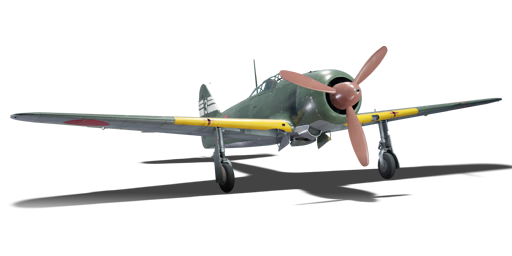
The Ki-100-II is a premium rank Japanese fighter with a battle rating of (AB), (RB), and (SB). It was introduced in Update 1.65 "Way of the Samurai".
General info
Flight performance
| Characteristics | Max Speed (km/h at 10,000 m) |
Max altitude (metres) |
Turn time (seconds) |
Rate of climb (metres/second) |
Take-off run (metres) | |||
|---|---|---|---|---|---|---|---|---|
| AB | RB | AB | RB | AB | RB | |||
| Stock | 567 | 550 | 22.0 | 22.7 | 10.1 | 10.1 | 420 | |
| Upgraded | 616 | 590 | 20.5 | 21.0 | 18.1 | 13.5 | ||
Details
| Features | ||||
|---|---|---|---|---|
| Combat flaps | Take-off flaps | Landing flaps | Air brakes | Arrestor gear |
| ✓ | ✓ | ✓ | X | X |
| Limits | ||||||
|---|---|---|---|---|---|---|
| Wings (km/h) | Gear (km/h) | Flaps (km/h) | Max Static G | |||
| Combat | Take-off | Landing | + | - | ||
| 850 | 292 | 282 | 230 | ~14 | ~7 | |
| Optimal velocities (km/h) | |||
|---|---|---|---|
| Ailerons | Rudder | Elevators | Radiator |
| < 370 | < 350 | < 410 | > 330 |
Survivability and armour
- 13 mm steel plate behind the pilot seat and headrest
Modifications and economy
Armaments
Offensive armament
The Ki-100-II is armed with:
- 2 x 20 mm Ho-5 cannons, nose-mounted (200 rpg = 400 total)
- 2 x 12.7 mm Ho-103 machine guns, wing-mounted (250 rpg = 500 total)
Suspended armament
The Ki-100-II can be outfitted with the following ordnance:
- Without load
- 2 x 50 kg Army Type 94 GPHE bombs (100 kg total)
- 2 x 100 kg Army Type 94 GPHE bombs (200 kg total)
- 2 x 250 kg Army Type 92 GPHE bombs (500 kg total)
Usage in battles
Pilots of the standard Ki-100 found in the tech tree should feel relatively comfortable in the premium Ki-100-II. This aircraft offers balanced performance characteristics that allow the pilot to choose how he wishes to fight in the Ki-100-II and adapt to the combat situation as necessary. The performance of the Ki-100-II is characterized by decent climb rate and manoeuvrability. The aircraft has good (but not the best) acceleration in a dive that makes it suitable for short range "boom and zoom" style attacks. The pilot should position the fighter around 1000 meters above a selected target, dive rapidly, fire a quick burst, and then pull away in a shallow climb to hold the plane's speed and escape. This is the safest way to conduct combat in the Ki-100-II, but there are other options available.
Against less manoeuvrable opponents, turn fighting can be a valid approach. Most German and American aircraft will not be able to out-turn you. However, turning combat is only advised when there are no other enemies around that could pounce on you while you are focused on your target. Do not manoeuvre for too long and avoid getting too slow, because your control surfaces will become less responsive. Then you will be a sitting duck for most other fighters.
With sufficient speed, the Ki-100-II also has suitable energy retention characteristics for spiral climbs and other moves that can drain your opponent's energy. However, there are other fighters which are still superior in this regard.
Manual Engine Control
| MEC elements | ||||||
|---|---|---|---|---|---|---|
| Mixer | Pitch | Radiator | Supercharger | Turbocharger | ||
| Oil | Water | Type | ||||
| Not controllable | Controllable Not auto controlled |
Controllable Not auto controlled |
Controllable Not auto controlled |
Separate | Not controllable 1 gear |
Not controllable |
Pros and cons
Pros:
- Nose-mounted Ho-5 cannons gives you better chance in head-ons
- Flexible fighting style
- Good climb rate and decent turn time
- Doesn't lock up too badly at high speed
- Turbocharger improves high altitude performance
Cons:
- No considerable strengths in performance
History
The Ki-100 was an fighter/interceptor which was developed from the Ki-61-II and the result of Japan's need to stop American bombing raids over the mainland. In October of 1944, the decision was made to fit 3 Ki-61s with Ha-112 radial engines, which were lighter and more reliable then the Ha-140 inline engine that the Ki-61 used. On February 1, 1945, the modified Ki-61 made its first flight, where it performed well. Continued testing throughout March and April proved that it outperformed the Ki-84, then considered the best fighter in the IJAAF's operation. In March 1945, because of its favourable performance, coupled with its much more reliable engine, it was ordered into production and given the Ki-100 designation. It began combat service on March 9, and was used mainly for its intended purpose until the Japanese surrender in 1945. A total of 396 were built.
The Ki-100-II was a prototype version of the Ki-100, built to improve its high altitude performance in order to improve interception capabilities against high flying American B-29s. It replaced the Ki-100's regular engine with a turbocharged, water-methanol injected one that enhanced performance above 8 kilometres. Ultimately, only 3 were built, with none of them ever seeing combat.
Media
- Skins
See also
Links to the articles on the War Thunder Wiki that you think will be useful for the reader, for example:
- reference to the series of the aircraft;
- links to approximate analogues of other nations and research trees.
External links
| Kawasaki Aircraft Industries (川崎航空機工業株式会社) | |
|---|---|
| Biplane Fighters | Ki-10-I · Ki-10-I C · Ki-10-II · Ki-10-II C |
| Fighters | Ki-61-I ko · Ki-61-I otsu · Ki-61-I hei · Tada's Ki-61-I hei · Ki-61-I tei · Ki-61-II Otsu Kai |
| Ki-100 · Ki-100-II | |
| Interceptors | Ki-45 ko · Ki-45 otsu · Ki-45 hei · Ki-45 tei |
| Ki-96 | |
| Ki-102 otsu | |
| Ki-108 Kai | |
| Bombers | Ki-32 |
| Ki-48-II otsu | |
| Captured | ␗Ki-45 hei/tei · ␗Ki-61-I otsu · ▃Ki-61-Ib |
| See also | Kawasaki Shipyard Co. |
| Japan fighters | |
|---|---|
| Navy | |
| Carrier-based fighter | |
| A5M | A5M4 · Hagiri's A5M4 |
| A6M | A6M2 mod. 11 · A6M2 · A6M3 · A6M3 mod. 22 · A6M3 mod. 22Ko · A6M5 · A6M5 Ko · A6M5 otsu · A6M5 Hei · A6M6c |
| A7He | A7He1* |
| A7M | A7M1 (NK9H) · A7M2 |
| Land-based Fighter | |
| J2M | J2M2 · J2M3 · J2M4 Kai · J2M5 · J2M5 (30 mm) |
| J6K | J6K1 |
| J7W | J7W1 |
| N1K-J | N1K1-Ja · N1K2-J · N1K2-Ja |
| Fighter seaplane | |
| N1K | N1K1 |
| A6M-N | A6M2-N |
| Army | |
| Ki-10 | Ki-10-I · Ki-10-I C · Ki-10-II · Ki-10-II C |
| Ki-27 | Ki-27 otsu · Ki-27 otsu Tachiarai |
| Ki-43 | Ki-43-I · Ki-43-II · Ki-43-III otsu |
| Ki-44 | Ki-44-I · Ki-44-I 34 · Ki-44-II otsu · Ki-44-II hei |
| Ki-61 | Ki-61-I ko · Ki-61-I otsu · Ki-61-I hei · Tada's Ki-61-I hei · Ki-61-I tei · Ki-61-II Otsu Kai |
| Ki-84 | Ki-84 ko · Ki-84 otsu · Ki-84 hei |
| Ki-87 | Ki-87 |
| Ki-94 | Ki-94-II |
| Ki-100 | Ki-100 · Ki-100-II |
| Other countries | ▅F4U-1A · ▅P-51C-11-NT · ▅Bf 109 E-7 · ▅Fw 190 A-5 |
| *Imported designation of the He 112 (A6M was in development - A7M would take A7 designation after the cancelation of the A7He) | |
| Japan premium aircraft | |
|---|---|
| Fighters | Hagiri's A5M4 · A7He1 · Ki-27 otsu Tachiarai |
| Ki-44-II otsu · ▅Bf 109 E-7 · ▅F4U-1A · Ki-100-II · Ki-44-I 34 | |
| ▅Fw 190 A-5 · A7M1 (NK9H) · Tada's Ki-61-I hei · ▅P-51C-11-NT | |
| J2M4 Kai · A6M5 Ko · A6M6c · J2M5 · Ki-87 · J6K1 | |
| Twin-engine fighters | Ki-96 |
| Jet fighters | F-86F-40 JASDF▅ · T-2 Early · F-4EJ ADTW |
| Strike aircraft | ▄AV-8S |
| Bombers | Ki-21-I hei · Ki-48-II otsu · H8K3 · B7A2 (Homare 23) · ▅B-17E |