Difference between revisions of "Ki-102 otsu"
U111970762 (talk | contribs) (→Offensive armament) (Tag: Visual edit) |
(Edits) |
||
| Line 11: | Line 11: | ||
=== Flight performance === | === Flight performance === | ||
{{Specs-Avia-Flight}} | {{Specs-Avia-Flight}} | ||
| − | <!-- | + | <!-- ''Describe how the aircraft behaves in the air. Speed, manoeuvrability, acceleration and allowable loads - these are the most important characteristics of the vehicle.'' --> |
| − | ''Describe how the aircraft behaves in the air. Speed, manoeuvrability, acceleration and allowable loads - these are the most important characteristics of the vehicle.''--> | ||
| − | The {{PAGENAME}} has a decent speed advantage over most enemy planes in a straight line or dive and very good climb rate. The climb rate is typically better than almost every aircraft it will come up | + | The {{PAGENAME}} has a decent speed advantage over most enemy planes in a straight line or dive and very good climb rate. The climb rate is typically better than almost every aircraft it will come up against. As with most Japanese heavy fighters, it is a very fast aircraft. The aircraft is as manoeuvrable as you would expect from a heavy fighter, though quite sluggish in a turn compared to a single engine aircraft. The {{PAGENAME}} has good acceleration in a dive due to its two powerful engines and increased weight and decent acceleration when travelling in a straight line. |
{| class="wikitable" style="text-align:center" width="70%" | {| class="wikitable" style="text-align:center" width="70%" | ||
| Line 30: | Line 29: | ||
|- | |- | ||
! Upgraded | ! Upgraded | ||
| − | | 608 || 580 || 23.6 || 24.5 || 24.9 || 19.5 | + | | 608 || 580 || 23.6 || 24.5 || 24.9 || 19.5 |
|- | |- | ||
|} | |} | ||
| Line 67: | Line 66: | ||
|- | |- | ||
| < 360 || < 400 || < 400 || > 312 | | < 360 || < 400 || < 400 || > 312 | ||
| − | |||
| − | |||
| − | |||
| − | |||
| − | |||
| − | |||
| − | |||
| − | |||
| − | |||
| − | |||
| − | |||
| − | |||
| − | |||
| − | |||
| − | |||
| − | |||
| − | |||
| − | |||
| − | |||
| − | |||
| − | |||
| − | |||
|- | |- | ||
|} | |} | ||
| Line 103: | Line 80: | ||
* 12 mm steel behind pilot | * 12 mm steel behind pilot | ||
* 12 mm steel in front of fuselage-mounted fuel tank | * 12 mm steel in front of fuselage-mounted fuel tank | ||
| − | * 12 mm steel behind fuselage-mounted fuel tank | + | * 12 mm steel behind fuselage-mounted fuel tank |
* 12 mm steel in front of gunner* | * 12 mm steel in front of gunner* | ||
* Self-sealing fuel tanks (1 in central fuselage, 3 in each wing) | * Self-sealing fuel tanks (1 in central fuselage, 3 in each wing) | ||
| Line 114: | Line 91: | ||
== Armaments == | == Armaments == | ||
{{Specs-Avia-Armaments}} | {{Specs-Avia-Armaments}} | ||
| − | === Offensive armament | + | === Offensive armament === |
{{Specs-Avia-Offensive}} | {{Specs-Avia-Offensive}} | ||
<!-- ''Describe the offensive armament of the aircraft, if any. Describe how effective the cannons and machine guns are in a battle, and also what belts or drums are better to use. If there is no offensive weaponry, delete this subsection.'' --> | <!-- ''Describe the offensive armament of the aircraft, if any. Describe how effective the cannons and machine guns are in a battle, and also what belts or drums are better to use. If there is no offensive weaponry, delete this subsection.'' --> | ||
| − | {{main|Ho-401 | + | {{main|Ho-401 (57 mm)|Ho-5 (20 mm)}} |
The '''''{{PAGENAME}}''''' is armed with: | The '''''{{PAGENAME}}''''' is armed with: | ||
| − | * 1 x 57 mm Ho-401 | + | * 1 x 57 mm Ho-401 cannon, nose-mounted (16 rpg) |
| − | * 2 x 20 mm Ho-5 | + | * 2 x 20 mm Ho-5 cannons, chin-mounted (200 rpg = 400 total) |
=== Defensive armament === | === Defensive armament === | ||
{{Specs-Avia-Defensive}} | {{Specs-Avia-Defensive}} | ||
<!-- ''Defensive armament with turret machine guns or cannons, crewed by gunners. Examine the number of gunners and what belts or drums are better to use. If defensive weaponry is not available, remove this subsection.'' --> | <!-- ''Defensive armament with turret machine guns or cannons, crewed by gunners. Examine the number of gunners and what belts or drums are better to use. If defensive weaponry is not available, remove this subsection.'' --> | ||
| − | {{main|Ho-104 | + | {{main|Ho-104 (12.7 mm)}} |
The '''''{{PAGENAME}}''''' is defended by: | The '''''{{PAGENAME}}''''' is defended by: | ||
| − | * 1 x 12.7 mm Ho-104 | + | * 1 x 12.7 mm Ho-104 machine gun, dorsal turret (500 rpg) |
== Usage in battles == | == Usage in battles == | ||
| − | ''Describe the tactics of playing in | + | ''Describe the tactics of playing in the aircraft, the features of using aircraft in a team and advice on tactics. Refrain from creating a "guide" - do not impose a single point of view, but instead, give the reader food for thought. Examine the most dangerous enemies and give recommendations on fighting them. If necessary, note the specifics of the game in different modes (AB, RB, SB).'' |
=== Manual Engine Control === | === Manual Engine Control === | ||
| Line 147: | Line 124: | ||
! rowspan="2" | Turbocharger | ! rowspan="2" | Turbocharger | ||
|- | |- | ||
| − | ! Oil | + | ! Oil !! Water !! Type |
| − | ! Water | ||
| − | ! Type | ||
|- | |- | ||
| − | | | + | | Not controllable || Controllable<br>Auto control available || Controllable<br>Not auto controlled || Controllable<br>Not auto controlled || Separate || Controllable<br>2 gears || Not controllable |
|- | |- | ||
|} | |} | ||
| Line 169: | Line 144: | ||
== History == | == History == | ||
| − | ''Describe the history of the creation and combat usage of the aircraft in more detail than in the introduction. If the historical reference turns out to be too long, take it to a separate article, taking a link to the article about the vehicle and adding a block "/ History" (example: <nowiki>https://wiki.warthunder.com/(Vehicle-name)/History</nowiki>) and add a link to it here using the <code>main</code> template. Be sure to reference text and sources by using <code><nowiki><ref></ref></nowiki></code>, as well as adding them at the end of the article with <code><nowiki><references /></nowiki></code>. This section may also include the vehicle's dev blog entry (if applicable) and the in-game encyclopedia description (under <code><nowiki>=== In-game description ===</nowiki></code>, also if applicable).'' | + | ''Describe the history of the creation and combat usage of the aircraft in more detail than in the introduction. If the historical reference turns out to be too long, take it to a separate article, taking a link to the article about the vehicle and adding a block "/History" (example: <nowiki>https://wiki.warthunder.com/(Vehicle-name)/History</nowiki>) and add a link to it here using the <code>main</code> template. Be sure to reference text and sources by using <code><nowiki><ref></ref></nowiki></code>, as well as adding them at the end of the article with <code><nowiki><references /></nowiki></code>. This section may also include the vehicle's dev blog entry (if applicable) and the in-game encyclopedia description (under <code><nowiki>=== In-game description ===</nowiki></code>, also if applicable).'' |
== Media == | == Media == | ||
| Line 189: | Line 164: | ||
== External links == | == External links == | ||
| − | <!--''Paste links to sources and external resources, such as:'' | + | <!-- ''Paste links to sources and external resources, such as:'' |
* ''topic on the official game forum;'' | * ''topic on the official game forum;'' | ||
| − | * ''other literature.''--> | + | * ''other literature.'' --> |
* [https://forum.warthunder.com/index.php?/topic/303477-kawasaki-ki-102-otsu/ Official data sheet - more details about the performance] | * [https://forum.warthunder.com/index.php?/topic/303477-kawasaki-ki-102-otsu/ Official data sheet - more details about the performance] | ||
{{AirManufacturer Kawasaki}} | {{AirManufacturer Kawasaki}} | ||
| − | {{Japan twin-engine fighters and | + | {{Japan twin-engine fighters and strike aircraft}} |
Revision as of 19:05, 8 February 2022


Contents
Description
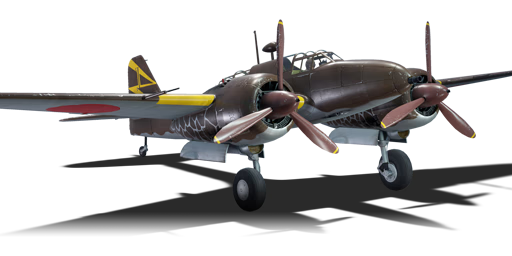
The Ki-102 otsu is a rank Japanese twin-engine fighter with a battle rating of (AB), (RB), and (SB). It was introduced in Update 1.35. The Allied reporting name for this aircraft was "Randy".
General info
Flight performance
The Ki-102 otsu has a decent speed advantage over most enemy planes in a straight line or dive and very good climb rate. The climb rate is typically better than almost every aircraft it will come up against. As with most Japanese heavy fighters, it is a very fast aircraft. The aircraft is as manoeuvrable as you would expect from a heavy fighter, though quite sluggish in a turn compared to a single engine aircraft. The Ki-102 otsu has good acceleration in a dive due to its two powerful engines and increased weight and decent acceleration when travelling in a straight line.
| Characteristics | Max Speed (km/h at 1,900 m) |
Max altitude (metres) |
Turn time (seconds) |
Rate of climb (metres/second) |
Take-off run (metres) | |||
|---|---|---|---|---|---|---|---|---|
| AB | RB | AB | RB | AB | RB | |||
| Stock | 555 | 537 | 25.5 | 26.1 | 15.4 | 15.4 | 450 | |
| Upgraded | 608 | 580 | 23.6 | 24.5 | 24.9 | 19.5 | ||
Details
| Features | ||||
|---|---|---|---|---|
| Combat flaps | Take-off flaps | Landing flaps | Air brakes | Arrestor gear |
| ✓ | ✓ | ✓ | X | X |
| Limits | ||||||
|---|---|---|---|---|---|---|
| Wings (km/h) | Gear (km/h) | Flaps (km/h) | Max Static G | |||
| Combat | Take-off | Landing | + | - | ||
| 437 | 408 | 260 | ~9 | ~7 | ||
| Optimal velocities (km/h) | |||
|---|---|---|---|
| Ailerons | Rudder | Elevators | Radiator |
| < 360 | < 400 | < 400 | > 312 |
Survivability and armour
- 8 mm steel behind 57 mm cannon
- 8 mm steel on both sides of pilot
- 8 mm steel behind pilot's head
- 8 mm steel on both sides of gunner
- 12 mm steel around 57 mm gun barrel
- 12 mm steel behind pilot
- 12 mm steel in front of fuselage-mounted fuel tank
- 12 mm steel behind fuselage-mounted fuel tank
- 12 mm steel in front of gunner*
- Self-sealing fuel tanks (1 in central fuselage, 3 in each wing)
*Note that the gunner is rear-facing
Modifications and economy
Armaments
Offensive armament
The Ki-102 otsu is armed with:
- 1 x 57 mm Ho-401 cannon, nose-mounted (16 rpg)
- 2 x 20 mm Ho-5 cannons, chin-mounted (200 rpg = 400 total)
Defensive armament
The Ki-102 otsu is defended by:
- 1 x 12.7 mm Ho-104 machine gun, dorsal turret (500 rpg)
Usage in battles
Describe the tactics of playing in the aircraft, the features of using aircraft in a team and advice on tactics. Refrain from creating a "guide" - do not impose a single point of view, but instead, give the reader food for thought. Examine the most dangerous enemies and give recommendations on fighting them. If necessary, note the specifics of the game in different modes (AB, RB, SB).
Manual Engine Control
| MEC elements | ||||||
|---|---|---|---|---|---|---|
| Mixer | Pitch | Radiator | Supercharger | Turbocharger | ||
| Oil | Water | Type | ||||
| Not controllable | Controllable Auto control available |
Controllable Not auto controlled |
Controllable Not auto controlled |
Separate | Controllable 2 gears |
Not controllable |
Pros and cons
Pros:
- Powerful 57 mm cannon
- Self-sealing fuel tanks and decent survivability, unlike many Japanese aircraft
Cons:
- Weak defensive armament
- Rather slow for its BR
History
Describe the history of the creation and combat usage of the aircraft in more detail than in the introduction. If the historical reference turns out to be too long, take it to a separate article, taking a link to the article about the vehicle and adding a block "/History" (example: https://wiki.warthunder.com/(Vehicle-name)/History) and add a link to it here using the main template. Be sure to reference text and sources by using <ref></ref>, as well as adding them at the end of the article with <references />. This section may also include the vehicle's dev blog entry (if applicable) and the in-game encyclopedia description (under === In-game description ===, also if applicable).
Media
- Skins
See also
- Similar aircraft fitted with a 57 mm gun
External links
| Kawasaki Aircraft Industries (川崎航空機工業株式会社) | |
|---|---|
| Biplane Fighters | Ki-10-I · Ki-10-I C · Ki-10-II · Ki-10-II C |
| Fighters | Ki-61-I ko · Ki-61-I otsu · Ki-61-I hei · Tada's Ki-61-I hei · Ki-61-I tei · Ki-61-II Otsu Kai |
| Ki-100 · Ki-100-II | |
| Interceptors | Ki-45 ko · Ki-45 otsu · Ki-45 hei · Ki-45 tei |
| Ki-96 | |
| Ki-102 otsu | |
| Ki-108 Kai | |
| Bombers | Ki-32 |
| Ki-48-II otsu | |
| Captured | ␗Ki-45 hei/tei · ␗Ki-61-I otsu · ▃Ki-61-Ib |
| See also | Kawasaki Shipyard Co. |
| Japan twin-engine fighters and strike aircraft | |
|---|---|
| Navy | |
| Land-based Fighter | |
| J1N | J1N1 |
| J5N | J5N1 |
| Army | |
| Ki-45 | Ki-45 ko · Ki-45 otsu · Ki-45 hei · Ki-45 tei |
| Ki-83 | Ki-83 |
| Ki-96 | Ki-96 |
| Ki-102 | Ki-102 otsu |
| Ki-108 | Ki-108 Kai |
| Ki-109 | Ki-109 |