Difference between pages "PBY-5 Catalina" and "SB2U-2"
(→Modules) (Tag: Visual edit) |
(Edits) |
||
| Line 1: | Line 1: | ||
| − | |||
{{About | {{About | ||
| − | | about = American bomber '''{{PAGENAME}}''' | + | |about = American dive bomber '''{{PAGENAME}}''' |
| − | | usage = other | + | |other |
| − | | link = | + | |usage-1 = the other version |
| + | |link-1 = SB2U-3 | ||
| + | |usage-2 = other uses | ||
| + | |link-2 = SB2 (Disambiguation) | ||
| + | }} | ||
| + | {{Specs-Card | ||
| + | |code=sb2u-2 | ||
| + | |images={{Specs-Card-Image|GarageImage_{{PAGENAME}}.jpg|ArtImage_{{PAGENAME}}.png}} | ||
| + | |cockpit=cockpit_sb2u-2.jpg | ||
}} | }} | ||
== Description == | == Description == | ||
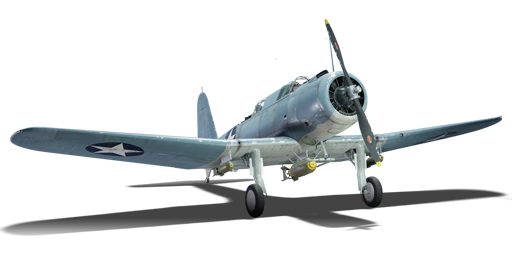
| − | <!-- ''In the description, the first part should be about the history of and the creation and combat usage of the aircraft, as well as its key features. In the second part, tell the reader about the aircraft in the game. Insert a screenshot of the vehicle, so that if the novice player does not remember the vehicle by name, he will immediately understand what kind of vehicle the article is talking about.'' --> | + | <!-- ''In the description, the first part should be about the history of and the creation and combat usage of the aircraft, as well as its key features. In the second part, tell the reader about the aircraft in the game. Insert a screenshot of the vehicle, so that if the novice player does not remember the vehicle by name, he will immediately understand what kind of vehicle the article is talking about.'' -->The SB2U was developed in the early 1930s and although considered obsolete at the outbreak of World War II, it still remained in service through the Battle of Midway. However, in 1943, it was withdrawn into training units and replaced by more advanced aircraft. This aircraft featured a constant-speed propeller which was intended to be utilized as a dive brake while performing dive-bombing attack manoeuvres. There are three hard points for bombs to be attached, one 250 lb bomb under each wing and a single 500 or 1,000 lb bomb mounted onto a pylon under the fuselage. The larger bomb was also attached to what was called a "trapeze", a device which would when the bomb was released, swing the bomb clear of the propeller arc. |
| − | |||
| − | |||
| − | The | ||
| − | + | It was introduced in [[Update 1.75 "La Résistance"]]. The SB2U-2 is a carrier-based dive bomber. This aircraft is a fairly slow aircraft, but sturdy. Built as a dive-bomber, it excels at diving down above a target to release its bombs. Unlike many dive bombers in War Thunder, the SB2U does not feature dive brakes, instead, its landing flaps can aid in retarding the build-up of speed during a dive, helping prevent ripping off of wings in RB and SB. Wing mounted machine guns allow for this aircraft to strafe softer ground or water targets while waiting for bombs to reload (AB). Rear-facing dorsal gunner helps to ward off enemy attackers, but it isn't a game-changer for this aircraft. However, thanks to its rather low BR, it will face biplanes frequently which can be dealt with using the rear 7.7 mm machine gun. | |
== General info == | == General info == | ||
| + | The {{PAGENAME}} is typically an easy target for fighter and attacker aircraft. Due to its mission of bombing ground targets, the flight path is relatively predictable and the defensive turret can only do so much to rid a rear-attacking aircraft. The manoeuvrability and turning radius will make it difficult to get out of sticky situations, however, if you are unchallenged, then this aircraft excels at low-level bombing and dive-bombing attacks and is quite accurate. Most of the critical components are clustered in the front of the aircraft and are extremely vulnerable during head-on attacks. | ||
| + | |||
=== Flight performance === | === Flight performance === | ||
| − | ''Describe how the aircraft behaves in the air. Speed, manoeuvrability, acceleration and allowable loads - these are the most important characteristics of the vehicle.'' | + | {{Specs-Avia-Flight}} |
| + | <!-- ''Describe how the aircraft behaves in the air. Speed, manoeuvrability, acceleration and allowable loads - these are the most important characteristics of the vehicle.'' --> | ||
| − | {| class="wikitable" style="text-align:center" | + | {| class="wikitable" style="text-align:center" width="70%" |
| − | + | ! rowspan="2" | Characteristics | |
| − | + | ! colspan="2" | Max Speed<br>(km/h at 4,084 m) | |
| − | + | ! rowspan="2" | Max altitude<br>(metres) | |
| − | ! | ||
| − | |||
| − | ! colspan="2" | Max Speed<br>(km/h at | ||
| − | ! rowspan="2" | Max altitude<br>( | ||
! colspan="2" | Turn time<br>(seconds) | ! colspan="2" | Turn time<br>(seconds) | ||
| − | ! colspan="2" | Rate of climb<br>( | + | ! colspan="2" | Rate of climb<br>(metres/second) |
| − | ! rowspan="2" | Take-off run<br>( | + | ! rowspan="2" | Take-off run<br>(metres) |
|- | |- | ||
| − | ! AB | + | ! AB !! RB !! AB !! RB !! AB !! RB |
| − | ! RB | ||
| − | ! AB | ||
| − | ! RB | ||
| − | ! AB | ||
| − | ! RB | ||
|- | |- | ||
| − | | | + | ! Stock |
| + | | 343 || 327 || rowspan="2" | {{Specs|ceiling}} || 23.2 || 24.5 || 4.5 || 4.5 || rowspan="2" | 300 | ||
|- | |- | ||
| − | ! | + | ! Upgraded |
| − | + | | 383 || 360 || 20.4 || 22.0 || 9.7 || 6.2 | |
| − | |||
| − | |||
| − | |||
| − | |||
| − | |||
| − | |||
| − | |||
| − | |||
| − | |||
| − | |||
| − | |||
| − | |||
| − | | | ||
| − | | | ||
|- | |- | ||
|} | |} | ||
==== Details ==== | ==== Details ==== | ||
| − | {| class="wikitable" style="text-align:center" | + | {| class="wikitable" style="text-align:center" width="50%" |
|- | |- | ||
! colspan="5" | Features | ! colspan="5" | Features | ||
|- | |- | ||
| − | ! Combat flaps | + | ! Combat flaps !! Take-off flaps !! Landing flaps !! Air brakes !! Arrestor gear |
| − | ! Take-off flaps | ||
| − | ! Landing flaps | ||
| − | ! Air brakes | ||
| − | ! Arrestor gear | ||
|- | |- | ||
| − | | X || X || | + | | X || X || ✓ || X || ✓ <!-- ✓ --> |
|- | |- | ||
|} | |} | ||
| − | {| class="wikitable" style="text-align:center" | + | {| class="wikitable" style="text-align:center" width="50%" |
|- | |- | ||
| − | ! colspan=" | + | ! colspan="7" | Limits |
|- | |- | ||
| − | ! rowspan="2" | | + | ! rowspan="2" | Wings (km/h) |
| − | ! rowspan="2" | Gear | + | ! rowspan="2" | Gear (km/h) |
| − | ! | + | ! colspan="3" | Flaps (km/h) |
! colspan="2" | Max Static G | ! colspan="2" | Max Static G | ||
|- | |- | ||
| − | ! + | + | ! Combat !! Take-off !! Landing !! + !! - |
| − | ! - | ||
|- | |- | ||
| − | | {{Specs|destruction| | + | | 740 <!-- {{Specs|destruction|body}} --> || {{Specs|destruction|gear}} || - || - || 700 || ~14 || ~8 |
|- | |- | ||
|} | |} | ||
| Line 91: | Line 71: | ||
{| class="wikitable" style="text-align:center" | {| class="wikitable" style="text-align:center" | ||
|- | |- | ||
| − | ! colspan="4" | Optimal velocities | + | ! colspan="4" | Optimal velocities (km/h) |
|- | |- | ||
| − | ! Ailerons | + | ! Ailerons !! Rudder !! Elevators !! Radiator |
| − | ! Rudder | ||
| − | ! Elevators | ||
| − | ! Radiator | ||
|- | |- | ||
| − | | < | + | | < 300 || < 350 || < 320 || > 299 |
| − | |||
| − | |||
| − | |||
| − | |||
| − | |||
| − | |||
| − | |||
| − | |||
| − | |||
| − | |||
| − | |||
| − | |||
| − | |||
| − | |||
|- | |- | ||
|} | |} | ||
=== Survivability and armour === | === Survivability and armour === | ||
| + | {{Specs-Avia-Armour}} | ||
<!-- ''Examine the survivability of the aircraft. Note how vulnerable the structure is and how secure the pilot is, whether the fuel tanks are armoured, etc. Describe the armour, if there is any, and also mention the vulnerability of other critical aircraft systems.'' --> | <!-- ''Examine the survivability of the aircraft. Note how vulnerable the structure is and how secure the pilot is, whether the fuel tanks are armoured, etc. Describe the armour, if there is any, and also mention the vulnerability of other critical aircraft systems.'' --> | ||
| − | * | + | * 3 mm Steel boxes between the pilot and gunner |
| − | + | * No armour glazing | |
| − | * | ||
* Critical components located at front of aircraft (fuel, pilot, engine, controls) | * Critical components located at front of aircraft (fuel, pilot, engine, controls) | ||
| − | * | + | * Self-sealing fuel tanks (1 behind pilot) |
| + | |||
| + | === Modifications and economy === | ||
| + | {{Specs-Economy}} | ||
== Armaments == | == Armaments == | ||
| + | {{Specs-Avia-Armaments}} | ||
| + | === Offensive armament === | ||
| + | {{Specs-Avia-Offensive}} | ||
| + | <!-- ''Describe the offensive armament of the aircraft, if any. Describe how effective the cannons and machine guns are in a battle, and also what belts or drums are better to use. If there is no offensive weaponry, delete this subsection.'' --> | ||
| + | {{main|Browning (7.7 mm)}} | ||
| + | |||
| + | The '''''{{PAGENAME}}''''' is armed with: | ||
| + | |||
| + | * 2 x 7.7 mm Browning machine guns, wing-mounted (1,000 rpg = 2,000 total) | ||
| + | |||
=== Suspended armament === | === Suspended armament === | ||
| + | {{Specs-Avia-Suspended}} | ||
<!-- ''Describe the aircraft's suspended armament: additional cannons under the wings, bombs, rockets and torpedoes. This section is especially important for bombers and attackers. If there is no suspended weaponry remove this subsection.'' --> | <!-- ''Describe the aircraft's suspended armament: additional cannons under the wings, bombs, rockets and torpedoes. This section is especially important for bombers and attackers. If there is no suspended weaponry remove this subsection.'' --> | ||
| − | {{main|AN-M30A1 (100 lb)|AN-M64A1 (500 lb)|AN-M65A1 (1,000 lb)|Mk | + | {{main|AN-M30A1 (100 lb)|AN-M57 (250 lb)|AN-M64A1 (500 lb)|AN-M65A1 (1,000 lb)|AN-Mk 1 (1,600 lb)}} |
| + | {{main|Type A Mark I mine}} | ||
The '''''{{PAGENAME}}''''' can be outfitted with the following ordnance: | The '''''{{PAGENAME}}''''' can be outfitted with the following ordnance: | ||
| − | * | + | * 1 x 500 lb AN-M64A1 bomb + 2 x 100 lb AN-M30A1 bombs (700 lb total) |
| − | * | + | * 1 x 500 lb AN-M64A1 bomb + 2 x 250 lb AN-M57 bombs (1,000 lb total) |
| − | * | + | * 1 x 1,000 lb AN-M65A1 bomb (1,000 lb total) |
| − | * | + | * 1 x 1,600 lb AN-Mk 1 bomb (1,600 lb total) |
| − | * | + | * 1 x Type A Mark I mine |
=== Defensive armament === | === Defensive armament === | ||
| + | {{Specs-Avia-Defensive}} | ||
<!-- ''Defensive armament with turret machine guns or cannons, crewed by gunners. Examine the number of gunners and what belts or drums are better to use. If defensive weaponry is not available, remove this subsection.'' --> | <!-- ''Defensive armament with turret machine guns or cannons, crewed by gunners. Examine the number of gunners and what belts or drums are better to use. If defensive weaponry is not available, remove this subsection.'' --> | ||
| − | {{main|Browning | + | {{main|Browning (7.7 mm)}} |
The '''''{{PAGENAME}}''''' is defended by: | The '''''{{PAGENAME}}''''' is defended by: | ||
| − | + | * 1 x 7.7 mm Browning machine gun, dorsal turret (600 rpg) | |
| − | * 1 x 7. | ||
| − | |||
== Usage in battles == | == Usage in battles == | ||
| − | <!-- ''Describe the tactics of playing in | + | <!-- ''Describe the tactics of playing in the aircraft, the features of using aircraft in a team and advice on tactics. Refrain from creating a "guide" - do not impose a single point of view, but instead, give the reader food for thought. Examine the most dangerous enemies and give recommendations on fighting them. If necessary, note the specifics of the game in different modes (AB, RB, SB).'' --> |
| − | + | The SB2U-2 is a slow aircraft which leads it to have two options. The first that a pilot may choose is to hug the terrain. While flying to your target of choice (AAA sites, AA Vehicles or bases), fly along the terrain, utilizing the hills and valleys there are to fly through. Time on target may be limited before the enemy gets to your location, so drop your bombs and return to friendly cover as soon as possible. This aircraft can manoeuvre fairly well. Utilizing elevator and rudder controls, you can quickly flip this aircraft around and return to ground attacking targets you just flew over. | |
| − | The | + | The second option will be to gain altitude. Going too high will render your bombs ineffective. The idea here is to gain several thousand feet, fly towards your target of choice and then dive on it. During your dive, your aircraft will build up speed, to prevent too much speed build-up and control stiffening, reduce your throttle and engage landing flaps ("F" by default) as the SB2U does not have airbrakes. This will allow you a controlled descent and the ability to line up your target easier, the unfortunate downside is that now you are slowly moving in a straight line, an easy target for enemy fighters. Once you swoop on your target and release your bombs, engage full throttle and retract dive brakes. |
| − | + | While this aircraft is slow, it can be utilized to attack fighters if in a pinch. The manoeuvrability of this aircraft along with its slow speed can aid in forcing an attacking enemy to overshoot or underestimate the capabilities of this aircraft. | |
| − | The | + | The rear-facing dorsal gunner does not deter much, don't rely on him to clear your tail of trailing aircraft. Enemy fighters will assume this aircraft to be an easy target due to its size and slow speed. |
| + | |||
| + | The SB2U-2 is a slow aircraft, however, it is manoeuvrable. Due to the large surface area of the wings and rudder, it can make quick reversals through wing-overs, causing faster fighters to overshoot. The rear-gunner does not pack much of a punch, however coming at this aircraft from the underside will avoid any offensive/defensive weapons allowing for time to line up a shot. Aim for critical areas of the aircraft (engine, pilot, fuel…) as the body of the aircraft can soak up a good amount of damage. | ||
=== Manual Engine Control === | === Manual Engine Control === | ||
| Line 169: | Line 148: | ||
! rowspan="2" | Turbocharger | ! rowspan="2" | Turbocharger | ||
|- | |- | ||
| − | ! Oil | + | ! Oil !! Water !! Type |
| − | ! Water | ||
| − | ! Type | ||
| − | |||
| − | |||
| − | |||
| − | |||
| − | |||
| − | |||
| − | |||
| − | |||
| − | |||
| − | |||
| − | |||
| − | |||
| − | |||
| − | |||
| − | |||
| − | |||
| − | |||
| − | |||
| − | |||
|- | |- | ||
| − | | | + | | Controllable || Controllable<br>Not auto controlled || Controllable<br>Not auto controlled || Controllable<br>Not auto controlled || Separate || Not controllable<br>1 gear || Not controllable |
| − | | | ||
| − | | | ||
| − | | | ||
| − | | | ||
| − | | | ||
| − | | | ||
| − | | | ||
| − | | | ||
| − | | | ||
| − | | | ||
| − | | | ||
| − | |||
| − | |||
| − | |||
| − | |||
| − | |||
| − | |||
| − | |||
| − | |||
| − | |||
| − | |||
| − | | | ||
|- | |- | ||
|} | |} | ||
| Line 223: | Line 159: | ||
'''Pros:''' | '''Pros:''' | ||
| − | * | + | * Manoeuvrable |
| − | * | + | * Dual role dive bomber/attacker |
| − | * | + | * Good diver |
| − | * | + | * Decent bomb load options |
'''Cons:''' | '''Cons:''' | ||
| − | * | + | * Large target |
| − | * Slow | + | * Slow speed |
| − | * | + | * Weak defensive armament |
| + | * Difficult to dogfight with | ||
| + | * Rather long take off run | ||
== History == | == History == | ||
| − | + | <!-- ''Describe the history of the creation and combat usage of the aircraft in more detail than in the introduction. If the historical reference turns out to be too long, take it to a separate article, taking a link to the article about the vehicle and adding a block "/History" (example: <nowiki>https://wiki.warthunder.com/(Vehicle-name)/History</nowiki>) and add a link to it here using the <code>main</code> template. Be sure to reference text and sources by using <code><nowiki><ref></ref></nowiki></code>, as well as adding them at the end of the article with <code><nowiki><references /></nowiki></code>. This section may also include the vehicle's dev blog entry (if applicable) and the in-game encyclopedia description (under <code><nowiki>=== In-game description ===</nowiki></code>, also if applicable).'' --> | |
| − | + | The mid-1930s was an exciting time of military aircraft development. As is with technological changes, designers, developers and engineers looked for ways to eke out as much power, speed or even damage infliction as possible. Aircraft which imbue the best of these qualities are typically the ones which get contracts with the military. | |
| − | + | The United States Navy was continuously looking to upgrade its fleet of aircraft and in 1934 sought to receive proposals for a new scout bomber designed for carrier usage. This scout bomber requirement was unique for the time as the request came in two parts, the aircraft manufactures had the choice to submit either a monoplane or biplane option. Six manufactures competed in the proposal, and Vought was the only manufacturer which submitted a prospective aircraft in each category. At the time, monoplanes were still relatively new while biplanes had a known track record. Vought favoured the monoplane design, however, concluded that providing a submission in each category allowed them to be competitive no matter the category the Navy selected. Of the six companies submissions, four of them won contracts with the U.S. Navy and Vought's monoplane XSB2U-1 was one of them. | |
| − | + | The SB2U-1 was a conventional low-wing monoplane of the mid-1930s. The fuselage construction consisted of steel tubes which had aluminium panels covering the aircraft from the engine cowling to the rear cockpit where the tail gunner sat. A majority of the rear portion of the fuselage utilised fabric covering. The wings were all metal and could fold up for storage on the aircraft carriers when not in use, accommodating more aircraft. This aircraft was a two-crew aircraft needing only a pilot and tail-gunner who could also operate as a spotter. The aircraft sported a Pratt & Whitney R-1535-2 Twin-Wasp Junior radial engine which worked in conjunction with a two-bladed constant-speed propeller. The intent was to have the propeller work as a dive brake during diving attack runs. However, this proved to be less effective, and pilots tended to lower the landing gear, which provided more drag which they needed. The aircraft utilised a swinging trapeze under the fuselage of the aircraft to sling a bomb during a diving attack to ensure it would clear the propeller arc. Pilots found that the best practice for dropping the 1,000 lb bombs was to dive at a shallower angle to ensure proper speed and clearance when dropping the large bomb. Smaller bombs could be mounted under the wings to allow for an additional 500 lbs. | |
| − | |||
| − | + | In 1938, the U.S. Navy submitted an order to add to their growing collection of SB2Us and requested 58 SB2U-2 scout bombers which were a slightly modified version of the SB2U-1. There were no physical differences; however, there were minor changes in the equipment installed on the aircraft. | |
| − | + | Shortly after the SB2U-2s began rolling off the assembly line floor they went to work with aircraft groups aboard aircraft carriers which included the Lexington, Ranger and Wasp replacing the ageing Curtiss BFC-2 biplanes. Though quickly themselves becoming outdated, the SB2Us served in the Pacific through the Battle of Midway, however, it was not long before they were pulled from the action and relegated to training units. | |
| − | The | + | The sole surviving SB2U-2 was recovered from the bottom of Lake Michigan in 1990. In June 1943 during a training exercise with the training aircraft carrier Wolverine (IX-64), a pilot attempted a landing even after being waived off. After hitting the deck at a bad angle and after breaking off the tailhook, the scout bomber slid off the deck and sunk to the bottom of the lake; luckily the pilot was rescued. The aircraft has been restored and is now on display at the U.S. National Museum of Naval Aviation at Pensacola, Florida. |
| − | |||
| − | The | ||
| − | |||
| − | |||
== Media == | == Media == | ||
| − | <!--Excellent additions to the article would be video guides, screenshots from the game, and photos.--> | + | <!-- ''Excellent additions to the article would be video guides, screenshots from the game, and photos.'' --> |
| − | ; | + | ;Skins |
| − | |||
| − | |||
| − | |||
| − | + | * [https://live.warthunder.com/feed/camouflages/?vehicle=sb2u-2 Skins and camouflages for the {{PAGENAME}} from live.warthunder.com.] | |
| − | {{ | ||
== See also == | == See also == | ||
| − | + | ''Links to the articles on the War Thunder Wiki that you think will be useful for the reader, for example:'' | |
| + | |||
* ''reference to the series of the aircraft;'' | * ''reference to the series of the aircraft;'' | ||
| − | * ''links to approximate analogues of other nations and research trees.'' | + | * ''links to approximate analogues of other nations and research trees.'' |
| − | + | == External links == | |
| + | <!--''Paste links to sources and external resources, such as:'' | ||
| − | + | * ''topic on the official game forum;'' | |
| + | * ''other literature.''--> | ||
| − | * https:// | + | * [https://forum.warthunder.com/index.php?/topic/392578-sb2u-v-156/ Official data sheet - more details about the performance] |
| − | |||
| − | |||
| − | {{AirManufacturer | + | {{AirManufacturer Vought}} |
{{USA bombers}} | {{USA bombers}} | ||
| − | |||
Latest revision as of 10:12, 23 August 2024
| This page is about the American dive bomber SB2U-2. For the other version, see SB2U-3. For other uses, see SB2 (Disambiguation). |


Contents
Description
The SB2U was developed in the early 1930s and although considered obsolete at the outbreak of World War II, it still remained in service through the Battle of Midway. However, in 1943, it was withdrawn into training units and replaced by more advanced aircraft. This aircraft featured a constant-speed propeller which was intended to be utilized as a dive brake while performing dive-bombing attack manoeuvres. There are three hard points for bombs to be attached, one 250 lb bomb under each wing and a single 500 or 1,000 lb bomb mounted onto a pylon under the fuselage. The larger bomb was also attached to what was called a "trapeze", a device which would when the bomb was released, swing the bomb clear of the propeller arc.
It was introduced in Update 1.75 "La Résistance". The SB2U-2 is a carrier-based dive bomber. This aircraft is a fairly slow aircraft, but sturdy. Built as a dive-bomber, it excels at diving down above a target to release its bombs. Unlike many dive bombers in War Thunder, the SB2U does not feature dive brakes, instead, its landing flaps can aid in retarding the build-up of speed during a dive, helping prevent ripping off of wings in RB and SB. Wing mounted machine guns allow for this aircraft to strafe softer ground or water targets while waiting for bombs to reload (AB). Rear-facing dorsal gunner helps to ward off enemy attackers, but it isn't a game-changer for this aircraft. However, thanks to its rather low BR, it will face biplanes frequently which can be dealt with using the rear 7.7 mm machine gun.
General info
The SB2U-2 is typically an easy target for fighter and attacker aircraft. Due to its mission of bombing ground targets, the flight path is relatively predictable and the defensive turret can only do so much to rid a rear-attacking aircraft. The manoeuvrability and turning radius will make it difficult to get out of sticky situations, however, if you are unchallenged, then this aircraft excels at low-level bombing and dive-bombing attacks and is quite accurate. Most of the critical components are clustered in the front of the aircraft and are extremely vulnerable during head-on attacks.
Flight performance
| Characteristics | Max Speed (km/h at 4,084 m) |
Max altitude (metres) |
Turn time (seconds) |
Rate of climb (metres/second) |
Take-off run (metres) | |||
|---|---|---|---|---|---|---|---|---|
| AB | RB | AB | RB | AB | RB | |||
| Stock | 343 | 327 | 23.2 | 24.5 | 4.5 | 4.5 | 300 | |
| Upgraded | 383 | 360 | 20.4 | 22.0 | 9.7 | 6.2 | ||
Details
| Features | ||||
|---|---|---|---|---|
| Combat flaps | Take-off flaps | Landing flaps | Air brakes | Arrestor gear |
| X | X | ✓ | X | ✓ |
| Limits | ||||||
|---|---|---|---|---|---|---|
| Wings (km/h) | Gear (km/h) | Flaps (km/h) | Max Static G | |||
| Combat | Take-off | Landing | + | - | ||
| 740 | - | - | 700 | ~14 | ~8 | |
| Optimal velocities (km/h) | |||
|---|---|---|---|
| Ailerons | Rudder | Elevators | Radiator |
| < 300 | < 350 | < 320 | > 299 |
Survivability and armour
- 3 mm Steel boxes between the pilot and gunner
- No armour glazing
- Critical components located at front of aircraft (fuel, pilot, engine, controls)
- Self-sealing fuel tanks (1 behind pilot)
Modifications and economy
Armaments
Offensive armament
The SB2U-2 is armed with:
- 2 x 7.7 mm Browning machine guns, wing-mounted (1,000 rpg = 2,000 total)
Suspended armament
The SB2U-2 can be outfitted with the following ordnance:
- 1 x 500 lb AN-M64A1 bomb + 2 x 100 lb AN-M30A1 bombs (700 lb total)
- 1 x 500 lb AN-M64A1 bomb + 2 x 250 lb AN-M57 bombs (1,000 lb total)
- 1 x 1,000 lb AN-M65A1 bomb (1,000 lb total)
- 1 x 1,600 lb AN-Mk 1 bomb (1,600 lb total)
- 1 x Type A Mark I mine
Defensive armament
The SB2U-2 is defended by:
- 1 x 7.7 mm Browning machine gun, dorsal turret (600 rpg)
Usage in battles
The SB2U-2 is a slow aircraft which leads it to have two options. The first that a pilot may choose is to hug the terrain. While flying to your target of choice (AAA sites, AA Vehicles or bases), fly along the terrain, utilizing the hills and valleys there are to fly through. Time on target may be limited before the enemy gets to your location, so drop your bombs and return to friendly cover as soon as possible. This aircraft can manoeuvre fairly well. Utilizing elevator and rudder controls, you can quickly flip this aircraft around and return to ground attacking targets you just flew over.
The second option will be to gain altitude. Going too high will render your bombs ineffective. The idea here is to gain several thousand feet, fly towards your target of choice and then dive on it. During your dive, your aircraft will build up speed, to prevent too much speed build-up and control stiffening, reduce your throttle and engage landing flaps ("F" by default) as the SB2U does not have airbrakes. This will allow you a controlled descent and the ability to line up your target easier, the unfortunate downside is that now you are slowly moving in a straight line, an easy target for enemy fighters. Once you swoop on your target and release your bombs, engage full throttle and retract dive brakes.
While this aircraft is slow, it can be utilized to attack fighters if in a pinch. The manoeuvrability of this aircraft along with its slow speed can aid in forcing an attacking enemy to overshoot or underestimate the capabilities of this aircraft.
The rear-facing dorsal gunner does not deter much, don't rely on him to clear your tail of trailing aircraft. Enemy fighters will assume this aircraft to be an easy target due to its size and slow speed.
The SB2U-2 is a slow aircraft, however, it is manoeuvrable. Due to the large surface area of the wings and rudder, it can make quick reversals through wing-overs, causing faster fighters to overshoot. The rear-gunner does not pack much of a punch, however coming at this aircraft from the underside will avoid any offensive/defensive weapons allowing for time to line up a shot. Aim for critical areas of the aircraft (engine, pilot, fuel…) as the body of the aircraft can soak up a good amount of damage.
Manual Engine Control
| MEC elements | ||||||
|---|---|---|---|---|---|---|
| Mixer | Pitch | Radiator | Supercharger | Turbocharger | ||
| Oil | Water | Type | ||||
| Controllable | Controllable Not auto controlled |
Controllable Not auto controlled |
Controllable Not auto controlled |
Separate | Not controllable 1 gear |
Not controllable |
Pros and cons
Pros:
- Manoeuvrable
- Dual role dive bomber/attacker
- Good diver
- Decent bomb load options
Cons:
- Large target
- Slow speed
- Weak defensive armament
- Difficult to dogfight with
- Rather long take off run
History
The mid-1930s was an exciting time of military aircraft development. As is with technological changes, designers, developers and engineers looked for ways to eke out as much power, speed or even damage infliction as possible. Aircraft which imbue the best of these qualities are typically the ones which get contracts with the military.
The United States Navy was continuously looking to upgrade its fleet of aircraft and in 1934 sought to receive proposals for a new scout bomber designed for carrier usage. This scout bomber requirement was unique for the time as the request came in two parts, the aircraft manufactures had the choice to submit either a monoplane or biplane option. Six manufactures competed in the proposal, and Vought was the only manufacturer which submitted a prospective aircraft in each category. At the time, monoplanes were still relatively new while biplanes had a known track record. Vought favoured the monoplane design, however, concluded that providing a submission in each category allowed them to be competitive no matter the category the Navy selected. Of the six companies submissions, four of them won contracts with the U.S. Navy and Vought's monoplane XSB2U-1 was one of them.
The SB2U-1 was a conventional low-wing monoplane of the mid-1930s. The fuselage construction consisted of steel tubes which had aluminium panels covering the aircraft from the engine cowling to the rear cockpit where the tail gunner sat. A majority of the rear portion of the fuselage utilised fabric covering. The wings were all metal and could fold up for storage on the aircraft carriers when not in use, accommodating more aircraft. This aircraft was a two-crew aircraft needing only a pilot and tail-gunner who could also operate as a spotter. The aircraft sported a Pratt & Whitney R-1535-2 Twin-Wasp Junior radial engine which worked in conjunction with a two-bladed constant-speed propeller. The intent was to have the propeller work as a dive brake during diving attack runs. However, this proved to be less effective, and pilots tended to lower the landing gear, which provided more drag which they needed. The aircraft utilised a swinging trapeze under the fuselage of the aircraft to sling a bomb during a diving attack to ensure it would clear the propeller arc. Pilots found that the best practice for dropping the 1,000 lb bombs was to dive at a shallower angle to ensure proper speed and clearance when dropping the large bomb. Smaller bombs could be mounted under the wings to allow for an additional 500 lbs.
In 1938, the U.S. Navy submitted an order to add to their growing collection of SB2Us and requested 58 SB2U-2 scout bombers which were a slightly modified version of the SB2U-1. There were no physical differences; however, there were minor changes in the equipment installed on the aircraft.
Shortly after the SB2U-2s began rolling off the assembly line floor they went to work with aircraft groups aboard aircraft carriers which included the Lexington, Ranger and Wasp replacing the ageing Curtiss BFC-2 biplanes. Though quickly themselves becoming outdated, the SB2Us served in the Pacific through the Battle of Midway, however, it was not long before they were pulled from the action and relegated to training units.
The sole surviving SB2U-2 was recovered from the bottom of Lake Michigan in 1990. In June 1943 during a training exercise with the training aircraft carrier Wolverine (IX-64), a pilot attempted a landing even after being waived off. After hitting the deck at a bad angle and after breaking off the tailhook, the scout bomber slid off the deck and sunk to the bottom of the lake; luckily the pilot was rescued. The aircraft has been restored and is now on display at the U.S. National Museum of Naval Aviation at Pensacola, Florida.
Media
- Skins
See also
Links to the articles on the War Thunder Wiki that you think will be useful for the reader, for example:
- reference to the series of the aircraft;
- links to approximate analogues of other nations and research trees.
External links
| Chance Vought Aircraft | |
|---|---|
| Fighters | |
| Corsair | F4U-1A · F4U-1A (USMC) · F4U-1C · F4U-1D · F4U-4 · F4U-4B · F4U-4B VMF-214 |
| Float planes | O3U-1 · OS2U-1 · OS2U-3 |
| Attackers | AU-1 |
| Bombers | SB2U-2 · SB2U-3 |
| Jet aircraft | |
| Corsair II | A-7D · A-7E · A-7K |
| Crusader | F8U-2 · F-8E |
| Export | V-156-B1 · V-156-F · ▄Corsair F Mk II · F4U-7 · ▄F-8E(FN) |
| Captured | ▅F4U-1A |
| USA bombers | |
|---|---|
| Dive | SB2U-2 · SB2U-3 · SBD-3 · SB2C-1C · SB2C-4 |
| Torpedo | TBD-1 · PBY-5 Catalina · PBY-5A Catalina · TBF-1C · BTD-1 |
| Medium | B-10B · B-18A · B-34 · PV-2D · B-25J-1 · B-25J-20 · A-26C-45 · A-26C-45DT · B-26B |
| Heavy | B-17E · B-17E/L · B-17G-60-VE · PB4Y-2 · B-24D-25-CO · B-29A-BN |
| Hydroplanes | OS2U-1 · OS2U-3 · PBM-1 "Mariner" · PBM-3 "Mariner" · PBM-5A "Mariner" |