Difference between pages "SARC MkVI (2pdr)" and "Do 335 B-2"
(Tag: Visual edit) |
(Undo revisions by User:U162623248: Plagiarism from wikipedia:Dornier_Do_335) |
||
| Line 1: | Line 1: | ||
| + | {{About | ||
| + | | about = premium German strike aircraft '''{{PAGENAME}}''' | ||
| + | | usage = other versions | ||
| + | | link = Do 335 (Family) | ||
| + | }} | ||
{{Specs-Card | {{Specs-Card | ||
| − | |code= | + | |code=do_335b_2 |
|images={{Specs-Card-Image|GarageImage_{{PAGENAME}}.jpg}} | |images={{Specs-Card-Image|GarageImage_{{PAGENAME}}.jpg}} | ||
}} | }} | ||
== Description == | == Description == | ||
| − | <!-- ''In the description, the first part should be about the history of the creation and combat usage of the | + | <!-- ''In the description, the first part should be about the history of and the creation and combat usage of the aircraft, as well as its key features. In the second part, tell the reader about the aircraft in the game. Insert a screenshot of the vehicle, so that if the novice player does not remember the vehicle by name, he will immediately understand what kind of vehicle the article is talking about.'' --> |
| − | The ''' | + | The '''Dornier Do 335 B-2''' '''''Pfeil''''' (lit. "Arrow") was a dedicated "bomber destroyer" variant of the [[Do 335 (Family)|Do 335]] fast bomber/attacker aircraft. In a further step to converting the Pfeil into an interceptor in accordance with the Emergency Fighter program, two examples of Do 335 was outfitted with two 20 mm [[MG151/20 (20 mm)|MG151/20]] autocannons in place of the 15 mm [[MG151/15 (15 mm)|MG151/15]] machine guns, along with a provision to carry two 300-liters drop tanks to extend its operation ranges. Little is known about its operational service other than it did not survive the war. |
| − | The | + | It was introduced in [[Update 1.57 "Battle March"]]. The '''{{PAGENAME}}''' can only be played as a ground attack or interceptor due to its sluggish handling. It is not advised to dogfight or even to evade pursuing enemy aircraft. However, it is normally able to deliver the first strike due to its incredible top speed in a dive. |
| − | + | Its three 30 mm and two 20 mm cannons are able to make short work of any enemy vehicle which may try to oppose this unique plane. Not only that, it is able to carry up to 1,000 kg of bombs. Its airframe is one of the strongest in the game. It is able to take hit after hit and can survive hard landings without too much critical damage. When the enemy is on your six o'clock, the rear engine is the most common part to be destroyed during that engagement. If the enemy is coming from the front they will very likely destroy the front engine or knock your pilot out. However, having one of the engines destroyed will not cause a large problem apart from a slower plane. Nevertheless, you should immediately disengage and return to base to repair. | |
| − | |||
| − | |||
== General info == | == General info == | ||
| − | === | + | === Flight performance === |
| − | {{Specs- | + | {{Specs-Avia-Flight}} |
| − | <!-- ''Describe | + | <!-- ''Describe how the aircraft behaves in the air. Speed, manoeuvrability, acceleration and allowable loads - these are the most important characteristics of the vehicle.'' --> |
| − | + | {| class="wikitable" style="text-align:center" width="70%" | |
| − | + | ! rowspan="2" | Characteristics | |
| − | + | ! colspan="2" | Max Speed<br>(km/h at 7,400 m) | |
| − | + | ! rowspan="2" | Max altitude<br>(metres) | |
| − | + | ! colspan="2" | Turn time<br>(seconds) | |
| − | + | ! colspan="2" | Rate of climb<br>(metres/second) | |
| − | + | ! rowspan="2" | Take-off run<br>(metres) | |
| − | |||
| − | |||
| − | |||
| − | |||
| − | |||
| − | |||
| − | |||
| − | |||
|- | |- | ||
| − | ! | + | ! AB !! RB !! AB !! RB !! AB !! RB |
|- | |- | ||
| − | | | + | ! Stock |
| + | | 747 || 724 || rowspan="2" | {{Specs|ceiling}} || 27.8 || 29.1 || 5.0 || 5.0 || rowspan="2" | 500 | ||
|- | |- | ||
| − | | | + | ! Upgraded |
| + | | 835 || 789 || 24.3 || 26.0 || 17.8 || 10.1 | ||
|- | |- | ||
|} | |} | ||
| − | + | ==== Details ==== | |
| − | + | {| class="wikitable" style="text-align:center" width="50%" | |
| − | |||
| − | |||
| − | |||
| − | |||
| − | |||
| − | |||
| − | |||
| − | |||
| − | |||
| − | |||
| − | |||
| − | |||
| − | |||
| − | |||
| − | == | ||
| − | |||
| − | === | ||
| − | |||
| − | |||
| − | |||
| − | |||
| − | |||
| − | {| class="wikitable" style="text-align:center" width=" | ||
|- | |- | ||
| − | ! colspan="5" | | + | ! colspan="5" | Features |
|- | |- | ||
| − | ! | + | ! Combat flaps !! Take-off flaps !! Landing flaps !! Air brakes !! Arrestor gear |
| − | |||
| − | |||
|- | |- | ||
| − | + | | X || ✓ || ✓ || X || X <!-- ✓ --> | |
| − | | | ||
| − | |- | ||
| − | |||
| − | |||
|- | |- | ||
|} | |} | ||
| − | + | {| class="wikitable" style="text-align:center" width="50%" | |
| − | {| class="wikitable | ||
| − | |||
|- | |- | ||
| − | + | ! colspan="7" | Limits | |
| − | |||
| − | ! colspan=" | ||
|- | |- | ||
| − | ! | + | ! rowspan="2" | Wings (km/h) |
| + | ! rowspan="2" | Gear (km/h) | ||
| + | ! colspan="3" | Flaps (km/h) | ||
| + | ! colspan="2" | Max Static G | ||
|- | |- | ||
| − | + | ! Combat !! Take-off !! Landing !! + !! - | |
|- | |- | ||
| − | | | + | | {{Specs|destruction|body}} || {{Specs|destruction|gear}} || N/A || 386 || 280 || ~9 || ~4 |
| − | |||
| − | |||
| − | | | ||
| − | | | ||
|- | |- | ||
|} | |} | ||
| − | {| class="wikitable | + | |
| − | + | {| class="wikitable" style="text-align:center" | |
|- | |- | ||
| − | ! | + | ! colspan="4" | Optimal velocities (km/h) |
| − | |||
| − | |||
| − | |||
| − | |||
| − | |||
| − | |||
| − | |||
|- | |- | ||
| − | ! | + | ! Ailerons !! Rudder !! Elevators !! Radiator |
|- | |- | ||
| − | | | + | | < 380 || < 340 || < 400 || > 440 |
| − | |||
| − | |||
| − | |||
| − | |||
| − | |||
| − | |||
|- | |- | ||
|} | |} | ||
| − | === | + | === Survivability and armour === |
| − | <!-- | + | {{Specs-Avia-Armour}} |
| − | <!-- '' | + | <!-- ''Examine the survivability of the aircraft. Note how vulnerable the structure is and how secure the pilot is, whether the fuel tanks are armoured, etc. Describe the armour, if there is any, and also mention the vulnerability of other critical aircraft systems.'' --> |
| − | {| | + | |
| − | + | * 5 mm Steel - 2 x Ammunition protection plate | |
| − | + | * 8 mm Steel - Behind pilot's seat | |
| − | + | * 70 mm Bulletproof glass | |
| − | + | ||
| − | + | === Modifications and economy === | |
| − | + | {{Specs-Economy}} | |
| − | + | ||
| − | ! | + | == Armaments == |
| − | + | {{Specs-Avia-Armaments}} | |
| − | + | === Offensive armament === | |
| − | + | {{Specs-Avia-Offensive}} | |
| − | + | <!-- ''Describe the offensive armament of the aircraft, if any. Describe how effective the cannons and machine guns are in a battle, and also what belts or drums are better to use. If there is no offensive weaponry, delete this subsection.'' --> | |
| − | + | {{main|MK 103 (30 mm)|MG 151 (20 mm)}} | |
| + | |||
| + | The '''''{{PAGENAME}}''''' is armed with: | ||
| + | |||
| + | * 2 x 30 mm MK 103 cannon, wing-mounted (140 rpg = 280 total) | ||
| + | * 1 x 30 mm MK 103 cannon, nose-mounted (70 rpg = 70 total) | ||
| + | * 2 x 20 mm MG 151 cannon, nose-mounted (200 rpg = 400 total) | ||
| + | |||
| + | === Suspended armament === | ||
| + | {{Specs-Avia-Suspended}} | ||
| + | <!-- ''Describe the aircraft's suspended armament: additional cannons under the wings, bombs, rockets and torpedoes. This section is especially important for bombers and attackers. If there is no suspended weaponry remove this subsection.'' --> | ||
| + | {{main|SC250JA (250 kg)|SC500K (500 kg)}} | ||
| + | |||
| + | The '''''{{PAGENAME}}''''' can be outfitted with the following ordnance: | ||
| + | |||
| + | * Without load | ||
| + | * 2 x 250 kg SC250JA bombs (500 kg total) | ||
| + | * 1 x 500 kg SC500K bomb (500 kg total) | ||
| + | * 1 x 500 kg SC500K bomb + 2 x 250 kg SC250JA bombs (1,000 kg total) | ||
| + | |||
| + | == Usage in battles == | ||
| + | <!-- ''Describe the tactics of playing in the aircraft, the features of using aircraft in a team and advice on tactics. Refrain from creating a "guide" - do not impose a single point of view, but instead, give the reader food for thought. Examine the most dangerous enemies and give recommendations on fighting them. If necessary, note the specifics of the game in different modes (AB, RB, SB).'' --> | ||
| + | |||
| + | ;Air defence | ||
| + | |||
| + | The three 30 mm cannons make it easy to shoot down even the heaviest bombers the plane will face even in an up-tier. Load the anti-aircraft belts, set the gun conversion to 800 m, put the plane in a 15° climb to get to bomber altitudes quickly and you can snipe away every enemy bomber that crosses your path. Aiming the 30 mm cannons can be hard at first, but they have a relatively shallow learning curve and seeing enemies explode is quite rewarding. | ||
| + | |||
| + | ;Boom & Zoom | ||
| + | |||
| + | While it does not have the capability to turn, accelerate or climb (sustained) quickly as might an energy fighting aircraft, it can be used to make quick, swooping attacks on enemy bombers, and in a limited capacity, fighters. Advantaged by its swift dive acceleration, Boom & Zoom is a viable tactic; however, prolonged engagements with enemy aircraft should be avoided, as energy fighters will quickly deplete its momentum, and turn-fighting aircraft will easily outmanoeuvre this lumbering aircraft. Instead, diving on a target with a lower energy state (it is permissible to engage some slower aircraft in level flight as the 335 can reach speeds well in excess of 450 km/h within seconds of levelling the aircraft out of a climb) and then simply running away and zoom climbing out of range if the target is not killed on the first run is a significant advantage for Do 335 pilots who wish to return home alive. It may take several runs to kill a target, even with the heavy armament possessed by this aircraft, however, momentum conservation is a key advantage of the 335, and multiple swooping attack runs disallow slow, "walking" adjustment of fire by bomber turrets, and can deny a turn-fighter an opportunity to attack, and potentially significantly drain them of energy. Targets in a higher energy state (More altitude and/or speed) should not be engaged unless you can ensure that once you have followed through with the attack run, you will be moving fast enough to avoid retaliation by the target. | ||
| + | |||
| + | Made a problematic aircraft to master by its poor manoeuvrability, both anti-bomber operations and ground strafing are a challenging task in this aircraft; however, it does have bomb capacity for 1,000 kg of ordnance and considering its speed, it is moderately capable in the role of a medium or strategic bomber aircraft. Subsequently, the ability to disrupt soft (20 mm) and hard (30 mm) ground targets far away from the initial fighter onslaught does provide some redemption for its poor anti-aircraft capabilities. | ||
| + | |||
| + | The Do 335's design flaws make it particularly inept at chasing other planes. It is nigh-impossible to try to aim while performing a dive since the nose dances around in all directions and provides no stability to the aiming reticle. Indeed, aiming at the enemy while climbing is prone to the same inaccuracy. Trying to roll the wings to enter a quick dive, e.g. to escape an approaching enemy, is more akin to turning a ship than a heavy fighter. During ground attacks, its inability to aim properly makes more of a "spray and pray" than an accurate firing platform. The most useful approach would be to dive on bombers and attempt to hit with the 30 mm cannon at a distance. | ||
| + | |||
| + | ;Counter-Tactics | ||
| + | <!--What to expect, if it would be in command of the enemy and how to counter it. (i.e. They will most likely BnZ, etc.)--> | ||
| + | |||
| + | The Do 335 is fast in a dive but flies like a brick. Out-turning it is easy in almost all other aircraft it will face. Due to the centre-mounted cannons, it is best to avoid head-on attacks with it. | ||
| + | |||
| + | ;Taking off and landing: | ||
| + | |||
| + | The 'Pfeil' has a rare push-pull design, with large twin vertical stabilizers with pusher propeller mounted behind it. | ||
| − | + | * '''Taking Off:''' Taking off when fully loaded out with bombs very hard and long. Do not force the plane to climb or you will hit the vertical stabilizer and cause damage to it. The worst case scenario results in the plane crashing. | |
| − | + | * '''Landing:''' When on final approach, make sure you slow the plane down to ~270 km/h (~170 mph) before the gear and flaps are deployed. About 30 feet from the ground, lower the engine's throttle to 0% then flare slightly, land and apply full-brakes. **If you come in too steep, you will either hit the lower vertical stabilizer or the tail, if this happens - level the plane off and still continue with your landing. However in the worst case it could cause you to spin/roll and crash. The airframe is very strong so it should still be repairable in most cases. | |
| − | |||
| − | |||
| − | |||
| − | ' | ||
| − | {| class="wikitable" style="text-align:center | + | === Manual Engine Control === |
| + | {| class="wikitable" style="text-align:center" | ||
|- | |- | ||
| − | ! colspan=" | + | ! colspan="7" | MEC elements |
|- | |- | ||
| − | ! | + | ! rowspan="2" | Mixer |
| + | ! rowspan="2" | Pitch | ||
| + | ! colspan="3" | Radiator | ||
| + | ! rowspan="2" | Supercharger | ||
| + | ! rowspan="2" | Turbocharger | ||
|- | |- | ||
| − | + | ! Oil !! Water !! Type | |
|- | |- | ||
| − | | || | + | | Not controllable || Controllable<br>Auto control available || Not controllable<br>Not auto controlled || Controllable<br>Auto control available || Combined || Not controllable<br>1 gear || Not controllable |
| − | | | ||
| − | | || | ||
|- | |- | ||
|} | |} | ||
| − | == | + | === Pros and cons === |
| − | <!-- '' | + | <!-- ''Summarise and briefly evaluate the vehicle in terms of its characteristics and combat effectiveness. Mark its pros and cons in the bulleted list. Try not to use more than 6 points for each of the characteristics. Avoid using categorical definitions such as "bad", "good" and the like - use substitutions with softer forms such as "inadequate" and "effective".'' --> |
| − | |||
| − | + | '''Pros:''' | |
| − | |||
| − | * | + | * Very tough airframe |
| − | * | + | * Very good roll rate |
| − | * | + | * Powerful armament of multiple 30 mm MK 103 and 20 mm MG 151 cannons |
| − | * | + | * Two engines in push-pull configuration: it can fly with one engine if the other one is damaged |
| − | * | + | * Great acceleration when no ordnance is equipped |
| + | * Excellent control in dives, it can dive beyond 725 km/h (450 mph) and still be able to pull out | ||
| + | * Excellent firepower - up to 77 mm of penetration with HVAP-T belt | ||
| + | * Excellent for hunting and destroying large enemy bombers | ||
| + | * Good choices for secondary bomb load, can carry up to 1,000 kg | ||
| + | * Strong WEP capability thanks to the MW-50 fuel mix | ||
'''Cons:''' | '''Cons:''' | ||
| − | * | + | * Large airframe |
| − | * | + | * Long take off strip required due to its heavy weight and large airframe |
| − | * | + | * Long time to deploy landing gear |
| − | * | + | * It is easy to damage the rear propeller and/or lower rudder on take off and landing |
| − | * | + | * Due to its unique configuration, it takes time to learn how to take off and land |
| + | * Rear engine overheats slightly faster | ||
| + | * Rear engine is more likely to be damaged during combat | ||
| + | * Mediocre rudder | ||
| + | * Mediocre handling | ||
| + | * Unable to dogfight any fighter aircraft due to its large airframe | ||
== History == | == History == | ||
| − | <!-- ''Describe the history of the creation and combat usage of the | + | <!-- ''Describe the history of the creation and combat usage of the aircraft in more detail than in the introduction. If the historical reference turns out to be too long, take it to a separate article, taking a link to the article about the vehicle and adding a block "/History" (example: <nowiki>https://wiki.warthunder.com/(Vehicle-name)/History</nowiki>) and add a link to it here using the <code>main</code> template. Be sure to reference text and sources by using <code><nowiki><ref></ref></nowiki></code>, as well as adding them at the end of the article with <code><nowiki><references /></nowiki></code>. This section may also include the vehicle's dev blog entry (if applicable) and the in-game encyclopedia description (under <code><nowiki>=== In-game description ===</nowiki></code>, also if applicable).'' --> |
| − | ''Describe the history of the creation and combat usage of the | + | ''Describe the history of the creation and combat usage of the aircraft in more detail than in the introduction. If the historical reference turns out to be too long, take it to a separate article, taking a link to the article about the vehicle and adding a block "/History" (example: <nowiki>https://wiki.warthunder.com/(Vehicle-name)/History</nowiki>) and add a link to it here using the <code>main</code> template. Be sure to reference text and sources by using <code><nowiki><ref></ref></nowiki></code>, as well as adding them at the end of the article with <code><nowiki><references /></nowiki></code>. This section may also include the vehicle's dev blog entry (if applicable) and the in-game encyclopedia description (under <code><nowiki>=== In-game description ===</nowiki></code>, also if applicable).'' |
== Media == | == Media == | ||
<!-- ''Excellent additions to the article would be video guides, screenshots from the game, and photos.'' --> | <!-- ''Excellent additions to the article would be video guides, screenshots from the game, and photos.'' --> | ||
| − | '' | + | |
| + | ;Skins | ||
| + | * [https://live.warthunder.com/feed/camouflages/?vehicle=do_335b_2 Skins and camouflages for the {{PAGENAME}} from live.warthunder.com.] | ||
| + | |||
| + | ;Videos | ||
| + | {{Youtube-gallery|INb9VjLxKf0|'''Most unusual aircraft''' discusses the {{PAGENAME}} at 5:02 - ''War Thunder Official Channel''|xI8p0KZbcG0|'''The Shooting Range #65''' - ''War Machines'' section at 04:39 discusses the Do 335 B-2.}} | ||
== See also == | == See also == | ||
<!-- ''Links to the articles on the War Thunder Wiki that you think will be useful for the reader, for example:'' | <!-- ''Links to the articles on the War Thunder Wiki that you think will be useful for the reader, for example:'' | ||
| − | * ''reference to the series of the | + | * ''reference to the series of the aircraft;'' |
* ''links to approximate analogues of other nations and research trees.'' --> | * ''links to approximate analogues of other nations and research trees.'' --> | ||
| − | |||
| − | |||
| − | |||
| − | |||
| − | |||
| − | + | ;Related development | |
| − | + | * [[Do 335 (Family)]] | |
| − | |||
| − | |||
| − | * [[ | ||
== External links == | == External links == | ||
| Line 214: | Line 210: | ||
* ''topic on the official game forum;'' | * ''topic on the official game forum;'' | ||
* ''other literature.'' --> | * ''other literature.'' --> | ||
| − | |||
| − | * | + | * [https://forum.warthunder.com/index.php?/topic/402957-dornier-do-335/ Official data sheet - more details about the performance] |
| − | |||
| − | {{ | + | {{AirManufacturer Dornier}} |
| + | {{Germany strike aircraft}} | ||
| + | {{Germany premium aircraft}} | ||
Latest revision as of 15:14, 22 June 2024
| This page is about the premium German strike aircraft Do 335 B-2. For other versions, see Do 335 (Family). |

Contents
Description
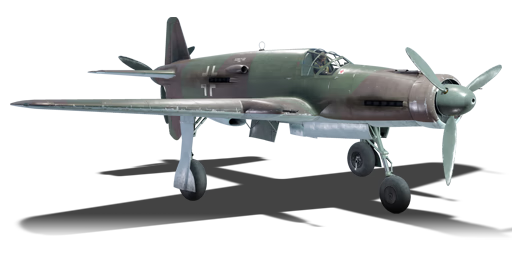
The Dornier Do 335 B-2 Pfeil (lit. "Arrow") was a dedicated "bomber destroyer" variant of the Do 335 fast bomber/attacker aircraft. In a further step to converting the Pfeil into an interceptor in accordance with the Emergency Fighter program, two examples of Do 335 was outfitted with two 20 mm MG151/20 autocannons in place of the 15 mm MG151/15 machine guns, along with a provision to carry two 300-liters drop tanks to extend its operation ranges. Little is known about its operational service other than it did not survive the war.
It was introduced in Update 1.57 "Battle March". The Do 335 B-2 can only be played as a ground attack or interceptor due to its sluggish handling. It is not advised to dogfight or even to evade pursuing enemy aircraft. However, it is normally able to deliver the first strike due to its incredible top speed in a dive.
Its three 30 mm and two 20 mm cannons are able to make short work of any enemy vehicle which may try to oppose this unique plane. Not only that, it is able to carry up to 1,000 kg of bombs. Its airframe is one of the strongest in the game. It is able to take hit after hit and can survive hard landings without too much critical damage. When the enemy is on your six o'clock, the rear engine is the most common part to be destroyed during that engagement. If the enemy is coming from the front they will very likely destroy the front engine or knock your pilot out. However, having one of the engines destroyed will not cause a large problem apart from a slower plane. Nevertheless, you should immediately disengage and return to base to repair.
General info
Flight performance
| Characteristics | Max Speed (km/h at 7,400 m) |
Max altitude (metres) |
Turn time (seconds) |
Rate of climb (metres/second) |
Take-off run (metres) | |||
|---|---|---|---|---|---|---|---|---|
| AB | RB | AB | RB | AB | RB | |||
| Stock | 747 | 724 | 27.8 | 29.1 | 5.0 | 5.0 | 500 | |
| Upgraded | 835 | 789 | 24.3 | 26.0 | 17.8 | 10.1 | ||
Details
| Features | ||||
|---|---|---|---|---|
| Combat flaps | Take-off flaps | Landing flaps | Air brakes | Arrestor gear |
| X | ✓ | ✓ | X | X |
| Limits | ||||||
|---|---|---|---|---|---|---|
| Wings (km/h) | Gear (km/h) | Flaps (km/h) | Max Static G | |||
| Combat | Take-off | Landing | + | - | ||
| N/A | 386 | 280 | ~9 | ~4 | ||
| Optimal velocities (km/h) | |||
|---|---|---|---|
| Ailerons | Rudder | Elevators | Radiator |
| < 380 | < 340 | < 400 | > 440 |
Survivability and armour
- 5 mm Steel - 2 x Ammunition protection plate
- 8 mm Steel - Behind pilot's seat
- 70 mm Bulletproof glass
Modifications and economy
Armaments
Offensive armament
The Do 335 B-2 is armed with:
- 2 x 30 mm MK 103 cannon, wing-mounted (140 rpg = 280 total)
- 1 x 30 mm MK 103 cannon, nose-mounted (70 rpg = 70 total)
- 2 x 20 mm MG 151 cannon, nose-mounted (200 rpg = 400 total)
Suspended armament
The Do 335 B-2 can be outfitted with the following ordnance:
- Without load
- 2 x 250 kg SC250JA bombs (500 kg total)
- 1 x 500 kg SC500K bomb (500 kg total)
- 1 x 500 kg SC500K bomb + 2 x 250 kg SC250JA bombs (1,000 kg total)
Usage in battles
- Air defence
The three 30 mm cannons make it easy to shoot down even the heaviest bombers the plane will face even in an up-tier. Load the anti-aircraft belts, set the gun conversion to 800 m, put the plane in a 15° climb to get to bomber altitudes quickly and you can snipe away every enemy bomber that crosses your path. Aiming the 30 mm cannons can be hard at first, but they have a relatively shallow learning curve and seeing enemies explode is quite rewarding.
- Boom & Zoom
While it does not have the capability to turn, accelerate or climb (sustained) quickly as might an energy fighting aircraft, it can be used to make quick, swooping attacks on enemy bombers, and in a limited capacity, fighters. Advantaged by its swift dive acceleration, Boom & Zoom is a viable tactic; however, prolonged engagements with enemy aircraft should be avoided, as energy fighters will quickly deplete its momentum, and turn-fighting aircraft will easily outmanoeuvre this lumbering aircraft. Instead, diving on a target with a lower energy state (it is permissible to engage some slower aircraft in level flight as the 335 can reach speeds well in excess of 450 km/h within seconds of levelling the aircraft out of a climb) and then simply running away and zoom climbing out of range if the target is not killed on the first run is a significant advantage for Do 335 pilots who wish to return home alive. It may take several runs to kill a target, even with the heavy armament possessed by this aircraft, however, momentum conservation is a key advantage of the 335, and multiple swooping attack runs disallow slow, "walking" adjustment of fire by bomber turrets, and can deny a turn-fighter an opportunity to attack, and potentially significantly drain them of energy. Targets in a higher energy state (More altitude and/or speed) should not be engaged unless you can ensure that once you have followed through with the attack run, you will be moving fast enough to avoid retaliation by the target.
Made a problematic aircraft to master by its poor manoeuvrability, both anti-bomber operations and ground strafing are a challenging task in this aircraft; however, it does have bomb capacity for 1,000 kg of ordnance and considering its speed, it is moderately capable in the role of a medium or strategic bomber aircraft. Subsequently, the ability to disrupt soft (20 mm) and hard (30 mm) ground targets far away from the initial fighter onslaught does provide some redemption for its poor anti-aircraft capabilities.
The Do 335's design flaws make it particularly inept at chasing other planes. It is nigh-impossible to try to aim while performing a dive since the nose dances around in all directions and provides no stability to the aiming reticle. Indeed, aiming at the enemy while climbing is prone to the same inaccuracy. Trying to roll the wings to enter a quick dive, e.g. to escape an approaching enemy, is more akin to turning a ship than a heavy fighter. During ground attacks, its inability to aim properly makes more of a "spray and pray" than an accurate firing platform. The most useful approach would be to dive on bombers and attempt to hit with the 30 mm cannon at a distance.
- Counter-Tactics
The Do 335 is fast in a dive but flies like a brick. Out-turning it is easy in almost all other aircraft it will face. Due to the centre-mounted cannons, it is best to avoid head-on attacks with it.
- Taking off and landing
The 'Pfeil' has a rare push-pull design, with large twin vertical stabilizers with pusher propeller mounted behind it.
- Taking Off: Taking off when fully loaded out with bombs very hard and long. Do not force the plane to climb or you will hit the vertical stabilizer and cause damage to it. The worst case scenario results in the plane crashing.
- Landing: When on final approach, make sure you slow the plane down to ~270 km/h (~170 mph) before the gear and flaps are deployed. About 30 feet from the ground, lower the engine's throttle to 0% then flare slightly, land and apply full-brakes. **If you come in too steep, you will either hit the lower vertical stabilizer or the tail, if this happens - level the plane off and still continue with your landing. However in the worst case it could cause you to spin/roll and crash. The airframe is very strong so it should still be repairable in most cases.
Manual Engine Control
| MEC elements | ||||||
|---|---|---|---|---|---|---|
| Mixer | Pitch | Radiator | Supercharger | Turbocharger | ||
| Oil | Water | Type | ||||
| Not controllable | Controllable Auto control available |
Not controllable Not auto controlled |
Controllable Auto control available |
Combined | Not controllable 1 gear |
Not controllable |
Pros and cons
Pros:
- Very tough airframe
- Very good roll rate
- Powerful armament of multiple 30 mm MK 103 and 20 mm MG 151 cannons
- Two engines in push-pull configuration: it can fly with one engine if the other one is damaged
- Great acceleration when no ordnance is equipped
- Excellent control in dives, it can dive beyond 725 km/h (450 mph) and still be able to pull out
- Excellent firepower - up to 77 mm of penetration with HVAP-T belt
- Excellent for hunting and destroying large enemy bombers
- Good choices for secondary bomb load, can carry up to 1,000 kg
- Strong WEP capability thanks to the MW-50 fuel mix
Cons:
- Large airframe
- Long take off strip required due to its heavy weight and large airframe
- Long time to deploy landing gear
- It is easy to damage the rear propeller and/or lower rudder on take off and landing
- Due to its unique configuration, it takes time to learn how to take off and land
- Rear engine overheats slightly faster
- Rear engine is more likely to be damaged during combat
- Mediocre rudder
- Mediocre handling
- Unable to dogfight any fighter aircraft due to its large airframe
History
Describe the history of the creation and combat usage of the aircraft in more detail than in the introduction. If the historical reference turns out to be too long, take it to a separate article, taking a link to the article about the vehicle and adding a block "/History" (example: https://wiki.warthunder.com/(Vehicle-name)/History) and add a link to it here using the main template. Be sure to reference text and sources by using <ref></ref>, as well as adding them at the end of the article with <references />. This section may also include the vehicle's dev blog entry (if applicable) and the in-game encyclopedia description (under === In-game description ===, also if applicable).
Media
- Skins
- Videos
See also
- Related development
External links
| Dornier Aircraft Corporation (Dornier Flugzeugwerke) | |
|---|---|
| Fighters | Do 17 Z-7 |
| Do 217 J-1 · Do 217 J-2 · Do 217 N-1 · Do 217 N-2 | |
| Do 335 A-0 · Do 335 A-1 · Do 335 B-2 | |
| Bombers | Do 17 E-1 · Do 17 Z-2 |
| Do 217 E-2 · Do 217 E-4 · Do 217 K-1 · Do 217 M-1 | |
| Jet Aircraft | Alpha Jet A** |
| Helicopters | ◄UH-1D* |
| *Licensed | |
| **Jointly manufactured with Dassault Aviation | |
| Germany strike aircraft | |
|---|---|
| Messerschmitt | |
| Bf 110 | Bf 110 C-6 · Bf 110 C-7 · Bf 110 F-2 · Bf 110 G-2 · Bf 110 G-4 |
| Me 410 | Me 410 A-1 · Me 410 A-1/U4 · Me 410 B-1 · Me 410 B-2/U4 · Me 410 B-6/R3 |
| Dornier | |
| Do 335 | Do 335 A-0 · Do 335 A-1 · Do 335 B-2 |
| Focke-Wulf | |
| Fw 190 | Fw 190 F-8 |
| Heinkel | |
| He 219 | He 219 A-7 |
| Henschel | |
| Hs 129 | Hs 129 B-2 · Hs 129 B-2 (Romania) · Hs 129 B-3 |
| Junkers | |
| Ju 87 | Ju 87 G-1 · Ju 87 G-2 |
| Foreign: | |
| USSR | ▀IL-2 (1942) |
| Germany premium aircraft | |
|---|---|
| Fighters | He 51 B-2/H · BV 155 B-1 |
| He 112 | He 112 B-1/U2 · He 112 B-2/U2 |
| Bf 109 | Flegel's Bf 109 A · Bf 109 E-7/U2 · Bf 109 G-2 |
| Fw 190 | Fw 190 A-5/U14 · Fw 190 C · Fw 190 D-13 |
| Captured | ▀Marcolin's C.R.42 CN · ▀Hawk H-75A-2 · ▀Yak-1B · ▀La-5FN · ▀P-47D-16-RE · ▀P-47D · ▀Tempest Mk V |
| Twin-engine fighters | Bf 109 Z-1 · Ju 388 J · Ta 154 A-1 |
| Jet fighters | ◄Sea Hawk Mk.100 · ◄G.91 R/4 · FFA P-16 · ◄MiG-21 SPS-K · ◊MiG-21 "Lazur-M" |
| Strike aircraft | Hs 129 B-2 (Romania) · ▀IL-2 (1942) · Bf 110 C-6 · Do 335 B-2 · He 219 A-7 · ◄Tornado IDS WTD61 · ◄Su-22M4 WTD61 |
| Bombers | Ar 196 A-3 · BV 238 · Fw 189 A-1 · He 177 A-3 · Ju 87 R-2 Libya · Ju 288 C · ▀Wellington Mk Ic |