Difference between pages "IJN Ayanami" and "USS Litchfield"
(Edits) |
(Specs-Card ArtImage added.) |
||
| Line 1: | Line 1: | ||
| − | {{Specs-Card|code= | + | {{Specs-Card |
| + | |code=us_destroyer_clemson_litchfield | ||
| + | |images={{Specs-Card-Image|GarageImage_{{PAGENAME}}.jpg|ArtImage_{{PAGENAME}}.png}} | ||
| + | }} | ||
== Description == | == Description == | ||
<!-- ''In the first part of the description, cover the history of the ship's creation and military application. In the second part, tell the reader about using this ship in the game. Add a screenshot: if a beginner player has a hard time remembering vehicles by name, a picture will help them identify the ship in question.'' --> | <!-- ''In the first part of the description, cover the history of the ship's creation and military application. In the second part, tell the reader about using this ship in the game. Add a screenshot: if a beginner player has a hard time remembering vehicles by name, a picture will help them identify the ship in question.'' --> | ||
| − | + | The '''USS Litchfield (DD-336/AG-95)''' is a member of the Clemson-class destroyer family. On January 15, 1919, the USS Litchfield was laid down from the Mare Island Navy Yard. Mrs. Martha D. Litchfield, the mother of Pharmacist's Mate Litchfield, sponsored the vessel's launch on August 12, 1919. The destroyer was commissioned on May 12, 1920. By the end of 1921, the USS Litchfield had sailed from San Diego, California, to Charleston, South Carolina. The USS Litchfield sailed from Newport, Rhode Island, to join Division 39 for service in the eastern Mediterranean Sea, arriving in Constantinople on June 28, 1922. The USS Litchfield supported humanitarian issues as well as American foreign policy. The USS Litchfield returned to the United States late in 1923, carrying the remains of World War I hero George Dilboy, who had been brought to the U.S. for reburial after his original grave had been desecrated as part of the Greco-Turkish battle. After completing her last operation on July 21, 1945, the USS Litchfield arrived in San Diego on August 9, 1945, where she was decommissioned on November 5, 1945, and removed from the Naval Vessel Register on November 28, 1945. On March 29, 1946, the Philadelphia Navy Yard completed the scrapping. | |
| − | |||
| − | The ''' | ||
| − | + | Introduced in [[Update 1.79 "Project X"]], the USS Litchfield is an early destroyer for players who want to explore the US Navy's bluewater fleet. The USS Litchfield is a fantastic starting point for basic destroyer gameplay. Since her smaller guns are precise, she is good at sinking smaller ships. She also has fair manoeuvrability for her rank and acceptable secondary guns. The USS Litchfield, on the other hand, cannot successfully deal with other destroyers as her firepower is limited and will not inflict much damage to them. Furthermore, the shell velocity is moderate, making long-range engagement difficult. Finally, there is no anti-aircraft armament, which is a significant disadvantage, especially when there are a large number of opposing aircraft present during engagements. | |
== General info == | == General info == | ||
=== Survivability and armour === | === Survivability and armour === | ||
| + | {{Specs-Fleet-Armour}} | ||
<!-- ''Talk about the vehicle's armour. Note the most well-defended and most vulnerable zones, e.g. the ammo magazine. Evaluate the composition of components and assemblies responsible for movement and manoeuvrability. Evaluate the survivability of the primary and secondary armaments separately. Don't forget to mention the size of the crew, which plays an important role in fleet mechanics. Save tips on preserving survivability for the "Usage in battles" section. If necessary, use a graphical template to show the most well-protected or most vulnerable points in the armour.'' --> | <!-- ''Talk about the vehicle's armour. Note the most well-defended and most vulnerable zones, e.g. the ammo magazine. Evaluate the composition of components and assemblies responsible for movement and manoeuvrability. Evaluate the survivability of the primary and secondary armaments separately. Don't forget to mention the size of the crew, which plays an important role in fleet mechanics. Save tips on preserving survivability for the "Usage in battles" section. If necessary, use a graphical template to show the most well-protected or most vulnerable points in the armour.'' --> | ||
| − | + | USS Litchfield has no armour grade steel on the hull, leaving her only protection as the {{Annotation|0.63 inches|16 mm}} of steel the hull is constructed from. This means that any guns {{Annotation|3 inches|76.2 mm}} and up will slice through at essentially any battle range. It will protect against 20 mm fire at all but point blank range, and 40 mm fire at medium ranges. She has fuel tanks around her engines which can provide some slight protection against low penetrating shells and small bombs, but these should not be relied on to absorb any significant amounts of damage. The magazines are placed below the fore and aft turrets, below the waterline. This leaves them out of the line of fire of most enemy vessels and allows some degree of survivability against fire, though the crew of only 150 still will usually lead to the ship being rendered ineffective relatively quickly. USS Litchfield is still more survivable than most coastal vessels, though compared to later bluewater vessels Captains should be much more wary of taking concentrated fire from enemy vessels. As for her turrets, they have {{Annotation|0.195 inches|4.97 mm}} of armour on their gunshields, which is only enough to stop rifle calibre rounds. | |
| − | |||
| − | |||
| − | |||
| − | |||
=== Mobility === | === Mobility === | ||
| + | {{Specs-Fleet-Mobility}} | ||
<!-- ''Write about the ship's mobility. Evaluate its power and manoeuvrability, rudder rerouting speed, stopping speed at full tilt, with its maximum forward and reverse speed.'' --> | <!-- ''Write about the ship's mobility. Evaluate its power and manoeuvrability, rudder rerouting speed, stopping speed at full tilt, with its maximum forward and reverse speed.'' --> | ||
| − | {{NavalMobility}} | + | {{NavalMobility |
| + | |SpeedForwardStockAB = 58 | ||
| + | |SpeedBackStockAB = 19 | ||
| + | |TurnTimeStockAB = 98.65 | ||
| + | |TurnSpeedStockAB = 41 | ||
| + | }} | ||
| + | |||
| + | Four boilers and two geared steam turbines produce 27,000 HP, allowing her a top speed of just under 65 km/h with a spaded vessel. Her rudder shift is 5.4s, which is quite workable for her battle rating and her strange gun layout. She is very average compared to other destroyers, but it serves as a good indication of what to expect for future destroyers. | ||
| − | + | === Modifications and economy === | |
| + | {{Specs-Economy}} | ||
== Armament == | == Armament == | ||
| + | {{Specs-Fleet-Armaments}} | ||
=== Primary armament === | === Primary armament === | ||
| + | {{Specs-Fleet-Primary}} | ||
<!-- ''Provide information about the characteristics of the primary armament. Evaluate their efficacy in battle based on their reload speed, ballistics and the capacity of their shells. Add a link to the main article about the weapon: <code><nowiki>{{main|Weapon name (calibre)}}</nowiki></code>. Broadly describe the ammunition available for the primary armament, and provide recommendations on how to use it and which ammunition to choose.'' --> | <!-- ''Provide information about the characteristics of the primary armament. Evaluate their efficacy in battle based on their reload speed, ballistics and the capacity of their shells. Add a link to the main article about the weapon: <code><nowiki>{{main|Weapon name (calibre)}}</nowiki></code>. Broadly describe the ammunition available for the primary armament, and provide recommendations on how to use it and which ammunition to choose.'' --> | ||
| − | + | {{main|4 inch/50 Mk.9 (102 mm)}} | |
| − | {{main| | ||
| − | |||
| − | |||
| − | + | DD-336 Clemson carries four 102 mm Mk.9 cannons. They have a HE shell and APHEBC round available to them, both of which are mediocre shells. It's worthwhile to stay with the HE shell as this Clemson doesn't see well-armoured enemies, so the extra HE filler over the APHEBC round is a bonus. They have a traverse speed of 12 degrees per second, which is good compared to other early destroyers. A reload speed of 7.93 seconds with a stock crew or 6.1 seconds with a fully aced crew is decent, but slow compared to other destroyers of a slightly higher rank. Her shells are decently 'floaty' and require good leading at range, and you will be outgunned by almost every other destroyer of a higher BR. With a maximum elevation of 20 degrees, you cannot target enemy planes effectively. The gun mounts have 5 mm of anti-fragmentation armour on each turret. With 1 gun in the front, 1 in the rear, and 1 on each side, you can only bring 3 of 4 guns to a broadside; but, you can swing back and forth to use each side gun effectively. | |
| − | + | {{:4 inch/50 Mk.9 (102 mm)/Ammunition|4 inch HC Mk.15, 4 inch SP Common, 4 inch HC Mk.15 (base fuze)}} | |
=== Secondary armament === | === Secondary armament === | ||
| + | {{Specs-Fleet-Secondary}} | ||
<!-- ''Some ships are fitted with weapons of various calibres. Secondary armaments are defined as weapons chosen with the control <code>Select secondary weapon</code>. Evaluate the secondary armaments and give advice on how to use them. Describe the ammunition available for the secondary armament. Provide recommendations on how to use them and which ammunition to choose. Remember that any anti-air armament, even heavy calibre weapons, belong in the next section. If there is no secondary armament, remove this section.'' --> | <!-- ''Some ships are fitted with weapons of various calibres. Secondary armaments are defined as weapons chosen with the control <code>Select secondary weapon</code>. Evaluate the secondary armaments and give advice on how to use them. Describe the ammunition available for the secondary armament. Provide recommendations on how to use them and which ammunition to choose. Remember that any anti-air armament, even heavy calibre weapons, belong in the next section. If there is no secondary armament, remove this section.'' --> | ||
| − | {{main| | + | {{main|3 inch/23 Mk.4 (76 mm)}} |
| − | |||
| − | |||
| − | |||
| − | |||
| − | |||
| − | |||
| − | |||
| − | |||
| − | + | This Clemson has a single 3-inch Mk.24 gun on the rear. It can carry HE or APHEBC shells, but as it's a secondary, you may as well use the HE since the AI will gun it for you. The 3 inch Mk.24 reloads in 6.7s with a stock crew and 3.35s with a fully aced crew, making it surprisingly good for dealing with small boats that would out-traverse your main armament. This gun has a traverse speed of 25 degrees per second, so it will be your backup against smaller ships. It also elevates at 25 degrees per second and has a maximum elevation of 70 degrees. The AI may snipe a plane if you're lucky, but that'll be your only AA. | |
| − | + | {{:3 inch/23 Mk.4 (76 mm)/Ammunition|3 inch AA Mk.26, 3 inch Common Mk.3}} | |
| − | === | + | === Additional armament === |
| − | <!-- '' | + | {{Specs-Fleet-Additional}} |
| − | {{main| | + | <!-- ''Describe the available additional armaments of the ship: depth charges, mines, torpedoes. Talk about their positions, available ammunition and launch features such as dead zones of torpedoes. If there is no additional armament, remove this section.'' --> |
| + | {{main|21 in Mk.8 (533 mm)}} | ||
| − | + | She carries four triple torpedo launchers, utilizing the 21-inch Mk.8 torpedo. Their firing arcs are pretty good, and the sheer number of torpedoes and their positioning - two mounts on each side - means you can zig-zag to drop all twelve torpedoes. The Mk.8 has a good range of 9.1 km, but a very slow speed of 50 km/h and a mediocre explosive load of 146 kg. | |
== Usage in battles == | == Usage in battles == | ||
<!-- ''Describe the technique of using this ship, the characteristics of her use in a team and tips on strategy. Abstain from writing an entire guide – don't try to provide a single point of view, but give the reader food for thought. Talk about the most dangerous opponents for this vehicle and provide recommendations on fighting them. If necessary, note the specifics of playing with this vehicle in various modes (AB, RB, SB).'' --> | <!-- ''Describe the technique of using this ship, the characteristics of her use in a team and tips on strategy. Abstain from writing an entire guide – don't try to provide a single point of view, but give the reader food for thought. Talk about the most dangerous opponents for this vehicle and provide recommendations on fighting them. If necessary, note the specifics of playing with this vehicle in various modes (AB, RB, SB).'' --> | ||
| − | |||
| − | |||
| − | |||
| − | + | She is good as a learning platform for basic destroyer play. Good at sinking smaller ships because her smaller guns are accurate, with decent traverse speed for the BR and a passable secondary gun. She cannot effectively deal with other destroyers however, as her guns are small and will fail to do much damage to them. Her torpedoes will do good work for area saturation, and using the rudder to swing the ship back and forth will allow you to put most guns on target and use the good torpedo arcs. | |
| − | |||
| − | |||
| − | |||
| − | |||
| − | |||
| − | |||
| − | |||
| − | |||
| − | |||
| − | |||
| − | |||
| − | |||
| − | |||
| − | |||
| − | |||
| − | |||
| − | |||
| − | |||
| − | |||
| − | |||
| − | |||
| − | |||
| − | |||
| − | |||
| − | |||
| − | |||
| − | |||
| − | |||
| − | |||
| − | |||
| − | |||
| − | |||
| − | |||
| − | |||
| − | |||
| − | |||
| − | |||
| − | |||
| − | |||
| − | |||
| − | |||
=== Pros and cons === | === Pros and cons === | ||
<!-- ''Summarise and briefly evaluate the vehicle in terms of its characteristics and combat effectiveness. Mark its pros and cons in the bulleted list. Try not to use more than 6 points for each of the characteristics. Avoid using categorical definitions such as "bad", "good" and the like - use substitutions with softer forms such as "inadequate" and "effective".'' --> | <!-- ''Summarise and briefly evaluate the vehicle in terms of its characteristics and combat effectiveness. Mark its pros and cons in the bulleted list. Try not to use more than 6 points for each of the characteristics. Avoid using categorical definitions such as "bad", "good" and the like - use substitutions with softer forms such as "inadequate" and "effective".'' --> | ||
| + | [[File:Radar chart Clemson (DD-336).png|thumb|Destroyers abilities of the USS Litchfield.]] | ||
'''Pros:''' | '''Pros:''' | ||
| − | * | + | * Six torpedoes per side |
| − | * | + | * Turret traverse is decent compared to other first-generation destroyers |
| + | * Decent firing arcs | ||
'''Cons:''' | '''Cons:''' | ||
| − | * | + | * Slow shell velocity and rate of fire, making long-shots difficult |
| − | * | + | * No anti-aircraft guns, vulnerable to any aircraft |
| − | * | + | * No armour |
| + | * Firepower is woefully inadequate for dealing with later destroyers | ||
== History == | == History == | ||
<!-- ''Describe the history of the creation and combat usage of the ship in more detail than in the introduction. If the historical reference turns out to be too long, take it to a separate article, taking a link to the article about the ship and adding a block "/History" (example: <nowiki>https://wiki.warthunder.com/(Ship-name)/History</nowiki>) and add a link to it here using the <code>main</code> template. Be sure to reference text and sources by using <code><nowiki><ref></ref></nowiki></code>, as well as adding them at the end of the article with <code><nowiki><references /></nowiki></code>. This section may also include the ship's dev blog entry (if applicable) and the in-game encyclopedia description (under <code><nowiki>=== In-game description ===</nowiki></code>, also if applicable).'' --> | <!-- ''Describe the history of the creation and combat usage of the ship in more detail than in the introduction. If the historical reference turns out to be too long, take it to a separate article, taking a link to the article about the ship and adding a block "/History" (example: <nowiki>https://wiki.warthunder.com/(Ship-name)/History</nowiki>) and add a link to it here using the <code>main</code> template. Be sure to reference text and sources by using <code><nowiki><ref></ref></nowiki></code>, as well as adding them at the end of the article with <code><nowiki><references /></nowiki></code>. This section may also include the ship's dev blog entry (if applicable) and the in-game encyclopedia description (under <code><nowiki>=== In-game description ===</nowiki></code>, also if applicable).'' --> | ||
| − | The | + | The Clemson class of destroyers were built between 1918 and 1922, as the last "flush-decker" type in the US navy, an evolution of the Wickes class. They were designed to do anti-submarine combat better than preceding destroyer classes, should the US get involved in another naval war after WW I. The Clemson had the same armament as the Wickes, however, there were provisions for 5-inch guns, which only seven destroyers received. DD-336 in-game, USS Litchfield, was commissioned in May 1920. She helped with humanitarian efforts in Greece and Armenia and was overhauled in 1923. Joining Destroyer Squadron 12, her crew earned money for doing very effective short-range fire. In May 1937, she was designated flagship of Submarine Squadron 4 and participated in drills at and nearby Pearl Harbor. After the attack on Pearl Harbor, she escorted US submarines near the base and conducted anti-submarine patrols. In 1944, she performed convoy escorts to Midway and Eniwetok, rescued aircraft crew, performed exercises, and in at least one case salvaged an aircraft. After escorting a convoy to Guam in March 1945, she was redesignated an auxiliary; she was ordered to be decommissioned in November 1945 and was scrapped in March 1946. |
== Media == | == Media == | ||
| − | ''Excellent additions to the article would be video guides, screenshots from the game, and photos.'' | + | <!-- ''Excellent additions to the article would be video guides, screenshots from the game, and photos.'' --> |
| + | |||
| + | ;Skins | ||
| + | |||
| + | * [https://live.warthunder.com/feed/camouflages/?vehicle=us_destroyer_clemson_litchfield Skins and camouflages for the {{PAGENAME}} from live.warthunder.com.] | ||
== See also == | == See also == | ||
| − | ''Links to articles on the War Thunder Wiki that you think will be useful for the reader, for example:'' | + | <!-- ''Links to articles on the War Thunder Wiki that you think will be useful for the reader, for example:'' |
* ''reference to the series of the ship;'' | * ''reference to the series of the ship;'' | ||
| − | * ''links to approximate analogues of other nations and research trees.'' | + | * ''links to approximate analogues of other nations and research trees.'' --> |
| + | |||
| + | ;Related development | ||
| + | |||
| + | * [[Clemson (Family)]] | ||
== External links == | == External links == | ||
<!-- ''Paste links to sources and external resources, such as:'' | <!-- ''Paste links to sources and external resources, such as:'' | ||
* ''topic on the official game forum;'' | * ''topic on the official game forum;'' | ||
| − | |||
* ''other literature.'' --> | * ''other literature.'' --> | ||
| − | * [[Wikipedia: | + | *[[Wikipedia:USS_Litchfield_(DD-336)|[Wikipedia] USS Litchfield (DD-336)]] |
| − | * [[Wikipedia: | + | *[[Wikipedia:Clemson-class_destroyer|[Wikipedia] Clemson-class destroyer]] |
| − | {{ | + | {{ShipManufacturer Mare Island Navy Yard}} |
| + | {{USA destroyers}} | ||
Latest revision as of 12:16, 4 May 2024


Contents
Description
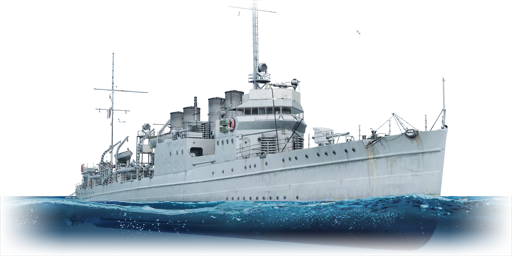
The USS Litchfield (DD-336/AG-95) is a member of the Clemson-class destroyer family. On January 15, 1919, the USS Litchfield was laid down from the Mare Island Navy Yard. Mrs. Martha D. Litchfield, the mother of Pharmacist's Mate Litchfield, sponsored the vessel's launch on August 12, 1919. The destroyer was commissioned on May 12, 1920. By the end of 1921, the USS Litchfield had sailed from San Diego, California, to Charleston, South Carolina. The USS Litchfield sailed from Newport, Rhode Island, to join Division 39 for service in the eastern Mediterranean Sea, arriving in Constantinople on June 28, 1922. The USS Litchfield supported humanitarian issues as well as American foreign policy. The USS Litchfield returned to the United States late in 1923, carrying the remains of World War I hero George Dilboy, who had been brought to the U.S. for reburial after his original grave had been desecrated as part of the Greco-Turkish battle. After completing her last operation on July 21, 1945, the USS Litchfield arrived in San Diego on August 9, 1945, where she was decommissioned on November 5, 1945, and removed from the Naval Vessel Register on November 28, 1945. On March 29, 1946, the Philadelphia Navy Yard completed the scrapping.
Introduced in Update 1.79 "Project X", the USS Litchfield is an early destroyer for players who want to explore the US Navy's bluewater fleet. The USS Litchfield is a fantastic starting point for basic destroyer gameplay. Since her smaller guns are precise, she is good at sinking smaller ships. She also has fair manoeuvrability for her rank and acceptable secondary guns. The USS Litchfield, on the other hand, cannot successfully deal with other destroyers as her firepower is limited and will not inflict much damage to them. Furthermore, the shell velocity is moderate, making long-range engagement difficult. Finally, there is no anti-aircraft armament, which is a significant disadvantage, especially when there are a large number of opposing aircraft present during engagements.
General info
Survivability and armour
USS Litchfield has no armour grade steel on the hull, leaving her only protection as the 0.63 inches of steel the hull is constructed from. This means that any guns 3 inches and up will slice through at essentially any battle range. It will protect against 20 mm fire at all but point blank range, and 40 mm fire at medium ranges. She has fuel tanks around her engines which can provide some slight protection against low penetrating shells and small bombs, but these should not be relied on to absorb any significant amounts of damage. The magazines are placed below the fore and aft turrets, below the waterline. This leaves them out of the line of fire of most enemy vessels and allows some degree of survivability against fire, though the crew of only 150 still will usually lead to the ship being rendered ineffective relatively quickly. USS Litchfield is still more survivable than most coastal vessels, though compared to later bluewater vessels Captains should be much more wary of taking concentrated fire from enemy vessels. As for her turrets, they have 0.195 inches of armour on their gunshields, which is only enough to stop rifle calibre rounds.
Mobility
| Mobility Characteristics | |||||
|---|---|---|---|---|---|
| Game Mode | Upgrade Status | Maximum Speed (km/h) | Turn Time (s) | Turn Radius (m) | |
| Forward | Reverse | ||||
| AB | Stock | 58 | 19 | ~98.65 | ~178.81 |
| Upgraded | ___ | ___ | |||
| RB/SB | |||||
| Upgraded | ___ | ___ | |||
Four boilers and two geared steam turbines produce 27,000 HP, allowing her a top speed of just under 65 km/h with a spaded vessel. Her rudder shift is 5.4s, which is quite workable for her battle rating and her strange gun layout. She is very average compared to other destroyers, but it serves as a good indication of what to expect for future destroyers.
Modifications and economy
Armament
Primary armament
DD-336 Clemson carries four 102 mm Mk.9 cannons. They have a HE shell and APHEBC round available to them, both of which are mediocre shells. It's worthwhile to stay with the HE shell as this Clemson doesn't see well-armoured enemies, so the extra HE filler over the APHEBC round is a bonus. They have a traverse speed of 12 degrees per second, which is good compared to other early destroyers. A reload speed of 7.93 seconds with a stock crew or 6.1 seconds with a fully aced crew is decent, but slow compared to other destroyers of a slightly higher rank. Her shells are decently 'floaty' and require good leading at range, and you will be outgunned by almost every other destroyer of a higher BR. With a maximum elevation of 20 degrees, you cannot target enemy planes effectively. The gun mounts have 5 mm of anti-fragmentation armour on each turret. With 1 gun in the front, 1 in the rear, and 1 on each side, you can only bring 3 of 4 guns to a broadside; but, you can swing back and forth to use each side gun effectively.
| Penetration statistics | |||||||
|---|---|---|---|---|---|---|---|
| Ammunition | Type of warhead |
Penetration @ 0° Angle of Attack (mm) | |||||
| 1,000 m | 2,500 m | 5,000 m | 7,500 m | 10,000 m | 15,000 m | ||
| HC Mk.15 | HE | 16 | 16 | 16 | 16 | 16 | 16 |
| SP Common | SP Common | 98 | 76 | 51 | 35 | 25 | 21 |
| HC Mk.15 (base fuse) | HE | 50 | 39 | 26 | 18 | 16 | 16 |
| Shell details | ||||||||||||
|---|---|---|---|---|---|---|---|---|---|---|---|---|
| Ammunition | Type of warhead |
Velocity (m/s) |
Projectile mass (kg) |
Fuse delay (s) |
Fuse sensitivity (mm) |
Explosive mass (TNT equivalent) (g) |
Ricochet | |||||
| 0% | 50% | 100% | ||||||||||
| HC Mk.15 | HE | 884 | 14.97 | 0 | 0.1 | 1,210 | 79° | 80° | 81° | |||
| SP Common | SP Common | 884 | 14.97 | 0.01 | 5 | 519.4 | 48° | 63° | 71° | |||
| HC Mk.15 (base fuse) | HE | 884 | 14.97 | 0.015 | 0.1 | 1,210 | 79° | 80° | 81° | |||
Secondary armament
This Clemson has a single 3-inch Mk.24 gun on the rear. It can carry HE or APHEBC shells, but as it's a secondary, you may as well use the HE since the AI will gun it for you. The 3 inch Mk.24 reloads in 6.7s with a stock crew and 3.35s with a fully aced crew, making it surprisingly good for dealing with small boats that would out-traverse your main armament. This gun has a traverse speed of 25 degrees per second, so it will be your backup against smaller ships. It also elevates at 25 degrees per second and has a maximum elevation of 70 degrees. The AI may snipe a plane if you're lucky, but that'll be your only AA.
| Penetration statistics | |||||||
|---|---|---|---|---|---|---|---|
| Ammunition | Type of warhead |
Penetration @ 0° Angle of Attack (mm) | |||||
| 100 m | 1,000 m | 2,000 m | 3,000 m | 4,000 m | 5,000 m | ||
| AA Mk.26 | HE-TF | 7 | 7 | 7 | 7 | 7 | 7 |
| Common Mk.3 | Common | 58 | 47 | 37 | 30 | 25 | 21 |
| Shell details | ||||||||||||
|---|---|---|---|---|---|---|---|---|---|---|---|---|
| Ammunition | Type of warhead |
Velocity (m/s) |
Projectile mass (kg) |
Fuse delay (m) |
Fuse sensitivity (mm) |
Explosive mass (TNT equivalent) (g) |
Ricochet | |||||
| 0% | 50% | 100% | ||||||||||
| AA Mk.26 | HE-TF | 503 | 5.9 | 0 | 0.1 | 340 | 79° | 80° | 81° | |||
| Common Mk.3 | Common | 503 | 5.9 | 1.6 | 8 | 62 | 47° | 60° | 65° | |||
Additional armament
She carries four triple torpedo launchers, utilizing the 21-inch Mk.8 torpedo. Their firing arcs are pretty good, and the sheer number of torpedoes and their positioning - two mounts on each side - means you can zig-zag to drop all twelve torpedoes. The Mk.8 has a good range of 9.1 km, but a very slow speed of 50 km/h and a mediocre explosive load of 146 kg.
Usage in battles
She is good as a learning platform for basic destroyer play. Good at sinking smaller ships because her smaller guns are accurate, with decent traverse speed for the BR and a passable secondary gun. She cannot effectively deal with other destroyers however, as her guns are small and will fail to do much damage to them. Her torpedoes will do good work for area saturation, and using the rudder to swing the ship back and forth will allow you to put most guns on target and use the good torpedo arcs.
Pros and cons
.png)
Pros:
- Six torpedoes per side
- Turret traverse is decent compared to other first-generation destroyers
- Decent firing arcs
Cons:
- Slow shell velocity and rate of fire, making long-shots difficult
- No anti-aircraft guns, vulnerable to any aircraft
- No armour
- Firepower is woefully inadequate for dealing with later destroyers
History
The Clemson class of destroyers were built between 1918 and 1922, as the last "flush-decker" type in the US navy, an evolution of the Wickes class. They were designed to do anti-submarine combat better than preceding destroyer classes, should the US get involved in another naval war after WW I. The Clemson had the same armament as the Wickes, however, there were provisions for 5-inch guns, which only seven destroyers received. DD-336 in-game, USS Litchfield, was commissioned in May 1920. She helped with humanitarian efforts in Greece and Armenia and was overhauled in 1923. Joining Destroyer Squadron 12, her crew earned money for doing very effective short-range fire. In May 1937, she was designated flagship of Submarine Squadron 4 and participated in drills at and nearby Pearl Harbor. After the attack on Pearl Harbor, she escorted US submarines near the base and conducted anti-submarine patrols. In 1944, she performed convoy escorts to Midway and Eniwetok, rescued aircraft crew, performed exercises, and in at least one case salvaged an aircraft. After escorting a convoy to Guam in March 1945, she was redesignated an auxiliary; she was ordered to be decommissioned in November 1945 and was scrapped in March 1946.
Media
- Skins
See also
- Related development
External links
| Mare Island Navy Yard | |
|---|---|
| Gun Destroyers (DD) | |
| Clemson-class | USS Litchfield |
| USA destroyers | |
|---|---|
| Clemson-class | USS Welborn C. Wood · USS Barker · USS Litchfield |
| Farragut-class | USS Aylwin |
| Bagley-class | USS Bagley |
| Porter-class | USS Porter · USS Phelps · USS Moffett |
| Somers-class | USS Somers · USS Davis |
| Fletcher-class | USS Fletcher · USS Bennion · USS Cowell |
| Allen M. Sumner-class | USS Sumner |
| Gearing-class | USS Gearing · USS Frank Knox |
| Mitscher-class | USS Mitscher · USS Wilkinson |