Difference between pages "P-43A-1" and "PV-2D"
(→Flight performance) |
U156279180 (talk | contribs) (Tag: Visual edit) |
||
| Line 1: | Line 1: | ||
{{Specs-Card | {{Specs-Card | ||
| − | |code= | + | |code=pv_2d |
| − | | | + | |images={{Specs-Card-Image|GarageImage_{{PAGENAME}}.jpg}} |
| − | | | + | |market=PV-2D Harpoon (USA) |
| − | |||
| − | |||
| − | |||
| − | | | ||
| − | |||
}} | }} | ||
== Description == | == Description == | ||
<!-- ''In the description, the first part should be about the history of and the creation and combat usage of the aircraft, as well as its key features. In the second part, tell the reader about the aircraft in the game. Insert a screenshot of the vehicle, so that if the novice player does not remember the vehicle by name, he will immediately understand what kind of vehicle the article is talking about.'' --> | <!-- ''In the description, the first part should be about the history of and the creation and combat usage of the aircraft, as well as its key features. In the second part, tell the reader about the aircraft in the game. Insert a screenshot of the vehicle, so that if the novice player does not remember the vehicle by name, he will immediately understand what kind of vehicle the article is talking about.'' --> | ||
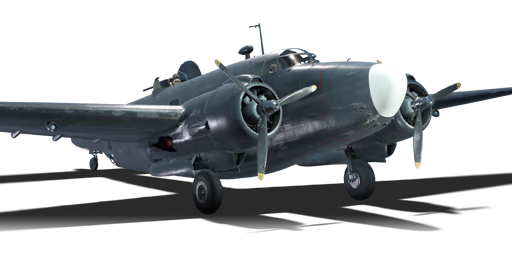
| − | + | The Lockheed PV-2 "Harpoon" was a significant development from the PV-1 "Ventura". The Harpoon, much like the name implies, was intended for maritime duties. One of the biggest complaints about the PV-1 was its lacklustre takeoff performance. To fix that, the PV-2 featured a longer wingspan to increase lift. Further modifications included more provisions for fuel, the removal of the bombardier's position, and other air frame changes. The R-2800-31 Double Wasp engine was kept in place from the Ventura. Performance was expected to be a bit worse except for range and take-off due to the extra fuel provisions and wing change. During initial testing, it was found that the wings would wrinkle, and another completely new redesign was needed to fix the issue. After the problem was remedied, the PV-2 Harpoon was quite popular within service and was also exported to other countries like Brazil and New Zealand. | |
| − | |||
| − | The | ||
| − | |||
| − | |||
| − | |||
| − | |||
| + | The '''{{Specs|name}}''' was introduced in [[Update 1.67 "Assault"]] as a reward for the [[wt:en/news/4648-special-war-thunder-chronicles-en/|2017 World War Two: Chronicle]] event. It is quite a rare aircraft but packs a much more powerful punch compared to its predecessor, the B-34 "Lexington". It features a much larger bomb load capacity, more defensive armament, and an incredible eight offensive 12.7 mm machine guns. Unfortunately, the Harpoon does not receive late-war .50 cal belts. However, it does receive two belts (stealth and universal), which have a belt composition of 4 out of 5 rounds being incendinary or AP-I. With its bomber spawn and flight performance, players can easily bomb targets before switching to attack other enemy bombers or fighters. Thanks to its flaps, the Harpoon can turn tight, which can surprise many enemy fighters. Overall, the PV-2D Harpoon is an excellent aircraft due to its numerous capabilities. | ||
== General info == | == General info == | ||
=== Flight performance === | === Flight performance === | ||
| − | <! | + | {{Specs-Avia-Flight}} |
| + | <!-- ''Describe how the aircraft behaves in the air. Speed, manoeuvrability, acceleration and allowable loads - these are the most important characteristics of the vehicle.'' --> | ||
| − | {| class="wikitable" style="text-align:center" | + | {| class="wikitable" style="text-align:center" width="70%" |
! rowspan="2" | Characteristics | ! rowspan="2" | Characteristics | ||
| − | ! colspan="2" | Max Speed<br>(km/h at | + | ! colspan="2" | Max Speed<br>(km/h at 4,267 m) |
! rowspan="2" | Max altitude<br>(metres) | ! rowspan="2" | Max altitude<br>(metres) | ||
! colspan="2" | Turn time<br>(seconds) | ! colspan="2" | Turn time<br>(seconds) | ||
| Line 35: | Line 26: | ||
|- | |- | ||
! Stock | ! Stock | ||
| − | | | + | | 448 || 435 || rowspan="2" | {{Specs|ceiling}} || 29.2 || 30.1 || 8.9 || 8.9 || rowspan="2" | 549 |
|- | |- | ||
! Upgraded | ! Upgraded | ||
| − | | | + | | 513 || 478 || 26.9 || 28.0 || 16.2 || 12.0 |
|- | |- | ||
|} | |} | ||
==== Details ==== | ==== Details ==== | ||
| − | {| class="wikitable" style="text-align:center" | + | {| class="wikitable" style="text-align:center" width="50%" |
|- | |- | ||
! colspan="5" | Features | ! colspan="5" | Features | ||
| Line 53: | Line 44: | ||
|} | |} | ||
| − | {| class="wikitable" style="text-align:center" | + | {| class="wikitable" style="text-align:center" width="50%" |
|- | |- | ||
! colspan="7" | Limits | ! colspan="7" | Limits | ||
| Line 64: | Line 55: | ||
! Combat !! Take-off !! Landing !! + !! - | ! Combat !! Take-off !! Landing !! + !! - | ||
|- | |- | ||
| − | | | + | | 601 <!-- {{Specs|destruction|body}} --> || {{Specs|destruction|gear}} || 326 || 309 || 222 || ~5 || ~3 |
|- | |- | ||
|} | |} | ||
| Line 74: | Line 65: | ||
! Ailerons !! Rudder !! Elevators !! Radiator | ! Ailerons !! Rudder !! Elevators !! Radiator | ||
|- | |- | ||
| − | | < | + | | < 260 || < 290 || < 320 || > 337 |
| − | |||
| − | |||
| − | |||
| − | |||
| − | |||
| − | |||
| − | |||
| − | |||
| − | |||
| − | |||
| − | |||
| − | |||
|- | |- | ||
|} | |} | ||
=== Survivability and armour === | === Survivability and armour === | ||
| + | {{Specs-Avia-Armour}} | ||
<!-- ''Examine the survivability of the aircraft. Note how vulnerable the structure is and how secure the pilot is, whether the fuel tanks are armoured, etc. Describe the armour, if there is any, and also mention the vulnerability of other critical aircraft systems.'' --> | <!-- ''Examine the survivability of the aircraft. Note how vulnerable the structure is and how secure the pilot is, whether the fuel tanks are armoured, etc. Describe the armour, if there is any, and also mention the vulnerability of other critical aircraft systems.'' --> | ||
| − | * | + | * 12.7 mm Steel - Armour plate cockpit, in front of the pilot |
| − | * | + | * 12.7 mm Steel - Armour plate cockpit, behind the pilot |
| − | + | * 12.7 mm Steel - Armour plate cockpit, behind radio operator/navigator | |
| − | + | * 12.7 mm Steel - Armour plate - tail section and ventral gunner protection | |
| + | * 12.7 mm Steel - Armour plate - dorsal gunner protective plate | ||
| + | * Fuel tanks at wing roots to middle of wing | ||
| − | + | === Modifications and economy === | |
| + | {{Specs-Economy}} | ||
== Armaments == | == Armaments == | ||
| + | {{Specs-Avia-Armaments}} | ||
=== Offensive armament === | === Offensive armament === | ||
| + | {{Specs-Avia-Offensive}} | ||
<!-- ''Describe the offensive armament of the aircraft, if any. Describe how effective the cannons and machine guns are in a battle, and also what belts or drums are better to use. If there is no offensive weaponry, delete this subsection.'' --> | <!-- ''Describe the offensive armament of the aircraft, if any. Describe how effective the cannons and machine guns are in a battle, and also what belts or drums are better to use. If there is no offensive weaponry, delete this subsection.'' --> | ||
{{main|M2 Browning (12.7 mm)}} | {{main|M2 Browning (12.7 mm)}} | ||
| Line 107: | Line 92: | ||
The '''''{{PAGENAME}}''''' is armed with: | The '''''{{PAGENAME}}''''' is armed with: | ||
| − | * | + | * 8 x 12.7 mm M2 Browning machine guns, chin-mounted (250 rpg = 2,000 total) |
| − | * 2 x 12.7 mm M2 Browning machine guns | + | |
| + | === Suspended armament === | ||
| + | {{Specs-Avia-Suspended}} | ||
| + | <!-- ''Describe the aircraft's suspended armament: additional cannons under the wings, bombs, rockets and torpedoes. This section is especially important for bombers and attackers. If there is no suspended weaponry remove this subsection.'' --> | ||
| + | {{main|AN-M57 (250 lb)|AN-M64A1 (500 lb)|AN-M65A1 (1,000 lb)}} | ||
| + | {{main|HVAR|Tiny Tim|Mk.13-6 Case (2,216 lb)|Type A Mark I mine|M2 Browning (12.7 mm)}} | ||
| + | |||
| + | The '''''{{PAGENAME}}''''' can be outfitted with the following ordnance: | ||
| + | |||
| + | * 6 x 250 lb AN-M57 bombs (1,500 lb total) | ||
| + | * 8 x HVAR rockets | ||
| + | * 1 x 2,216 lb Mk.13-6 Case torpedo | ||
| + | * 6 x 500 lb AN-M64A1 bombs (3,000 lb total) | ||
| + | * 6 x 1,000 lb AN-M65A1 bombs (6,000 lb total) | ||
| + | * 6 x Type A Mark I mines | ||
| + | * 2 x Tiny Tim rockets | ||
| + | * 4 x 12.7 mm M2 Browning machine guns (340 rpg = 1,360 total) | ||
| + | |||
| + | Note: Gunpods are fired separately from nose armaments if fired via '''"Additional guns"''' keybinds. | ||
| + | |||
| + | === Defensive armament === | ||
| + | {{Specs-Avia-Defensive}} | ||
| + | <!-- ''Defensive armament with turret machine guns or cannons, crewed by gunners. Examine the number of gunners and what belts or drums are better to use. If defensive weaponry is not available, remove this subsection.'' --> | ||
| + | {{main|M2 Browning (12.7 mm)}} | ||
| − | + | The '''''{{PAGENAME}}''''' is defended by: | |
| − | + | * 2 x 12.7 mm M2 Browning machine guns, dorsal turret (400 rpg = 800 total) | |
| + | * 2 x 12.7 mm M2 Browning machine guns, ventral turret (1,000 rpg = 2,000 total) | ||
== Usage in battles == | == Usage in battles == | ||
<!-- ''Describe the tactics of playing in the aircraft, the features of using aircraft in a team and advice on tactics. Refrain from creating a "guide" - do not impose a single point of view, but instead, give the reader food for thought. Examine the most dangerous enemies and give recommendations on fighting them. If necessary, note the specifics of the game in different modes (AB, RB, SB).'' --> | <!-- ''Describe the tactics of playing in the aircraft, the features of using aircraft in a team and advice on tactics. Refrain from creating a "guide" - do not impose a single point of view, but instead, give the reader food for thought. Examine the most dangerous enemies and give recommendations on fighting them. If necessary, note the specifics of the game in different modes (AB, RB, SB).'' --> | ||
| − | + | The PV-2D Harpoon is a bomber and should be played as such. Its gigantic and versatile payload options allow for enough power against ground/naval targets and bases. The eight nose-mounted 12.7 mm machine guns deal excellent damage, and can be used offensively with the dorsal turret able to point forward. Though the gunners provide ample top and bottom protection, the tail of the vehicle is a blind spot to the two turret gunners and thus a tailing pursuant would be a priority threat. | |
| − | + | It is also viable for bomber hunting due to the bomber spawn and its offensive armaments. Engaging unsuspecting fighters is also good, provided that you utilise BnZing and extend away. If your nose guns are out, consider using your dorsal for emergency shooting. Without an arrestor hook, you must land on carriers with some risk. Approach low and slow, use your flaps to slow down more and land on the deck without deploying your gear. Your plane won't break, the fuselage and engines will eat the brunt of impact. Same applies to landing on ground, you can do a soft belly landing without dying. | |
| − | + | If you do engage, try to drag the enemy to ground level. Dragging hostiles down is great for your team to pick off, and you can force pursuers to your tail by diving down. Dogfighting is not encouraged, but it can turn on a dime occasionally. | |
| − | + | '''Enemies worth noting:''' | |
| − | + | [[Yak-2 KABB]]: Do not think that the {{PAGENAME}} can confidently outmanoeuvre this plane just because it is twin-engined. The Yak-2 has an amazing turn rate for a heavy fighter, thus the {{PAGENAME}} must avoid turning with it, if not dogfighting with it in general. It bears a pair of ShVAK cannons that can easily damage vital parts like engine or cooling systems. It has green camo, greatly resembling an Me 410 but with an H-tail like a Bf 110's. | |
| − | + | [[ZSD63]]: Though it is hard to identify specific SPAA vehicles on the ground from the air (especially when they are shooting tracers at the plane), if a ZSD63 is identified, avoid it at all costs and '''do not''' attempt head-ons with it, ever. It can easily snap a wing off by causally putting a short burst in the {{PAGENAME}}'s flight path. Don't even get close to it unless it is occupied with another friendly or if the {{PAGENAME}} is equipped with a bomb that it can use. One identifying feature of the ZSD63 is its rather boxy and tall hull with a geometric turret sitting at the back, slightly similar to a Wirbelwind's. The firing manner is also distinctive: the sound and green tracers are very rapid, much like a buzz saw, but then it will remain silent for half a minute reloading. Note that an experienced ZSD player will hold its fire or shoot in single salvos with long halts between, making it look like that it's reloading. Armour-piercing belt is recommended since their high penetration can tear through the ZSD's armour with ease and knock out its crews. | |
| − | |||
| − | |||
| − | |||
| − | |||
| − | |||
| − | |||
=== Manual Engine Control === | === Manual Engine Control === | ||
| Line 147: | Line 150: | ||
! Oil !! Water !! Type | ! Oil !! Water !! Type | ||
|- | |- | ||
| − | | Controllable || Controllable<br>Not auto controlled || Controllable<br>Not auto controlled || Controllable<br>Not auto controlled || Separate || | + | | Controllable || Controllable<br>Not auto controlled || Controllable<br>Not auto controlled || Controllable<br>Not auto controlled || Separate || Controllable<br>2 gears || Not controllable |
|- | |- | ||
|} | |} | ||
| − | |||
| − | |||
| − | |||
| − | |||
| − | |||
| − | |||
| − | |||
| − | |||
| − | |||
| − | |||
| − | |||
| − | |||
| − | |||
| − | |||
| − | |||
| − | |||
| − | |||
| − | |||
| − | |||
| − | |||
| − | |||
| − | |||
| − | |||
| − | |||
| − | |||
| − | |||
| − | |||
| − | |||
| − | |||
| − | |||
| − | |||
| − | |||
| − | |||
| − | |||
| − | |||
| − | |||
| − | |||
=== Pros and cons === | === Pros and cons === | ||
| Line 193: | Line 159: | ||
'''Pros:''' | '''Pros:''' | ||
| − | * | + | * Very deadly offensive armament with plenty of ammunition |
| − | * | + | * Effective defensive armament with good coverage over rear section of aircraft |
| − | * | + | * The dorsal turret can swivel 360 degrees and even fire at targets off the nose of the plane |
| − | * | + | * Defensive armament has lots of ammo |
| − | * | + | * Good acceleration overall |
| − | * Good | + | * Acceptable climb rate |
| − | * | + | * Good energy retention in turns due to heavy weight(But do not turn too much, else you bleed all your energy) |
| + | * Large and versatile payload options | ||
'''Cons:''' | '''Cons:''' | ||
| − | * | + | * Huge airframe: prone to damage |
| − | * | + | * Big tail section is prone to attacks, usually crippling tail control |
| − | + | * Belly is a blindspot for gunners | |
| − | * | + | * Cannot sustain multiple turns, energy will bleed despite nice energy retention |
| − | * | + | * Mediocre manoeuvrability |
| − | * | + | * Cannot fly on one engine: you cannot sustain flight with just one |
| − | * | ||
== History == | == History == | ||
<!-- ''Describe the history of the creation and combat usage of the aircraft in more detail than in the introduction. If the historical reference turns out to be too long, take it to a separate article, taking a link to the article about the vehicle and adding a block "/History" (example: <nowiki>https://wiki.warthunder.com/(Vehicle-name)/History</nowiki>) and add a link to it here using the <code>main</code> template. Be sure to reference text and sources by using <code><nowiki><ref></ref></nowiki></code>, as well as adding them at the end of the article with <code><nowiki><references /></nowiki></code>. This section may also include the vehicle's dev blog entry (if applicable) and the in-game encyclopedia description (under <code><nowiki>=== In-game description ===</nowiki></code>, also if applicable).'' --> | <!-- ''Describe the history of the creation and combat usage of the aircraft in more detail than in the introduction. If the historical reference turns out to be too long, take it to a separate article, taking a link to the article about the vehicle and adding a block "/History" (example: <nowiki>https://wiki.warthunder.com/(Vehicle-name)/History</nowiki>) and add a link to it here using the <code>main</code> template. Be sure to reference text and sources by using <code><nowiki><ref></ref></nowiki></code>, as well as adding them at the end of the article with <code><nowiki><references /></nowiki></code>. This section may also include the vehicle's dev blog entry (if applicable) and the in-game encyclopedia description (under <code><nowiki>=== In-game description ===</nowiki></code>, also if applicable).'' --> | ||
| − | + | ===Ventura=== | |
| + | After the success of the Lockheed Hudson, Lockheed sought to introduce another bomber named the ''Ventura'' based off their Model 18 Lodestar transport aircraft. Though similar to the Hudson, the Ventura was a lot bigger. The Royal Air Force adopted the plane under the Ventura name, and the United States Army Air Force (USAAF) adopted it as the [[B-34|B-34 Lexington]]. Though the Ventura was faster and could hold twice as many bombs than the Hudson, the Royal Air Force did not like the plane very much and replaced them with Mosquitoes, the surplus Venturas sent to Coastal Command. America's usage of the B-34 Lexington was complicated with a feud in air power between the USAAF and the US Navy (USN). The USAAF had a monopoly on manufacturing and command of land-based bombers, leading to naval activities such as anti-submarine duties with bombers shouldered by the USAAF rather than the USN, forcing the usage of float planes like the [[PBY-5_Catalina|Catalina]] in the Navy's role. It wasn't until a compromise with the [[B-29A-BN|B-29 Superfortress]] in a naval manufacturing factory that the Army finally gave the Navy the aircraft and jurisdiction to act in their roles. | ||
| + | |||
| + | ===Naval adoption=== | ||
| + | The Lockheed Ventura bomber, an aircraft the USN had an eye for, was converted for their usage. The adapted Venturas were adopted under the designation ''PV-1 Ventura'' for the navy, with special equipment for patrol bombing, increased fuel storage along with a decrease in forward defensive armaments, and the addition of search radar. The first PV-1s arrived in December 1942, then entered naval service in February 1943. | ||
| + | |||
| + | The PV-1 was an adequate bomber but provided some weaknesses needed addressing, most notably in that the increased fuel weight made it difficult to take-off without problems. The Ventura design was modified with an increased wing area in order to improve take-off and load-carrying capability. This allowed the aircraft to carry not only up to 4,000 lb of bombs but even rockets under the wings. The redesigned aircraft was accepted by the USN as the '''PV-2 Harpoon'''. More than 500 Harpoons were built in the course of the war, with several variants. The original PV-2 had five forward armaments whereas the '''PV-2D''' updated it with eight forward guns. The ''PV-2C'' and ''PV-2T'' models were models built for training. | ||
| − | + | ===Combat usage=== | |
| + | The PV-1 was operated by three squadrons in the Pacific Theatre and flew bombing strikes against Japan. The PV-1 usually accompanied [[B-24D-25-CO|B-24s]] due to having a more sophisticated radar system. A few were also given to the Marine Corps fighter squadron VMF(N)-531 at the Solomon Islands. | ||
| − | + | The PV-2's design had a shaky start, issues with the wings wrinkling came off as dangerously problematic. Another redesign was needed, delaying the introduction into the Navy until early 1945, with the ones already delivered converted for training purposes as the ''PV-2C''. When the Harpoons were finally shipped, it went as the ''PV-2D'' model, and these aircraft designs proved reliable and popular with the crews that used them. | |
| − | + | After the war, the Venturas and its variants were eventually declared obsolete. A number were scrapped, some were given away to foreign nations during and after the war. A number of the aircraft still survive today in both airworthy and display-only conditions. | |
== Media == | == Media == | ||
| − | <!--Excellent additions to the article would be video guides, screenshots from the game, and photos.--> | + | <!-- ''Excellent additions to the article would be video guides, screenshots from the game, and photos.'' --> |
| + | |||
| + | ;Skins | ||
| − | + | * [https://live.warthunder.com/feed/camouflages/?vehicle=pv_2d Skins and camouflages for the {{PAGENAME}} from live.warthunder.com.] | |
| − | |||
| − | |||
| − | |||
| − | |||
;Videos | ;Videos | ||
| − | {{Youtube-gallery| | + | {{Youtube-gallery|rVvmp7zEmes|'''The Shooting Range #93''' - ''Pages of History'' section at 03:43 discusses the PV-2D.|O5RGUpnL_Vw|'''PV-2D Harpoon - Today Is Payday''' - ''Napalmratte''|fn80tkyCyho|'''Premium Review: PV-2D Harpoon [Hard Hitting]''' - ''Jengar''}} |
== See also == | == See also == | ||
| Line 238: | Line 209: | ||
* ''links to approximate analogues of other nations and research trees.'' --> | * ''links to approximate analogues of other nations and research trees.'' --> | ||
| − | + | ;Related development | |
| − | |||
| − | |||
| − | * | + | * [[B-34]] |
| + | * [[Hudson Mk V (Great Britain)]] | ||
== External links == | == External links == | ||
<!-- ''Paste links to sources and external resources, such as:'' | <!-- ''Paste links to sources and external resources, such as:'' | ||
* ''topic on the official game forum;'' | * ''topic on the official game forum;'' | ||
| − | |||
* ''other literature.'' --> | * ''other literature.'' --> | ||
| − | * [ | + | * [[wt:en/news/4657-development-ww2-chronicles-vehicles-the-pv-2-harpoon-en|[Devblog] WW2 Chronicles vehicles: The PV-2 Harpoon]] |
| − | * [ | + | * [https://forum.warthunder.com/index.php?/topic/361709-pv-2d/ Official data sheet - more details about the performance] |
| − | {{AirManufacturer | + | {{AirManufacturer Lockheed}} |
| − | {{USA | + | {{USA bombers}} |
{{USA premium aircraft}} | {{USA premium aircraft}} | ||
| − | |||
Latest revision as of 13:03, 16 October 2023

Contents
Description
The Lockheed PV-2 "Harpoon" was a significant development from the PV-1 "Ventura". The Harpoon, much like the name implies, was intended for maritime duties. One of the biggest complaints about the PV-1 was its lacklustre takeoff performance. To fix that, the PV-2 featured a longer wingspan to increase lift. Further modifications included more provisions for fuel, the removal of the bombardier's position, and other air frame changes. The R-2800-31 Double Wasp engine was kept in place from the Ventura. Performance was expected to be a bit worse except for range and take-off due to the extra fuel provisions and wing change. During initial testing, it was found that the wings would wrinkle, and another completely new redesign was needed to fix the issue. After the problem was remedied, the PV-2 Harpoon was quite popular within service and was also exported to other countries like Brazil and New Zealand.
The PV-2D Harpoon was introduced in Update 1.67 "Assault" as a reward for the 2017 World War Two: Chronicle event. It is quite a rare aircraft but packs a much more powerful punch compared to its predecessor, the B-34 "Lexington". It features a much larger bomb load capacity, more defensive armament, and an incredible eight offensive 12.7 mm machine guns. Unfortunately, the Harpoon does not receive late-war .50 cal belts. However, it does receive two belts (stealth and universal), which have a belt composition of 4 out of 5 rounds being incendinary or AP-I. With its bomber spawn and flight performance, players can easily bomb targets before switching to attack other enemy bombers or fighters. Thanks to its flaps, the Harpoon can turn tight, which can surprise many enemy fighters. Overall, the PV-2D Harpoon is an excellent aircraft due to its numerous capabilities.
General info
Flight performance
| Characteristics | Max Speed (km/h at 4,267 m) |
Max altitude (metres) |
Turn time (seconds) |
Rate of climb (metres/second) |
Take-off run (metres) | |||
|---|---|---|---|---|---|---|---|---|
| AB | RB | AB | RB | AB | RB | |||
| Stock | 448 | 435 | 29.2 | 30.1 | 8.9 | 8.9 | 549 | |
| Upgraded | 513 | 478 | 26.9 | 28.0 | 16.2 | 12.0 | ||
Details
| Features | ||||
|---|---|---|---|---|
| Combat flaps | Take-off flaps | Landing flaps | Air brakes | Arrestor gear |
| ✓ | ✓ | ✓ | X | X |
| Limits | ||||||
|---|---|---|---|---|---|---|
| Wings (km/h) | Gear (km/h) | Flaps (km/h) | Max Static G | |||
| Combat | Take-off | Landing | + | - | ||
| 601 | 326 | 309 | 222 | ~5 | ~3 | |
| Optimal velocities (km/h) | |||
|---|---|---|---|
| Ailerons | Rudder | Elevators | Radiator |
| < 260 | < 290 | < 320 | > 337 |
Survivability and armour
- 12.7 mm Steel - Armour plate cockpit, in front of the pilot
- 12.7 mm Steel - Armour plate cockpit, behind the pilot
- 12.7 mm Steel - Armour plate cockpit, behind radio operator/navigator
- 12.7 mm Steel - Armour plate - tail section and ventral gunner protection
- 12.7 mm Steel - Armour plate - dorsal gunner protective plate
- Fuel tanks at wing roots to middle of wing
Modifications and economy
Armaments
Offensive armament
The PV-2D is armed with:
- 8 x 12.7 mm M2 Browning machine guns, chin-mounted (250 rpg = 2,000 total)
Suspended armament
The PV-2D can be outfitted with the following ordnance:
- 6 x 250 lb AN-M57 bombs (1,500 lb total)
- 8 x HVAR rockets
- 1 x 2,216 lb Mk.13-6 Case torpedo
- 6 x 500 lb AN-M64A1 bombs (3,000 lb total)
- 6 x 1,000 lb AN-M65A1 bombs (6,000 lb total)
- 6 x Type A Mark I mines
- 2 x Tiny Tim rockets
- 4 x 12.7 mm M2 Browning machine guns (340 rpg = 1,360 total)
Note: Gunpods are fired separately from nose armaments if fired via "Additional guns" keybinds.
Defensive armament
The PV-2D is defended by:
- 2 x 12.7 mm M2 Browning machine guns, dorsal turret (400 rpg = 800 total)
- 2 x 12.7 mm M2 Browning machine guns, ventral turret (1,000 rpg = 2,000 total)
Usage in battles
The PV-2D Harpoon is a bomber and should be played as such. Its gigantic and versatile payload options allow for enough power against ground/naval targets and bases. The eight nose-mounted 12.7 mm machine guns deal excellent damage, and can be used offensively with the dorsal turret able to point forward. Though the gunners provide ample top and bottom protection, the tail of the vehicle is a blind spot to the two turret gunners and thus a tailing pursuant would be a priority threat.
It is also viable for bomber hunting due to the bomber spawn and its offensive armaments. Engaging unsuspecting fighters is also good, provided that you utilise BnZing and extend away. If your nose guns are out, consider using your dorsal for emergency shooting. Without an arrestor hook, you must land on carriers with some risk. Approach low and slow, use your flaps to slow down more and land on the deck without deploying your gear. Your plane won't break, the fuselage and engines will eat the brunt of impact. Same applies to landing on ground, you can do a soft belly landing without dying.
If you do engage, try to drag the enemy to ground level. Dragging hostiles down is great for your team to pick off, and you can force pursuers to your tail by diving down. Dogfighting is not encouraged, but it can turn on a dime occasionally.
Enemies worth noting:
Yak-2 KABB: Do not think that the PV-2D can confidently outmanoeuvre this plane just because it is twin-engined. The Yak-2 has an amazing turn rate for a heavy fighter, thus the PV-2D must avoid turning with it, if not dogfighting with it in general. It bears a pair of ShVAK cannons that can easily damage vital parts like engine or cooling systems. It has green camo, greatly resembling an Me 410 but with an H-tail like a Bf 110's.
ZSD63: Though it is hard to identify specific SPAA vehicles on the ground from the air (especially when they are shooting tracers at the plane), if a ZSD63 is identified, avoid it at all costs and do not attempt head-ons with it, ever. It can easily snap a wing off by causally putting a short burst in the PV-2D's flight path. Don't even get close to it unless it is occupied with another friendly or if the PV-2D is equipped with a bomb that it can use. One identifying feature of the ZSD63 is its rather boxy and tall hull with a geometric turret sitting at the back, slightly similar to a Wirbelwind's. The firing manner is also distinctive: the sound and green tracers are very rapid, much like a buzz saw, but then it will remain silent for half a minute reloading. Note that an experienced ZSD player will hold its fire or shoot in single salvos with long halts between, making it look like that it's reloading. Armour-piercing belt is recommended since their high penetration can tear through the ZSD's armour with ease and knock out its crews.
Manual Engine Control
| MEC elements | ||||||
|---|---|---|---|---|---|---|
| Mixer | Pitch | Radiator | Supercharger | Turbocharger | ||
| Oil | Water | Type | ||||
| Controllable | Controllable Not auto controlled |
Controllable Not auto controlled |
Controllable Not auto controlled |
Separate | Controllable 2 gears |
Not controllable |
Pros and cons
Pros:
- Very deadly offensive armament with plenty of ammunition
- Effective defensive armament with good coverage over rear section of aircraft
- The dorsal turret can swivel 360 degrees and even fire at targets off the nose of the plane
- Defensive armament has lots of ammo
- Good acceleration overall
- Acceptable climb rate
- Good energy retention in turns due to heavy weight(But do not turn too much, else you bleed all your energy)
- Large and versatile payload options
Cons:
- Huge airframe: prone to damage
- Big tail section is prone to attacks, usually crippling tail control
- Belly is a blindspot for gunners
- Cannot sustain multiple turns, energy will bleed despite nice energy retention
- Mediocre manoeuvrability
- Cannot fly on one engine: you cannot sustain flight with just one
History
Ventura
After the success of the Lockheed Hudson, Lockheed sought to introduce another bomber named the Ventura based off their Model 18 Lodestar transport aircraft. Though similar to the Hudson, the Ventura was a lot bigger. The Royal Air Force adopted the plane under the Ventura name, and the United States Army Air Force (USAAF) adopted it as the B-34 Lexington. Though the Ventura was faster and could hold twice as many bombs than the Hudson, the Royal Air Force did not like the plane very much and replaced them with Mosquitoes, the surplus Venturas sent to Coastal Command. America's usage of the B-34 Lexington was complicated with a feud in air power between the USAAF and the US Navy (USN). The USAAF had a monopoly on manufacturing and command of land-based bombers, leading to naval activities such as anti-submarine duties with bombers shouldered by the USAAF rather than the USN, forcing the usage of float planes like the Catalina in the Navy's role. It wasn't until a compromise with the B-29 Superfortress in a naval manufacturing factory that the Army finally gave the Navy the aircraft and jurisdiction to act in their roles.
The Lockheed Ventura bomber, an aircraft the USN had an eye for, was converted for their usage. The adapted Venturas were adopted under the designation PV-1 Ventura for the navy, with special equipment for patrol bombing, increased fuel storage along with a decrease in forward defensive armaments, and the addition of search radar. The first PV-1s arrived in December 1942, then entered naval service in February 1943.
The PV-1 was an adequate bomber but provided some weaknesses needed addressing, most notably in that the increased fuel weight made it difficult to take-off without problems. The Ventura design was modified with an increased wing area in order to improve take-off and load-carrying capability. This allowed the aircraft to carry not only up to 4,000 lb of bombs but even rockets under the wings. The redesigned aircraft was accepted by the USN as the PV-2 Harpoon. More than 500 Harpoons were built in the course of the war, with several variants. The original PV-2 had five forward armaments whereas the PV-2D updated it with eight forward guns. The PV-2C and PV-2T models were models built for training.
Combat usage
The PV-1 was operated by three squadrons in the Pacific Theatre and flew bombing strikes against Japan. The PV-1 usually accompanied B-24s due to having a more sophisticated radar system. A few were also given to the Marine Corps fighter squadron VMF(N)-531 at the Solomon Islands.
The PV-2's design had a shaky start, issues with the wings wrinkling came off as dangerously problematic. Another redesign was needed, delaying the introduction into the Navy until early 1945, with the ones already delivered converted for training purposes as the PV-2C. When the Harpoons were finally shipped, it went as the PV-2D model, and these aircraft designs proved reliable and popular with the crews that used them.
After the war, the Venturas and its variants were eventually declared obsolete. A number were scrapped, some were given away to foreign nations during and after the war. A number of the aircraft still survive today in both airworthy and display-only conditions.
Media
- Skins
- Videos
See also
- Related development
External links
- [Devblog] WW2 Chronicles vehicles: The PV-2 Harpoon
- Official data sheet - more details about the performance
| Lockheed Corporation | |
|---|---|
| Fighters | XP-38G · P-38E · P-38G-1 · P-38J-15 · Bong's P-38J-15 · P-38K · P-38L-5-LO · YP-38 |
| Bombers | B-34 · PV-2D |
| Jet Fighters | F-80A-5 · F-80C-10 |
| F-104A · F-104C | |
| Strike Aircraft | F-117 |
| Export / License | A-29 · ▄Hudson Mk V |
| ␗P-38L-1 | |
| ␗F-104A · ▀F-104G · ␗F-104G · ▄F-104G · ▅F-104J · ▄F-104S | |
| The Lockheed Corporation merged with Martin Marietta Corporation in 1995 to form Lockheed Martin Corporation. | |
| See Also | SABCA · Mitsubishi Heavy Industries · Fiat Aviation |
| USA bombers | |
|---|---|
| Dive | SB2U-2 · SB2U-3 · SBD-3 · SB2C-1C · SB2C-4 |
| Torpedo | TBD-1 · PBY-5 Catalina · PBY-5A Catalina · TBF-1C · BTD-1 |
| Medium | B-10B · B-18A · B-34 · PV-2D · B-25J-1 · B-25J-20 · A-26C-45 · A-26C-45DT · B-26B |
| Heavy | B-17E · B-17E/L · B-17G-60-VE · PB4Y-2 · B-24D-25-CO · B-29A-BN |
| Hydroplanes | OS2U-1 · OS2U-3 · PBM-1 "Mariner" · PBM-3 "Mariner" · PBM-5A "Mariner" |
| USA premium aircraft | |
|---|---|
| Fighters | Thach's F2A-1 · Galer's F3F-2 · F2G-1 · F4U-4B VMF-214 · P-26A-34 · Rasmussen's P-36A · P-40C · P-43A-1 |
| P-47M-1-RE · ⋠P-47M-1-RE · P-51A · P-51D-10 · P-51D-20-NA · ␠Kingcobra · XP-55 | |
| ▃A6M2 · ▃Ki-43-II · ▃Ki-61-Ib · ▃Bf 109 F-4 · ▃Fw 190 A-8 · ▃Spitfire LF Mk IXc | |
| Twin-engine fighters | XP-38G · Bong's P-38J-15 · P-38K · YP-38 · P-61A-11 · XF5F · XP-50 · F7F-3 |
| Jet fighters | P-59A · F-86F-35 · F-89B · F-89D · F-4S Phantom II · F-5C · F-20A |
| Strike aircraft | A-1H · A2D-1 · AU-1 · XA-38 · AV-8A · AV-8B (NA) · A-6E TRAM · A-10A |
| Bombers | A-26C-45DT · B-10B · BTD-1 · PBM-3 "Mariner" · PBM-5A "Mariner" · PV-2D |