Difference between revisions of "RN Aquilone"
(Updated format) |
(Done my Part) (Tag: Visual edit) |
||
| Line 12: | Line 12: | ||
{{Specs-Fleet-Armour}} | {{Specs-Fleet-Armour}} | ||
<!-- ''Talk about the vehicle's armour. Note the most well-defended and most vulnerable zones, e.g. the ammo magazine. Evaluate the composition of components and assemblies responsible for movement and manoeuvrability. Evaluate the survivability of the primary and secondary armaments separately. Don't forget to mention the size of the crew, which plays an important role in fleet mechanics. Save tips on preserving survivability for the "Usage in battles" section. If necessary, use a graphical template to show the most well-protected or most vulnerable points in the armour.'' --> | <!-- ''Talk about the vehicle's armour. Note the most well-defended and most vulnerable zones, e.g. the ammo magazine. Evaluate the composition of components and assemblies responsible for movement and manoeuvrability. Evaluate the survivability of the primary and secondary armaments separately. Don't forget to mention the size of the crew, which plays an important role in fleet mechanics. Save tips on preserving survivability for the "Usage in battles" section. If necessary, use a graphical template to show the most well-protected or most vulnerable points in the armour.'' --> | ||
| − | + | The RN Aquilone compared to the other ships of its rating is the smallest, with a hull of 91 meters compared to the 140 meters of the English Town Class or the 103 meters of the IJN Mutsuki, but even if it is the smallest ship it defends itself well. | |
| + | |||
| + | It is protected with 16 mm of steel on the hull. Her low-profile hull makes her very difficult to hit over long distances, but at the same time she is very agile and fast. | ||
| + | |||
| + | Thanks to her intrepid crew of 179 sailors she takes first place as the most manned ship at her rating, in second place we find the Frunze with 168 members and in third place we find the USS Litchfield (DD-336). These ships mentioned above will also be the most present along with the Leopard 1924 in battle, the advantage is that all three have one thing in common, they all have little protection on the main hold. | ||
| + | |||
| + | The Litchfield and the Leopard are the most vulnerable because right next to the hold they have the principal fuel tank, something that the Frunze does not have. | ||
| + | |||
| + | Unfortunately, the RN Aquilone also has this defect, which is a problem because during combat the front of the ship is one of the most vulnerable. To remedy this defect, it is recommended that the ship be angled slightly to the left or right in the direction of enemy fire, so that the enemy rounds do not find a flat surface to penetrate and blow the RN Aquilone to oblivion. | ||
=== Mobility === | === Mobility === | ||
{{Specs-Fleet-Mobility}} | {{Specs-Fleet-Mobility}} | ||
<!-- ''Write about the ship's mobility. Evaluate its power and manoeuvrability, rudder rerouting speed, stopping speed at full tilt, with its maximum forward and reverse speed.'' --> | <!-- ''Write about the ship's mobility. Evaluate its power and manoeuvrability, rudder rerouting speed, stopping speed at full tilt, with its maximum forward and reverse speed.'' --> | ||
| − | ' | + | The RN Aquilone is equipped with 2 powerful turbines that deliver a power of 40'000 horses that take it to 36 knots (66 km/h). Its draught of only 3 meters makes it very agile even at maximum speed. its rudder can turn from left to right and vice versa in just 5 seconds. |
| − | {{NavalMobility}} | + | The advantage of being small and wide increases the stability of the ship even in case of a sudden turn. The RN Aquilone, once it reaches maximum speed, is able to stop completely in 32 seconds and its maximum speed in reverse is -14 knots (-26 km/h).{{NavalMobility}} |
=== Modifications and economy === | === Modifications and economy === | ||
| Line 31: | Line 39: | ||
{{main|120 mm/45 O.T.O. Mod. 1926 (120 mm)}} | {{main|120 mm/45 O.T.O. Mod. 1926 (120 mm)}} | ||
| − | + | First produced by Ansaldo in 1926, this gun was continually modified during the 1930s by both Ansaldo and Odero-Terni-Orlando (OTO). The 120 mm/45 O.T.O. Mod. 1926 (120 mm) in the double mounts suffered from excessive dispersion which seems to be the result of mounting the barrels too close together. On later destroyers, a single 120 mm/50 (4.7") mount was used to replace the obsolete 120 mm/15 (4.7") star howitzers, thus improving the ship's firepower. | |
| + | |||
| + | In combat this type of weapon is very strong at its battle rating, as the ammunition it can offer are: HE , APHE , HE-TF. The speed of the rounds are 850 m/s and are fired with a frequency of 8.2 seconds. HE and HE-TF have an explosive mass of 2.39kg and APHE 1.16kg. The HEs which the RN Aquilone can use are currently the most explosive, the Frunze only has 2.1kg, the Leopard 1924 has 2kg, the Mutsuki 1.86kg, the Litchfield 1.23kg and the Town L45 with only 721g. The great velocity of it’s rounds guarantees an almighty success in long distance fights. | ||
=== Secondary armament === | === Secondary armament === | ||
| Line 38: | Line 48: | ||
{{main|40 mm/39 Vickers-Terni mod.1915/1917 (40 mm)}} | {{main|40 mm/39 Vickers-Terni mod.1915/1917 (40 mm)}} | ||
| − | + | Introduced into the Royal Navy in March 1915 as a large caliber MG AA. These guns used 25-round fabric belts, which are used only in single mounts. Britain produced a total of 795 cannons of which 577 were still available in 1939. | |
| + | |||
| + | The original Mark II design was prone to many defects and the Mark II* was a modified version that improved reliability. Stoppages and jams were still common in these models as the bullets slipped out of their mounts and the fabric belts which carried them often tore. The Mark II*C was another modification that used a 14-shot steel-link belt instead of the fabric belt. These steel-mesh belts were also used on the later 2-pdr. Mark VIIIs. About 50 of these guns were sold to the Italian Navy. They were then manufactured under license by Terni (Italy) until the early 1930s. The Terni version used a 50-round ammunition box. The Aquilone is equipped with no less than three 40mm/39 Vickers-Terni mod.1915/1917 guns, 2 in the center and 1 in the rear of the ship. This positioning guarantees complete aerial coverage within a radius of 1.1km. Unfortunately, their short range limits the air defense of the ship, but as soon as an air target enters the maximum effective range of these anti-aircraft guns, i.e. 800 meters, the aircraft will be instantly neutralized by the HE-TF rounds which use 31g of explosive. | ||
=== Additional armament === | === Additional armament === | ||
| Line 45: | Line 57: | ||
{{main|S.I. 250/533,4X7,5 Tipo A (533 mm)|Bollo P.125/1932 mine}} | {{main|S.I. 250/533,4X7,5 Tipo A (533 mm)|Bollo P.125/1932 mine}} | ||
| − | + | The RN Aquilone is equipped with 6 torpedoes S.I. 250/533,4X7,5 Type A (533 mm) and 52 Bollo P.125/1932 mines. The torpedo launchers are arranged in a linear fashion in the central part of the ship and have a range of 180 degrees on both sides of the ship.The torpedoes without the improved torpedo modification have a range of 4 km and travel at 76 km/h, while with the modification installed the torpedoes increase the range to 12 km, however their speed is reduced to 48 km/h. These torpedoes have a mass of 1781 kg and inside they contain 250 kg of explosives. After their launch, they need 50 meters to arm themselves and become completely destructive. The 52 mines are placed in the rear of the ships carried on rails that start from the middle of the ship and go all the way to the stern. The mines in question have a mass of 221 kg of which 125 kg of explosives alone, once released into the sea these mines will stay stationary to float and will not detonate until a ship goes very close. | |
== Usage in battles == | == Usage in battles == | ||
| Line 56: | Line 68: | ||
'''Pros:''' | '''Pros:''' | ||
| + | |||
* | * | ||
'''Cons:''' | '''Cons:''' | ||
| + | |||
* | * | ||
| Line 66: | Line 80: | ||
== Media == | == Media == | ||
| − | <!-- ''Excellent additions to the article would be video guides, screenshots from the game, and photos.'' --> | + | <!-- ''Excellent additions to the article would be video guides, screenshots from the game, and photos.'' -->[[File:Front.png|center|thumb]] |
| − | + | [[File:Rear.png|center|thumb|400x400px]] | |
| + | [[File:War Thunder Screenshot 2021.05.14 - 23.15.22.02.png|center|thumb|400x400px]] | ||
== See also == | == See also == | ||
| Line 74: | Line 89: | ||
* ''links to approximate analogues of other nations and research trees.'' --> | * ''links to approximate analogues of other nations and research trees.'' --> | ||
''Links to articles on the War Thunder Wiki that you think will be useful for the reader, for example:'' | ''Links to articles on the War Thunder Wiki that you think will be useful for the reader, for example:'' | ||
| + | |||
* ''reference to the series of the ship;'' | * ''reference to the series of the ship;'' | ||
* ''links to approximate analogues of other nations and research trees.'' | * ''links to approximate analogues of other nations and research trees.'' | ||
| Line 82: | Line 98: | ||
* ''other literature.'' --> | * ''other literature.'' --> | ||
''Paste links to sources and external resources, such as:'' | ''Paste links to sources and external resources, such as:'' | ||
| + | |||
* ''topic on the official game forum;'' | * ''topic on the official game forum;'' | ||
* ''other literature.'' | * ''other literature.'' | ||
Revision as of 15:46, 16 May 2021

Contents
Description
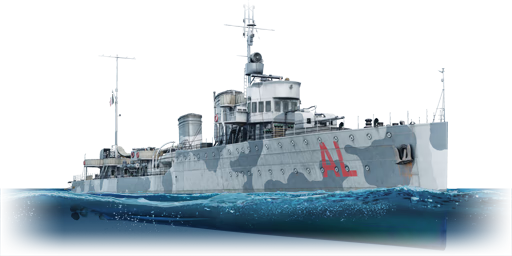
The Turbine-class, RN Aquilone, 1939 is a premium rank Italian destroyer with a battle rating of (AB), (RB), and (SB). It was introduced in Update "New Power".
General info
Survivability and armour
The RN Aquilone compared to the other ships of its rating is the smallest, with a hull of 91 meters compared to the 140 meters of the English Town Class or the 103 meters of the IJN Mutsuki, but even if it is the smallest ship it defends itself well.
It is protected with 16 mm of steel on the hull. Her low-profile hull makes her very difficult to hit over long distances, but at the same time she is very agile and fast.
Thanks to her intrepid crew of 179 sailors she takes first place as the most manned ship at her rating, in second place we find the Frunze with 168 members and in third place we find the USS Litchfield (DD-336). These ships mentioned above will also be the most present along with the Leopard 1924 in battle, the advantage is that all three have one thing in common, they all have little protection on the main hold.
The Litchfield and the Leopard are the most vulnerable because right next to the hold they have the principal fuel tank, something that the Frunze does not have.
Unfortunately, the RN Aquilone also has this defect, which is a problem because during combat the front of the ship is one of the most vulnerable. To remedy this defect, it is recommended that the ship be angled slightly to the left or right in the direction of enemy fire, so that the enemy rounds do not find a flat surface to penetrate and blow the RN Aquilone to oblivion.
Mobility
The RN Aquilone is equipped with 2 powerful turbines that deliver a power of 40'000 horses that take it to 36 knots (66 km/h). Its draught of only 3 meters makes it very agile even at maximum speed. its rudder can turn from left to right and vice versa in just 5 seconds.
The advantage of being small and wide increases the stability of the ship even in case of a sudden turn. The RN Aquilone, once it reaches maximum speed, is able to stop completely in 32 seconds and its maximum speed in reverse is -14 knots (-26 km/h). {| class="wikitable" style="text-align:center" ! colspan="4" | Mobility Characteristics |- ! rowspan="2" | Game Mode ! rowspan="2" | Upgrade Status ! colspan="2" | Maximum Speed (km/h) ! rowspan="2" style="display:none;"| Turn Time (s) ! rowspan="2" style="display:none;"| Turn Radius (m) |- ! Forward ! Reverse |- | rowspan="2" | AB | style="display:none;"| Stock | style="display:none;"| ___ | style="display:none;"| ___ | style="display:none;"| | style="display:none;"| |- | Upgraded || || | style="display:none;"| | style="display:none;"| |- | rowspan="2" | RB/SB | style="display:none;"| Stock | style="display:none;"| ___ | style="display:none;"| ___ | style="display:none;"| | style="display:none;"| |- | Upgraded || || | style="display:none;"| | style="display:none;"| |- |}
Modifications and economy
Armament
Primary armament
First produced by Ansaldo in 1926, this gun was continually modified during the 1930s by both Ansaldo and Odero-Terni-Orlando (OTO). The 120 mm/45 O.T.O. Mod. 1926 (120 mm) in the double mounts suffered from excessive dispersion which seems to be the result of mounting the barrels too close together. On later destroyers, a single 120 mm/50 (4.7") mount was used to replace the obsolete 120 mm/15 (4.7") star howitzers, thus improving the ship's firepower.
In combat this type of weapon is very strong at its battle rating, as the ammunition it can offer are: HE , APHE , HE-TF. The speed of the rounds are 850 m/s and are fired with a frequency of 8.2 seconds. HE and HE-TF have an explosive mass of 2.39kg and APHE 1.16kg. The HEs which the RN Aquilone can use are currently the most explosive, the Frunze only has 2.1kg, the Leopard 1924 has 2kg, the Mutsuki 1.86kg, the Litchfield 1.23kg and the Town L45 with only 721g. The great velocity of it’s rounds guarantees an almighty success in long distance fights.
Secondary armament
Introduced into the Royal Navy in March 1915 as a large caliber MG AA. These guns used 25-round fabric belts, which are used only in single mounts. Britain produced a total of 795 cannons of which 577 were still available in 1939.
The original Mark II design was prone to many defects and the Mark II* was a modified version that improved reliability. Stoppages and jams were still common in these models as the bullets slipped out of their mounts and the fabric belts which carried them often tore. The Mark II*C was another modification that used a 14-shot steel-link belt instead of the fabric belt. These steel-mesh belts were also used on the later 2-pdr. Mark VIIIs. About 50 of these guns were sold to the Italian Navy. They were then manufactured under license by Terni (Italy) until the early 1930s. The Terni version used a 50-round ammunition box. The Aquilone is equipped with no less than three 40mm/39 Vickers-Terni mod.1915/1917 guns, 2 in the center and 1 in the rear of the ship. This positioning guarantees complete aerial coverage within a radius of 1.1km. Unfortunately, their short range limits the air defense of the ship, but as soon as an air target enters the maximum effective range of these anti-aircraft guns, i.e. 800 meters, the aircraft will be instantly neutralized by the HE-TF rounds which use 31g of explosive.
Additional armament
The RN Aquilone is equipped with 6 torpedoes S.I. 250/533,4X7,5 Type A (533 mm) and 52 Bollo P.125/1932 mines. The torpedo launchers are arranged in a linear fashion in the central part of the ship and have a range of 180 degrees on both sides of the ship.The torpedoes without the improved torpedo modification have a range of 4 km and travel at 76 km/h, while with the modification installed the torpedoes increase the range to 12 km, however their speed is reduced to 48 km/h. These torpedoes have a mass of 1781 kg and inside they contain 250 kg of explosives. After their launch, they need 50 meters to arm themselves and become completely destructive. The 52 mines are placed in the rear of the ships carried on rails that start from the middle of the ship and go all the way to the stern. The mines in question have a mass of 221 kg of which 125 kg of explosives alone, once released into the sea these mines will stay stationary to float and will not detonate until a ship goes very close.
Usage in battles
Describe the technique of using this ship, the characteristics of her use in a team and tips on strategy. Abstain from writing an entire guide – don't try to provide a single point of view, but give the reader food for thought. Talk about the most dangerous opponents for this vehicle and provide recommendations on fighting them. If necessary, note the specifics of playing with this vehicle in various modes (AB, RB, SB).
Pros and cons
Summarise and briefly evaluate the vehicle in terms of its characteristics and combat effectiveness. Mark its pros and cons in the bulleted list. Try not to use more than 6 points for each of the characteristics. Avoid using categorical definitions such as "bad", "good" and the like - use substitutions with softer forms such as "inadequate" and "effective".
Pros:
Cons:
History
Describe the history of the creation and combat usage of the ship in more detail than in the introduction. If the historical reference turns out to be too long, take it to a separate article, taking a link to the article about the ship and adding a block "/History" (example: https://wiki.warthunder.com/(Ship-name)/History) and add a link to it here using the main template. Be sure to reference text and sources by using <ref></ref>, as well as adding them at the end of the article with <references />. This section may also include the ship's dev blog entry (if applicable) and the in-game encyclopedia description (under === In-game description ===, also if applicable).
Media

See also
Links to articles on the War Thunder Wiki that you think will be useful for the reader, for example:
- reference to the series of the ship;
- links to approximate analogues of other nations and research trees.
External links
Paste links to sources and external resources, such as:
- topic on the official game forum;
- other literature.
| Italy destroyers | |
|---|---|
| Regia Marina | |
| Aquila-class | RN Aquila |
| Leone-class | RN Leone · RN Tigre |
| Turbine-class | RN Aquilone · RN Turbine |
| Navigatori-class | RN Da Verazzano |
| Dardo-class | RN Dardo |
| Soldati-class | RN Aviere · RN Corazziere · RN Geniere |
| Comandanti Medaglie d'Oro-class | RN Comandante Margottini |
| Marina Militare | |
| Fante-class* | Geniere |
| Indomito-class | Impetuoso |
| * Modified Fletcher-class destroyers | |
| Italy premium ships | |
|---|---|
| Motor torpedo boats | Freccia P-493 · MAS 569 · MS 444 · MC 485 |
| Motor gun boats | Sparviero |
| Sub-chasers | Folaga |
| Destroyers | RN Aquilone · RN Aviere · RN Geniere · RN Tigre · Geniere |
| Heavy cruisers | RN Pola |
| Battleships | RN Leonardo da Vinci |