Difference between revisions of "V-11"
(→Description) (Tag: Visual edit) |
(→History) (Tag: Visual edit) |
||
| (14 intermediate revisions by 5 users not shown) | |||
| Line 6: | Line 6: | ||
== Description == | == Description == | ||
<!-- ''In the description, the first part should be about the history of and the creation and combat usage of the aircraft, as well as its key features. In the second part, tell the reader about the aircraft in the game. Insert a screenshot of the vehicle, so that if the novice player does not remember the vehicle by name, he will immediately understand what kind of vehicle the article is talking about.'' --> | <!-- ''In the description, the first part should be about the history of and the creation and combat usage of the aircraft, as well as its key features. In the second part, tell the reader about the aircraft in the game. Insert a screenshot of the vehicle, so that if the novice player does not remember the vehicle by name, he will immediately understand what kind of vehicle the article is talking about.'' --> | ||
| − | The '''{{Specs|name}}''' | + | The '''{{Specs|name}}''' is a rank {{Specs|rank}} Chinese strike aircraft {{Battle-rating}}. It was introduced in [[Update "Hot Tracks"]]. |
| − | |||
| − | |||
== General info == | == General info == | ||
| Line 14: | Line 12: | ||
{{Specs-Avia-Flight}} | {{Specs-Avia-Flight}} | ||
<!-- ''Describe how the aircraft behaves in the air. Speed, manoeuvrability, acceleration and allowable loads - these are the most important characteristics of the vehicle.'' --> | <!-- ''Describe how the aircraft behaves in the air. Speed, manoeuvrability, acceleration and allowable loads - these are the most important characteristics of the vehicle.'' --> | ||
| − | + | ''Describe how the aircraft behaves in the air. Speed, manoeuvrability, acceleration and allowable loads - these are the most important characteristics of the vehicle.'' | |
{| class="wikitable" style="text-align:center" width="70%" | {| class="wikitable" style="text-align:center" width="70%" | ||
| Line 56: | Line 54: | ||
! Combat !! Take-off !! Landing !! + !! - | ! Combat !! Take-off !! Landing !! + !! - | ||
|- | |- | ||
| − | | | + | | {{Specs|destruction|body}} || {{Specs|destruction|gear}} || 330 || 254 || 240 || ~8 || ~4 |
|- | |- | ||
|} | |} | ||
| Line 66: | Line 64: | ||
! Ailerons !! Rudder !! Elevators !! Radiator | ! Ailerons !! Rudder !! Elevators !! Radiator | ||
|- | |- | ||
| − | | < | + | | < 280 || < 260 || < 500 || > 250 |
|- | |- | ||
|} | |} | ||
| Line 74: | Line 72: | ||
<!-- ''Examine the survivability of the aircraft. Note how vulnerable the structure is and how secure the pilot is, whether the fuel tanks are armoured, etc. Describe the armour, if there is any, and also mention the vulnerability of other critical aircraft systems.'' --> | <!-- ''Examine the survivability of the aircraft. Note how vulnerable the structure is and how secure the pilot is, whether the fuel tanks are armoured, etc. Describe the armour, if there is any, and also mention the vulnerability of other critical aircraft systems.'' --> | ||
| − | * No armour | + | * No armour |
* Self-sealing fuel tanks (2 under pilot, 1 behind pilot, 2 in each wing) | * Self-sealing fuel tanks (2 under pilot, 1 behind pilot, 2 in each wing) | ||
| − | |||
=== Modifications and economy === | === Modifications and economy === | ||
| Line 114: | Line 111: | ||
== Usage in battles == | == Usage in battles == | ||
<!-- ''Describe the tactics of playing in the aircraft, the features of using aircraft in a team and advice on tactics. Refrain from creating a "guide" - do not impose a single point of view, but instead, give the reader food for thought. Examine the most dangerous enemies and give recommendations on fighting them. If necessary, note the specifics of the game in different modes (AB, RB, SB).'' --> | <!-- ''Describe the tactics of playing in the aircraft, the features of using aircraft in a team and advice on tactics. Refrain from creating a "guide" - do not impose a single point of view, but instead, give the reader food for thought. Examine the most dangerous enemies and give recommendations on fighting them. If necessary, note the specifics of the game in different modes (AB, RB, SB).'' --> | ||
| − | '' | + | ''Describe the tactics of playing in the aircraft, the features of using aircraft in a team and advice on tactics. Refrain from creating a "guide" - do not impose a single point of view, but instead, give the reader food for thought. Examine the most dangerous enemies and give recommendations on fighting them. If necessary, note the specifics of the game in different modes (AB, RB, SB).'' |
| − | |||
| − | |||
| − | |||
| − | |||
| − | |||
| − | |||
| − | |||
| − | |||
=== Manual Engine Control === | === Manual Engine Control === | ||
| Line 151: | Line 140: | ||
* Engine does not overheat quickly | * Engine does not overheat quickly | ||
* Has a rear gunner with a 7.62 mm MG for self-defence | * Has a rear gunner with a 7.62 mm MG for self-defence | ||
| − | |||
'''Cons:''' | '''Cons:''' | ||
* Extremely poor speed for a monoplane, cannot even catch I-16s quickly | * Extremely poor speed for a monoplane, cannot even catch I-16s quickly | ||
| − | |||
| − | |||
* Very slow energy retention | * Very slow energy retention | ||
* Is quite a big target | * Is quite a big target | ||
| Line 164: | Line 150: | ||
* Overall aircraft responds slowly to aiming adjustments, making it hard to put a solid burst into a manoeuvring target | * Overall aircraft responds slowly to aiming adjustments, making it hard to put a solid burst into a manoeuvring target | ||
* Bombload is quite poor for an aircraft of its size and role, the Hawk III carries the same payload while being a lightweight biplane | * Bombload is quite poor for an aircraft of its size and role, the Hawk III carries the same payload while being a lightweight biplane | ||
| − | |||
== History == | == History == | ||
| − | + | An initial order for 30 two-seat V-11Gs was placed by China before the end of 1935. This was followed by orders in 1939, for two versions (the V-12-C and V-12D) of the more powerful V-12 variant. The majority of these were planned to be assembled from kits at the Central Aircraft Manufacturing Company factory at Loiwing near the China-Burma border, and while the first batch of 25 V-12-Cs were completed successfully, the factory was heavily bombed just after assembly of the first V-12-Ds commenced. This resulted in the part built airframes being evacuated to India, where it was planned that the aircraft be completed at the Hindustan Aircraft Limited factory in Bangalore. However, after a few were assembled, production was stopped as the factory was diverted to more urgent overhaul work. | |
| − | |||
| − | The | + | The V-11s and V-12s were used as light bombers and achieved some success, including a mission to bomb the Japanese held airfield by 4 aircraft at Yuncheng on February 5, 1939, by the 10th Squadron of the Republic of China Air Force, before the aircraft were withdrawn from bombing missions to training and liaison duties in 1940. |
| − | |||
| − | |||
| − | |||
| − | |||
== Media == | == Media == | ||
| Line 181: | Line 161: | ||
;Skins | ;Skins | ||
| − | * [https://live.warthunder.com/feed/camouflages/?vehicle=v_11g Skins and camouflages for the {{PAGENAME}} from live.warthunder.com.] | + | * [https://live.warthunder.com/feed/camouflages/?vehicleCountry=china&vehicleType=aircraft&vehicleClass=assault&vehicle=v_11g Skins and camouflages for the {{PAGENAME}} from live.warthunder.com.] |
| − | |||
| − | |||
| − | |||
== See also == | == See also == | ||
| Line 190: | Line 167: | ||
* ''reference to the series of the aircraft;'' | * ''reference to the series of the aircraft;'' | ||
* ''links to approximate analogues of other nations and research trees.'' --> | * ''links to approximate analogues of other nations and research trees.'' --> | ||
| + | ''Links to the articles on the War Thunder Wiki that you think will be useful for the reader, for example:'' | ||
| − | * | + | * ''reference to the series of the aircraft;'' |
| + | * ''links to approximate analogues of other nations and research trees.'' | ||
== External links == | == External links == | ||
| Line 201: | Line 180: | ||
* [https://forum.warthunder.com/index.php?/topic/509649-v-11/ Official data sheet - more details about the performance] | * [https://forum.warthunder.com/index.php?/topic/509649-v-11/ Official data sheet - more details about the performance] | ||
| − | |||
{{China twin-engine fighters and strike aircraft}} | {{China twin-engine fighters and strike aircraft}} | ||
Revision as of 11:05, 23 March 2021

Contents
Description
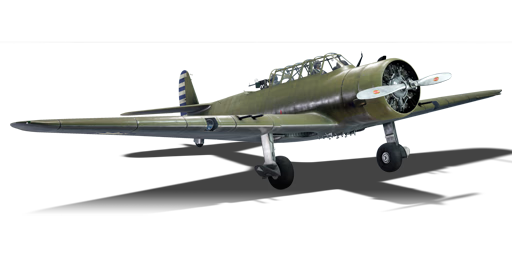
The V-11 is a rank Chinese strike aircraft with a battle rating of (AB), (RB), and (SB). It was introduced in Update "Hot Tracks".
General info
Flight performance
Describe how the aircraft behaves in the air. Speed, manoeuvrability, acceleration and allowable loads - these are the most important characteristics of the vehicle.
| Characteristics | Max Speed (km/h at 4,084 m) |
Max altitude (metres) |
Turn time (seconds) |
Rate of climb (metres/second) |
Take-off run (metres) | |||
|---|---|---|---|---|---|---|---|---|
| AB | RB | AB | RB | AB | RB | |||
| Stock | 342 | 329 | 22.9 | 23.8 | 4.8 | 4.8 | 300 | |
| Upgraded | 379 | 360 | 21.1 | 22.0 | 7.9 | 6.2 | ||
Details
| Features | ||||
|---|---|---|---|---|
| Combat flaps | Take-off flaps | Landing flaps | Air brakes | Arrestor gear |
| ✓ | ✓ | ✓ | X | X |
| Limits | ||||||
|---|---|---|---|---|---|---|
| Wings (km/h) | Gear (km/h) | Flaps (km/h) | Max Static G | |||
| Combat | Take-off | Landing | + | - | ||
| 330 | 254 | 240 | ~8 | ~4 | ||
| Optimal velocities (km/h) | |||
|---|---|---|---|
| Ailerons | Rudder | Elevators | Radiator |
| < 280 | < 260 | < 500 | > 250 |
Survivability and armour
- No armour
- Self-sealing fuel tanks (2 under pilot, 1 behind pilot, 2 in each wing)
Modifications and economy
Armaments
Offensive armament
The V-11 is armed with:
- 4 x 7.62 mm Browning machine guns, wing-mounted (600 rpg = 2,400 total)
Suspended armament
The V-11 can be outfitted with the following ordnance:
- Without load
- 2 x 250 lb AN-M57 bombs (500 lb total)
- 1 x 500 lb AN-M64A1 bomb (500 lb total)
Defensive armament
The V-11 is defended by:
- 1 x 7.62 mm Browning machine gun, dorsal turret (500 rpg)
Usage in battles
Describe the tactics of playing in the aircraft, the features of using aircraft in a team and advice on tactics. Refrain from creating a "guide" - do not impose a single point of view, but instead, give the reader food for thought. Examine the most dangerous enemies and give recommendations on fighting them. If necessary, note the specifics of the game in different modes (AB, RB, SB).
Manual Engine Control
| MEC elements | ||||||
|---|---|---|---|---|---|---|
| Mixer | Pitch | Radiator | Supercharger | Turbocharger | ||
| Oil | Water | Type | ||||
| Controllable | Controllable Not auto controlled |
Not controllable Not auto controlled |
Not controllable Not auto controlled |
Separate | Not controllable 1 gear |
Not controllable |
Pros and cons
Pros:
- Rather powerful bombload of one 500 lb bomb or two 250 lb bombs for the battle rating
- 4 x 7.62 mm MG is decent firepower for the battle rating, allowing it to effectively damage/destroy aircraft if needed
- Great over-the-nose visibility makes leading very easy in Simulator
- Engine does not overheat quickly
- Has a rear gunner with a 7.62 mm MG for self-defence
Cons:
- Extremely poor speed for a monoplane, cannot even catch I-16s quickly
- Very slow energy retention
- Is quite a big target
- Does not have any armour protection
- Does not have reflector gunsight, meaning you cannot move the pilot's head in Simulator or the reticle will not align
- Overall aircraft responds slowly to aiming adjustments, making it hard to put a solid burst into a manoeuvring target
- Bombload is quite poor for an aircraft of its size and role, the Hawk III carries the same payload while being a lightweight biplane
History
An initial order for 30 two-seat V-11Gs was placed by China before the end of 1935. This was followed by orders in 1939, for two versions (the V-12-C and V-12D) of the more powerful V-12 variant. The majority of these were planned to be assembled from kits at the Central Aircraft Manufacturing Company factory at Loiwing near the China-Burma border, and while the first batch of 25 V-12-Cs were completed successfully, the factory was heavily bombed just after assembly of the first V-12-Ds commenced. This resulted in the part built airframes being evacuated to India, where it was planned that the aircraft be completed at the Hindustan Aircraft Limited factory in Bangalore. However, after a few were assembled, production was stopped as the factory was diverted to more urgent overhaul work.
The V-11s and V-12s were used as light bombers and achieved some success, including a mission to bomb the Japanese held airfield by 4 aircraft at Yuncheng on February 5, 1939, by the 10th Squadron of the Republic of China Air Force, before the aircraft were withdrawn from bombing missions to training and liaison duties in 1940.
Media
- Skins
See also
Links to the articles on the War Thunder Wiki that you think will be useful for the reader, for example:
- reference to the series of the aircraft;
- links to approximate analogues of other nations and research trees.
External links
| China twin-engine fighters and strike aircraft | |
|---|---|
| Twin-engine fighters | ␗Ki-45 hei/tei · ␗P-38L-1 |
| Strike aircraft | V-11 · V-12D · ␗IL-10 (1946) · Mosquito FB.Mk.26 |