Difference between pages "HSTV-L" and "Spitfire Mk IIa"
(→Main armament) (Tag: Visual edit) |
(Undo revision 194751 by U169265393 (talk)) |
||
| Line 1: | Line 1: | ||
| − | {{Specs-Card|code= | + | {{About |
| + | | about = British fighter '''{{PAGENAME}}''' | ||
| + | | usage = other versions | ||
| + | | link = Spitfire (Family) | ||
| + | }} | ||
| + | {{Specs-Card | ||
| + | |code=spitfiremkiia | ||
| + | |images={{Specs-Card-Image|GarageImage_{{PAGENAME}}.jpg|ArtImage2_{{PAGENAME}}.png}} | ||
| + | }} | ||
== Description == | == Description == | ||
| − | <!-- ''In the description, the first part should be about the history of the creation and combat usage of the | + | <!-- ''In the description, the first part should be about the history of and the creation and combat usage of the aircraft, as well as its key features. In the second part, tell the reader about the aircraft in the game. Insert a screenshot of the vehicle, so that if the novice player does not remember the vehicle by name, he will immediately understand what kind of vehicle the article is talking about.'' --> |
| − | [[ | + | In 1939, a trial was undertaken in which a [[Spitfire Mk Ia|Spitfire Mk I]] was fitted with a new 1,175-hp Merlin XII engine, the success of which resulted in the designation of a new variant: the Spitfire Mk II. Other improvements included a new, more efficient cooling system, and a move away from the previous external electric engine starting systems. The Mk IIa variant in particular was fitted with the "A-type" wing, allowing an armament of 8 Browning .303 machine guns, much like the preceding Mk Ia. Spitfire Mk IIs were rapidly manufactured and delivered, replacing all Mk Is in active service by April 1941. |
| − | + | ||
| − | + | Introduced in [[Update 1.35]], the Spitfire Mk IIa is an improvement over its predecessor, with an even greater ability to gain the altitude advantage over opposing fighters and dictate the terms of the ensuing dogfight. The Spitfire Mk IIa's main strength continues to be its ability to turn-fight opponents, while its good top speed allows it to pursue any aircraft attempting to disengage and recoup. However, the Mk IIa also retains the same deficiencies of the Mk Ia, namely the weak but numerous Browning machine guns. While they present great volume of fire, they do not have great stopping power and are also quite limited by convergence due to their spread-out nature across the wings, and thus may require a long time on target to successfully down an opponent. | |
== General info == | == General info == | ||
| − | === | + | === Flight performance === |
| − | <!-- ''Describe | + | {{Specs-Avia-Flight}} |
| − | + | <!-- ''Describe how the aircraft behaves in the air. Speed, manoeuvrability, acceleration and allowable loads - these are the most important characteristics of the vehicle.'' --> | |
| − | {| class="wikitable" | + | {| class="wikitable" style="text-align:center" width="70%" |
| + | ! rowspan="2" | Characteristics | ||
| + | ! colspan="2" | Max Speed<br>(km/h at 4,572 m) | ||
| + | ! rowspan="2" | Max altitude<br>(metres) | ||
| + | ! colspan="2" | Turn time<br>(seconds) | ||
| + | ! colspan="2" | Rate of climb<br>(metres/second) | ||
| + | ! rowspan="2" | Take-off run<br>(metres) | ||
| + | |- | ||
| + | ! AB !! RB !! AB !! RB !! AB !! RB | ||
|- | |- | ||
| − | ! | + | ! Stock |
| + | | 549 || 533 || rowspan="2" | {{Specs|ceiling}} || 15.9 || 16.5 || 16.0 || 16.0 || rowspan="2" | 300 | ||
| + | |- | ||
| + | ! Upgraded | ||
| + | | 597 || 571 || 14.4 || 15.1 || 23.9 || 19.4 | ||
| + | |- | ||
| + | |} | ||
| + | |||
| + | ==== Details ==== | ||
| + | {| class="wikitable" style="text-align:center" width="50%" | ||
|- | |- | ||
| − | | | + | ! colspan="5" | Features |
|- | |- | ||
| − | + | ! Combat flaps !! Take-off flaps !! Landing flaps !! Air brakes !! Arrestor gear | |
|- | |- | ||
| − | | | + | | X || X || ✓ || X || X <!-- ✓ --> |
|- | |- | ||
|} | |} | ||
| − | + | {| class="wikitable" style="text-align:center" width="50%" | |
| − | |||
| − | |||
| − | |||
| − | |||
| − | |||
| − | |||
| − | |||
| − | |||
| − | |||
| − | |||
| − | |||
| − | |||
| − | |||
| − | |||
| − | {| class="wikitable" style="text-align:center" width=" | ||
|- | |- | ||
| − | ! colspan=" | + | ! colspan="7" | Limits |
|- | |- | ||
| − | ! | + | ! rowspan="2" | Wings (km/h) |
| − | ! | + | ! rowspan="2" | Gear (km/h) |
| − | ! | + | ! colspan="3" | Flaps (km/h) |
| + | ! colspan="2" | Max Static G | ||
|- | |- | ||
| − | ! | + | ! Combat !! Take-off !! Landing !! + !! - |
| − | |||
|- | |- | ||
| − | + | | {{Specs|destruction|body}} || {{Specs|destruction|gear}} || N/A || N/A || 230 || ~11 || ~6 | |
| − | | | ||
|- | |- | ||
|} | |} | ||
| − | + | {| class="wikitable" style="text-align:center" | |
| − | {| class="wikitable" style="text-align:center" | ||
| − | |||
|- | |- | ||
| − | + | ! colspan="4" | Optimal velocities (km/h) | |
| − | |||
| − | ! colspan=" | ||
|- | |- | ||
| − | ! | + | ! Ailerons !! Rudder !! Elevators !! Radiator |
|- | |- | ||
| − | | | + | | < 321 || < 400 || < 350 || > 500 |
|- | |- | ||
|} | |} | ||
| − | {| class="wikitable" style="text-align:center" | + | |
| − | + | {| class="wikitable" style="text-align:center" | |
|- | |- | ||
| − | ! | + | ! colspan="3" | Compressor (RB/SB) |
| − | |||
| − | |||
| − | |||
| − | |||
| − | |||
| − | |||
| − | |||
|- | |- | ||
| − | ! | + | ! colspan="3" | Setting 1 |
|- | |- | ||
| − | | | + | ! Optimal altitude |
| + | ! 100% Engine power | ||
| + | ! WEP Engine power | ||
| + | |- | ||
| + | | 4,490 m || 1,140 hp || 1,311 hp | ||
|- | |- | ||
|} | |} | ||
| − | ==== | + | ====Engine performance==== |
| − | |||
{| class="wikitable" style="text-align:center" | {| class="wikitable" style="text-align:center" | ||
|- | |- | ||
| − | ! | + | ! colspan="4" | Engine |
| − | ! | + | |- |
| − | ! | + | ! colspan="3" | Engine Name |
| − | ! | + | ! colspan="3" | Number present |
| − | ! | + | |- |
| − | ! | + | | colspan="3" | Rolls-Royce Merlin-XII 12-cylinder || colspan="1" | 1 |
| − | ! | + | |- |
| − | ! | + | ! colspan="4" | Engine characteristics |
| + | |- | ||
| + | ! colspan="2" | Weight (each) | ||
| + | ! colspan="1" | Type | ||
| + | ! colspan="1" | Cooling | ||
| + | |- | ||
| + | | colspan="2" | 625 kg || Inline || Water | ||
| + | |- | ||
| + | ! colspan="4" | Engine power (Stock) | ||
|- | |- | ||
| − | | '' | + | ! colspan="1" | Mode |
| + | ! colspan="2" | Max | ||
| + | ! colspan="2" | Take-off | ||
| + | |- | ||
| + | | ''Arcade'' || colspan="2" | 921 hp || colspan="2" | 1,074 hp | ||
| + | |- | ||
| + | | ''Realistic/Simulator'' || colspan="2" | 911 hp || colspan="2" | 1,064 hp | ||
| + | |- | ||
| + | ! colspan="4" | Engine power (Upgraded) | ||
| + | |- | ||
| + | ! Mode | ||
| + | ! colspan="2" | Max | ||
| + | ! colspan="2" | Take-off | ||
| + | |- | ||
| + | | ''Arcade'' || colspan="2" | 1,148 hp || colspan="2" | 1,301 hp | ||
| + | |- | ||
| + | | ''Realistic/Simulator'' || colspan="2" | 1,020 hp || colspan="2" | 1,173 hp | ||
|- | |- | ||
|} | |} | ||
| − | + | {| class="wikitable" style="text-align:center" | |
| − | |||
| − | |||
| − | |||
| − | |||
| − | {| class="wikitable" style="text-align:center | ||
|- | |- | ||
| − | ! colspan=" | + | ! colspan="4" | WEP Duration |
|- | |- | ||
| − | ! | + | ! colspan="2" | Arcade |
| + | ! colspan="2" | Realistic/Simulator | ||
|- | |- | ||
| − | | || | + | | colspan="2" | 25 seconds || colspan="2" | Infinite |
| − | |||
| − | |||
|- | |- | ||
|} | |} | ||
| + | |||
| + | === Survivability and armour === | ||
| + | {{Specs-Avia-Armour}} | ||
| + | <!-- ''Examine the survivability of the aircraft. Note how vulnerable the structure is and how secure the pilot is, whether the fuel tanks are armoured, etc. Describe the armour, if there is any, and also mention the vulnerability of other critical aircraft systems.'' --> | ||
| + | |||
| + | * 38 mm Bulletproof glass in cockpit front. | ||
| + | * 4 mm Steel plate in pilot's seat. | ||
| + | * 6-7 mm Steel plate behind the pilot. | ||
| + | |||
| + | === Modifications and economy === | ||
| + | {{Specs-Economy}} | ||
| + | |||
| + | == Armaments == | ||
| + | {{Specs-Avia-Armaments}} | ||
| + | === Offensive armament === | ||
| + | {{Specs-Avia-Offensive}} | ||
| + | <!-- ''Describe the offensive armament of the aircraft, if any. Describe how effective the cannons and machine guns are in a battle, and also what belts or drums are better to use. If there is no offensive weaponry, delete this subsection.'' --> | ||
| + | {{main|Browning (7.7 mm)}} | ||
| + | |||
| + | The '''''{{PAGENAME}}''''' is armed with: | ||
| + | |||
| + | * 8 x 7.7 mm Browning machine guns, wing-mounted (350 rpg = 2,800 total) | ||
== Usage in battles == | == Usage in battles == | ||
| − | <!-- ''Describe the tactics of playing in the | + | <!-- ''Describe the tactics of playing in the aircraft, the features of using aircraft in a team and advice on tactics. Refrain from creating a "guide" - do not impose a single point of view, but instead, give the reader food for thought. Examine the most dangerous enemies and give recommendations on fighting them. If necessary, note the specifics of the game in different modes (AB, RB, SB).'' --> |
| − | |||
| − | === | + | The Spitfire should climb at the beginning of battle in order to utilise its very good climb rate. It can reliably attain an altitude advantage over the enemy, which allows the pilot to pick and choose which engagements they wish to take part in but you should not fight enemies while on high altitude as engine performance is terrible over certain one. |
| − | {| class="wikitable" | + | |
| − | + | The Spitfire also has very good turning characteristics, and turn-fight engagements are usually the best way to fight. It is possible to fake a head-on (by pulling away once your enemy starts firing) if you're forced to by an enemy plane but it is highly recommended to never commit to a head-on engagement. A sensible opponent will try to energy fight you which you need to look out for. You can lose your energy faster than you realize and when you do, you've most likely been baited and are an easy target. However, if you are able to engage the enemy in an extended turn, the plane's great turn rate will work wonders. | |
| − | + | ||
| − | + | The Spitfire has a relatively good ammo count, spread between a very high number of guns. But, the 8 machine guns are only 7.7 mm in calibre, and are wing-mounted, meaning that convergence is an issue. This also means that accuracy when firing head-on can be difficult. It is recommended to set convergence at 300-500 m. This plane's guns can also be used against lightly-armoured ground targets such as artillery, AAA, or howitzers. | |
| − | + | ||
| + | This plane can often suffer from overheating issues. Be careful about this when deciding to enter into an engagement; if it becomes necessary to reduce throttle and cool the engine in the midst of a turning- or energy-based engagement, there may be an opportunity for the enemy to gain the upper hand. | ||
| + | |||
| + | ==== Specific enemies worth noting ==== | ||
| + | |||
| + | * Heavy bombers - Although the Spitfire Mk IIa is armed with 8 guns, they are only 7.7 mm in calibre. So, it can be difficult to destroy heavy fighters, attackers, and especially bombers. It is likely that long bursts will be necessary to destroy such targets, and that gives time for enemy turret gunners to shoot back. Luckily, most bombers at this tier are not defended by turrets from all angles. Try to plan attack runs so that you don't fly in the enemy's line of fire. | ||
| + | * Bf 109s can do tremendous amounts of damage if you don't watch out. They have quite good turning performance and their energy retention is excellent with a skilled pilot. | ||
| + | |||
| + | === Manual Engine Control === | ||
| + | {| class="wikitable" style="text-align:center" | ||
|- | |- | ||
| − | | | + | ! colspan="7" | MEC elements |
| − | |||
| − | |||
| − | |||
| − | |||
| − | |||
| − | |||
|- | |- | ||
| − | | | + | ! rowspan="2" | Mixer |
| − | | | + | ! rowspan="2" | Pitch |
| − | | | + | ! colspan="3" | Radiator |
| − | | | + | ! rowspan="2" | Supercharger |
| − | + | ! rowspan="2" | Turbocharger | |
| − | |||
| − | | | ||
|- | |- | ||
| − | + | ! Oil !! Water !! Type | |
| − | |||
| − | |||
| − | |||
| − | |||
| − | |||
| − | |||
|- | |- | ||
| − | | | + | | Controllable || Controllable<br>Not auto controlled || Not controllable<br>Not auto controlled || Controllable<br>Not auto controlled || Separate || Not controllable<br>1 gear || Not controllable |
| − | | | ||
| − | | | ||
| − | | | ||
| − | | | ||
| − | | | ||
| − | | | ||
|- | |- | ||
|} | |} | ||
=== Pros and cons === | === Pros and cons === | ||
| − | <!-- ''Summarise and briefly evaluate the vehicle in terms of its characteristics and combat effectiveness. Mark its pros and cons in | + | <!-- ''Summarise and briefly evaluate the vehicle in terms of its characteristics and combat effectiveness. Mark its pros and cons in the bulleted list. Try not to use more than 6 points for each of the characteristics. Avoid using categorical definitions such as "bad", "good" and the like - use substitutions with softer forms such as "inadequate" and "effective".'' --> |
| − | |||
'''Pros:''' | '''Pros:''' | ||
| − | * | + | * Eight 7.7 mm machine guns provide great anti-fighter power |
| + | * Great turn rate | ||
| + | * Good roll rate at low speed | ||
| + | * Great rate of climb | ||
| + | * Decent armour, a front 38 mm glass and rear 4-7 mm steel plates | ||
'''Cons:''' | '''Cons:''' | ||
| − | * | + | * Machine guns only effective in continuous bursts and only on short range |
| + | * Ammo can run out quickly in prolonged, uncontrolled bursts | ||
| + | * Quick kills against large bombers are difficult | ||
| + | * Machine guns cannot penetrate heavily armoured targets | ||
| + | * Bad high altitude performance | ||
| + | * Roll rate stiffens dramatically at ~350 km/h | ||
| + | * Pulling negative G's and rolling the plane ([[Realistic Battles|Realistic]]/[[Simulator Battles|simulator]] only) can cause the carburettor (engine) to fail quickly | ||
| + | * Terrible water radiator forces you to keep on 90% throttle | ||
| + | * No combat nor take-off flaps | ||
== History == | == History == | ||
| − | <!-- ''Describe the history of the creation and combat usage of the | + | <!-- ''Describe the history of the creation and combat usage of the aircraft in more detail than in the introduction. If the historical reference turns out to be too long, take it to a separate article, taking a link to the article about the vehicle and adding a block "/History" (example: <nowiki>https://wiki.warthunder.com/(Vehicle-name)/History</nowiki>) and add a link to it here using the <code>main</code> template. Be sure to reference text and sources by using <code><nowiki><ref></ref></nowiki></code>, as well as adding them at the end of the article with <code><nowiki><references /></nowiki></code>. This section may also include the vehicle's dev blog entry (if applicable) and the in-game encyclopedia description (under <code><nowiki>=== In-game description ===</nowiki></code>, also if applicable).'' --> |
| − | + | ||
| + | {{break}} | ||
| + | {{Navigation-Start|{{Annotation|Archive of the in-game description|An archive of the historical description of the vehicle that was presented in-game prior to Update 1.55 'Royal Armour'}}|expand=true}} | ||
| + | {{Navigation-First-Simple-Line}} | ||
| + | The Supermarine Spitfire was a British fighter which served with various nations from the late 1930s up into the 1950s. It was a single-engine, all-metal, low-wing monoplane with retractable landing gear. Various modifications served as fighters, interceptors, high-altitude fighters, fighter-bombers and reconnaissance aircraft. A total of some 20,300 Spitfires of all types were built during the war, including two-seater trainers. | ||
| + | |||
| + | In the summer of 1939, an early Spitfire Mk I was fitted with the new Rolls Royce Merlin XII engine, which had a higher output of 1175 HP and was fitted with a Coffman engine starter instead of the previous Merlin's electrical starter system. This, combined with the Rotol variable pitch propeller which had been used on many Spitfire Mk Is would now form the powerplant of the new Spitfire Mk II, although some production models used the De Havilland propeller. The Mk II was some 10-11 km/h (6-7 mph) faster than the later Spitfire Mk I, but still slower than the original Spitfires before a series of modifications increased the aircraft's weight. As with the Mk I, the Spitfire Mk II was produced with either eight machine guns as the Spitfire Mk IIA, or two 20 mm cannons and four machine guns as the Mk IIb. The earlier problems with cannon fitted to the Mk IB had now been solved by introducing a belt feed system to the weapon to replace the earlier drum, turning the cannon on its side and fitting a blister on the wing to house the new mechanism. | ||
| + | |||
| + | 920 Spitfire Mk IIs entered service; 750 Mk IIA and 170 MK IIB, although fighters used in the air-sea rescue role were later designated Mk IIC. The Spitfire II quickly replaced the Spitfire I, with the older variant being relegated to use in Operational Training Units. By April 1941, RAF Fighter Command had completed re-equipping with the Mk II, although this too would soon be replaced by the Mk V. | ||
| + | {{Navigation-End}} | ||
== Media == | == Media == | ||
<!-- ''Excellent additions to the article would be video guides, screenshots from the game, and photos.'' --> | <!-- ''Excellent additions to the article would be video guides, screenshots from the game, and photos.'' --> | ||
| − | + | ||
| + | ;Images | ||
| + | <gallery mode="packed-hover" heights="200"> | ||
| + | File:ArtImage Spitfire Mk IIa.png | ||
| + | </gallery> | ||
| + | |||
| + | ;Skins | ||
| + | * [https://live.warthunder.com/feed/camouflages/?vehicle=spitfiremkiia Skins and camouflages for the {{PAGENAME}} from live.warthunder.com.] | ||
== See also == | == See also == | ||
| − | |||
| − | |||
| − | |||
''Links to the articles on the War Thunder Wiki that you think will be useful for the reader, for example:'' | ''Links to the articles on the War Thunder Wiki that you think will be useful for the reader, for example:'' | ||
| − | * ''reference to the series of the | + | * ''reference to the series of the aircraft;'' |
* ''links to approximate analogues of other nations and research trees.'' | * ''links to approximate analogues of other nations and research trees.'' | ||
| Line 197: | Line 250: | ||
<!-- ''Paste links to sources and external resources, such as:'' | <!-- ''Paste links to sources and external resources, such as:'' | ||
* ''topic on the official game forum;'' | * ''topic on the official game forum;'' | ||
| − | |||
* ''other literature.'' --> | * ''other literature.'' --> | ||
| − | |||
| − | * | + | * [https://forum.warthunder.com/index.php?/topic/287255-supermarine-spitfire-mk-iia/ Official data sheet - more details about the performance] |
| − | |||
| − | |||
| − | {{ | + | {{AirManufacturer Supermarine}} |
| + | {{Britain fighters}} | ||
Latest revision as of 06:27, 9 November 2024
| This page is about the British fighter Spitfire Mk IIa. For other versions, see Spitfire (Family). |


Contents
Description
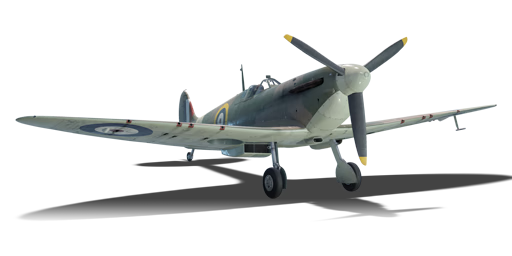
In 1939, a trial was undertaken in which a Spitfire Mk I was fitted with a new 1,175-hp Merlin XII engine, the success of which resulted in the designation of a new variant: the Spitfire Mk II. Other improvements included a new, more efficient cooling system, and a move away from the previous external electric engine starting systems. The Mk IIa variant in particular was fitted with the "A-type" wing, allowing an armament of 8 Browning .303 machine guns, much like the preceding Mk Ia. Spitfire Mk IIs were rapidly manufactured and delivered, replacing all Mk Is in active service by April 1941.
Introduced in Update 1.35, the Spitfire Mk IIa is an improvement over its predecessor, with an even greater ability to gain the altitude advantage over opposing fighters and dictate the terms of the ensuing dogfight. The Spitfire Mk IIa's main strength continues to be its ability to turn-fight opponents, while its good top speed allows it to pursue any aircraft attempting to disengage and recoup. However, the Mk IIa also retains the same deficiencies of the Mk Ia, namely the weak but numerous Browning machine guns. While they present great volume of fire, they do not have great stopping power and are also quite limited by convergence due to their spread-out nature across the wings, and thus may require a long time on target to successfully down an opponent.
General info
Flight performance
| Characteristics | Max Speed (km/h at 4,572 m) |
Max altitude (metres) |
Turn time (seconds) |
Rate of climb (metres/second) |
Take-off run (metres) | |||
|---|---|---|---|---|---|---|---|---|
| AB | RB | AB | RB | AB | RB | |||
| Stock | 549 | 533 | 15.9 | 16.5 | 16.0 | 16.0 | 300 | |
| Upgraded | 597 | 571 | 14.4 | 15.1 | 23.9 | 19.4 | ||
Details
| Features | ||||
|---|---|---|---|---|
| Combat flaps | Take-off flaps | Landing flaps | Air brakes | Arrestor gear |
| X | X | ✓ | X | X |
| Limits | ||||||
|---|---|---|---|---|---|---|
| Wings (km/h) | Gear (km/h) | Flaps (km/h) | Max Static G | |||
| Combat | Take-off | Landing | + | - | ||
| N/A | N/A | 230 | ~11 | ~6 | ||
| Optimal velocities (km/h) | |||
|---|---|---|---|
| Ailerons | Rudder | Elevators | Radiator |
| < 321 | < 400 | < 350 | > 500 |
| Compressor (RB/SB) | ||
|---|---|---|
| Setting 1 | ||
| Optimal altitude | 100% Engine power | WEP Engine power |
| 4,490 m | 1,140 hp | 1,311 hp |
Engine performance
| Engine | |||||
|---|---|---|---|---|---|
| Engine Name | Number present | ||||
| Rolls-Royce Merlin-XII 12-cylinder | 1 | ||||
| Engine characteristics | |||||
| Weight (each) | Type | Cooling | |||
| 625 kg | Inline | Water | |||
| Engine power (Stock) | |||||
| Mode | Max | Take-off | |||
| Arcade | 921 hp | 1,074 hp | |||
| Realistic/Simulator | 911 hp | 1,064 hp | |||
| Engine power (Upgraded) | |||||
| Mode | Max | Take-off | |||
| Arcade | 1,148 hp | 1,301 hp | |||
| Realistic/Simulator | 1,020 hp | 1,173 hp | |||
| WEP Duration | |||
|---|---|---|---|
| Arcade | Realistic/Simulator | ||
| 25 seconds | Infinite | ||
Survivability and armour
- 38 mm Bulletproof glass in cockpit front.
- 4 mm Steel plate in pilot's seat.
- 6-7 mm Steel plate behind the pilot.
Modifications and economy
Armaments
Offensive armament
The Spitfire Mk IIa is armed with:
- 8 x 7.7 mm Browning machine guns, wing-mounted (350 rpg = 2,800 total)
Usage in battles
The Spitfire should climb at the beginning of battle in order to utilise its very good climb rate. It can reliably attain an altitude advantage over the enemy, which allows the pilot to pick and choose which engagements they wish to take part in but you should not fight enemies while on high altitude as engine performance is terrible over certain one.
The Spitfire also has very good turning characteristics, and turn-fight engagements are usually the best way to fight. It is possible to fake a head-on (by pulling away once your enemy starts firing) if you're forced to by an enemy plane but it is highly recommended to never commit to a head-on engagement. A sensible opponent will try to energy fight you which you need to look out for. You can lose your energy faster than you realize and when you do, you've most likely been baited and are an easy target. However, if you are able to engage the enemy in an extended turn, the plane's great turn rate will work wonders.
The Spitfire has a relatively good ammo count, spread between a very high number of guns. But, the 8 machine guns are only 7.7 mm in calibre, and are wing-mounted, meaning that convergence is an issue. This also means that accuracy when firing head-on can be difficult. It is recommended to set convergence at 300-500 m. This plane's guns can also be used against lightly-armoured ground targets such as artillery, AAA, or howitzers.
This plane can often suffer from overheating issues. Be careful about this when deciding to enter into an engagement; if it becomes necessary to reduce throttle and cool the engine in the midst of a turning- or energy-based engagement, there may be an opportunity for the enemy to gain the upper hand.
Specific enemies worth noting
- Heavy bombers - Although the Spitfire Mk IIa is armed with 8 guns, they are only 7.7 mm in calibre. So, it can be difficult to destroy heavy fighters, attackers, and especially bombers. It is likely that long bursts will be necessary to destroy such targets, and that gives time for enemy turret gunners to shoot back. Luckily, most bombers at this tier are not defended by turrets from all angles. Try to plan attack runs so that you don't fly in the enemy's line of fire.
- Bf 109s can do tremendous amounts of damage if you don't watch out. They have quite good turning performance and their energy retention is excellent with a skilled pilot.
Manual Engine Control
| MEC elements | ||||||
|---|---|---|---|---|---|---|
| Mixer | Pitch | Radiator | Supercharger | Turbocharger | ||
| Oil | Water | Type | ||||
| Controllable | Controllable Not auto controlled |
Not controllable Not auto controlled |
Controllable Not auto controlled |
Separate | Not controllable 1 gear |
Not controllable |
Pros and cons
Pros:
- Eight 7.7 mm machine guns provide great anti-fighter power
- Great turn rate
- Good roll rate at low speed
- Great rate of climb
- Decent armour, a front 38 mm glass and rear 4-7 mm steel plates
Cons:
- Machine guns only effective in continuous bursts and only on short range
- Ammo can run out quickly in prolonged, uncontrolled bursts
- Quick kills against large bombers are difficult
- Machine guns cannot penetrate heavily armoured targets
- Bad high altitude performance
- Roll rate stiffens dramatically at ~350 km/h
- Pulling negative G's and rolling the plane (Realistic/simulator only) can cause the carburettor (engine) to fail quickly
- Terrible water radiator forces you to keep on 90% throttle
- No combat nor take-off flaps
History
| Archive of the in-game description | |
|---|---|
|
The Supermarine Spitfire was a British fighter which served with various nations from the late 1930s up into the 1950s. It was a single-engine, all-metal, low-wing monoplane with retractable landing gear. Various modifications served as fighters, interceptors, high-altitude fighters, fighter-bombers and reconnaissance aircraft. A total of some 20,300 Spitfires of all types were built during the war, including two-seater trainers. In the summer of 1939, an early Spitfire Mk I was fitted with the new Rolls Royce Merlin XII engine, which had a higher output of 1175 HP and was fitted with a Coffman engine starter instead of the previous Merlin's electrical starter system. This, combined with the Rotol variable pitch propeller which had been used on many Spitfire Mk Is would now form the powerplant of the new Spitfire Mk II, although some production models used the De Havilland propeller. The Mk II was some 10-11 km/h (6-7 mph) faster than the later Spitfire Mk I, but still slower than the original Spitfires before a series of modifications increased the aircraft's weight. As with the Mk I, the Spitfire Mk II was produced with either eight machine guns as the Spitfire Mk IIA, or two 20 mm cannons and four machine guns as the Mk IIb. The earlier problems with cannon fitted to the Mk IB had now been solved by introducing a belt feed system to the weapon to replace the earlier drum, turning the cannon on its side and fitting a blister on the wing to house the new mechanism. 920 Spitfire Mk IIs entered service; 750 Mk IIA and 170 MK IIB, although fighters used in the air-sea rescue role were later designated Mk IIC. The Spitfire II quickly replaced the Spitfire I, with the older variant being relegated to use in Operational Training Units. By April 1941, RAF Fighter Command had completed re-equipping with the Mk II, although this too would soon be replaced by the Mk V. | |
Media
- Images

- Skins
See also
Links to the articles on the War Thunder Wiki that you think will be useful for the reader, for example:
- reference to the series of the aircraft;
- links to approximate analogues of other nations and research trees.
External links
| Supermarine | |
|---|---|
| Spitfires | |
| Merlin engine | Spitfire Mk Ia · Spitfire Mk IIa · Spitfire Mk.IIa Venture I · Spitfire Mk IIb |
| Spitfire Mk Vb · Spitfire Mk Vb/trop · Spitfire Mk Vc · Spitfire Mk Vc/trop | |
| Spitfire F Mk IX · Spitfire F Mk IXc · Spitfire F Mk XVI | |
| Spitfire LF Mk IX · Plagis' Spitfire LF Mk IXc | |
| Griffon engine | Spitfire F Mk XIVc · Spitfire F Mk XIVe · Prendergast's Spitfire FR Mk XIVe · Spitfire F Mk XVIIIe · Spitfire F Mk 22 · Spitfire F Mk 24 |
| Export | ▄Spitfire Mk Vb/trop · ▃Spitfire LF Mk IXc · ▂Spitfire Mk IXc · Spitfire Mk IXc · Spitfire Mk.IX (CW) · Weizman's Spitfire LF Mk.IXe · ▄Spitfire FR Mk XIVe |
| Seafires | Seafire LF Mk.III · Seafire F Mk XVII · Seafire FR 47 |
| Export | ▄Seafire LF Mk.III |
| Jet fighters | Attacker FB 1 · Attacker FB.2 · Scimitar F Mk.1 · Swift F.1 · Swift F.7 |
| Hydroplanes | Walrus Mk.I |