Difference between pages "F2A-3" and "P-39Q-5"
(Edits.) |
(→Flight performance) |
||
| Line 1: | Line 1: | ||
| − | |||
| − | |||
| − | |||
| − | |||
{{About | {{About | ||
| about = American fighter '''{{PAGENAME}}''' | | about = American fighter '''{{PAGENAME}}''' | ||
| − | |||
| usage = other versions | | usage = other versions | ||
| − | | link- | + | | link = P-39 (Family) |
| − | | | + | }} |
| + | {{Specs-Card | ||
| + | |code=p-39q_5 | ||
| + | |images={{Specs-Card-Image|GarageImage_{{PAGENAME}}.jpg|ArtImage_{{PAGENAME}}.png}} | ||
| + | |cockpit=cockpit_p-39q_5.jpg | ||
}} | }} | ||
== Description == | == Description == | ||
<!-- ''In the description, the first part should be about the history of and the creation and combat usage of the aircraft, as well as its key features. In the second part, tell the reader about the aircraft in the game. Insert a screenshot of the vehicle, so that if the novice player does not remember the vehicle by name, he will immediately understand what kind of vehicle the article is talking about.'' --> | <!-- ''In the description, the first part should be about the history of and the creation and combat usage of the aircraft, as well as its key features. In the second part, tell the reader about the aircraft in the game. Insert a screenshot of the vehicle, so that if the novice player does not remember the vehicle by name, he will immediately understand what kind of vehicle the article is talking about.'' --> | ||
| − | + | The '''{{Specs|name}}''' is a rank {{Specs|rank}} American fighter {{Battle-rating}}. It has been in the game since the start of the Open Beta Test prior to Update 1.27. | |
| − | + | ||
| − | The '''{{Specs|name}}''' is a rank {{Specs|rank}} American fighter {{Battle-rating}}. | + | The primary purpose of a P-39 is that of a low-level interceptor against low-energy aircraft. It lacks the high-altitude performance needed to engage strategic bombers. The 37 mm M4's dropping trajectory and slow rate of fire make it useless in head-on passes. Therefore, prioritise low altitude objectives, like escorting attackers & low alt bombers, or preying on the ones of the enemy. |
| − | + | Compared to the P-39N-0, the Q-5 trades the four .30 calibre machine guns for another pair of .50 calibre machine guns in under-wing gun pods. Keep in mind that these underwing gun pods increase drag, wing loading, and decrease maximum speed in exchange for more firepower. | |
== General info == | == General info == | ||
| − | === Flight | + | === Flight performance === |
| − | ''Describe how the aircraft behaves in the air. Speed, manoeuvrability, acceleration and allowable loads - these are the most important characteristics of the vehicle.'' | + | {{Specs-Avia-Flight}} |
| + | <!-- ''Describe how the aircraft behaves in the air. Speed, manoeuvrability, acceleration and allowable loads - these are the most important characteristics of the vehicle.'' --> | ||
| − | {| class="wikitable" style="text-align:center" | + | {| class="wikitable" style="text-align:center" width="70%" |
| − | + | ! rowspan="2" | Characteristics | |
| − | + | ! colspan="2" | Max Speed<br>(km/h at 3,048 m) | |
| − | + | ! rowspan="2" | Max altitude<br>(metres) | |
| − | ! | ||
| − | |||
| − | ! colspan="2" | Max Speed<br>(km/h at | ||
| − | ! rowspan="2" | Max altitude<br>( | ||
! colspan="2" | Turn time<br>(seconds) | ! colspan="2" | Turn time<br>(seconds) | ||
| − | ! colspan="2" | Rate of climb<br>( | + | ! colspan="2" | Rate of climb<br>(metres/second) |
| − | ! rowspan="2" | Take-off run<br>( | + | ! rowspan="2" | Take-off run<br>(metres) |
| − | |||
| − | |||
| − | |||
| − | |||
| − | |||
| − | |||
| − | |||
| − | |||
| − | |||
| − | |||
| − | |||
|- | |- | ||
| − | ! | + | ! AB !! RB !! AB !! RB !! AB !! RB |
| − | ! | ||
| − | ! | ||
| − | ! | ||
| − | ! | ||
|- | |- | ||
| − | ! | + | ! Stock |
| − | + | | 573 || 554 || rowspan="2" | {{Specs|ceiling}} || 19.2 || 20.1 || 10.3 || 10.3 || rowspan="2" | 280 | |
| − | |||
| − | |||
| − | |||
| − | |||
|- | |- | ||
| − | | | + | ! Upgraded |
| + | | 636 || 602 || 16.8 || 18.0 || 20.3 || 14.4 | ||
|- | |- | ||
|} | |} | ||
| − | ====Details==== | + | ==== Details ==== |
| − | {| class="wikitable" style="text-align:center" | + | {| class="wikitable" style="text-align:center" width="50%" |
|- | |- | ||
! colspan="5" | Features | ! colspan="5" | Features | ||
|- | |- | ||
| − | ! Combat flaps | + | ! Combat flaps !! Take-off flaps !! Landing flaps !! Air brakes !! Arrestor gear |
| − | ! Take-off flaps | ||
| − | ! Landing flaps | ||
| − | ! Air brakes | ||
| − | ! Arrestor gear | ||
|- | |- | ||
| − | | ✓ || ✓ || ✓ || X || | + | | ✓ || ✓ || ✓ || X || X <!-- ✓ --> |
|- | |- | ||
|} | |} | ||
| − | {| class="wikitable" style="text-align:center" | + | {| class="wikitable" style="text-align:center" width="50%" |
|- | |- | ||
| − | ! colspan=" | + | ! colspan="7" | Limits |
|- | |- | ||
| − | ! rowspan="2" | | + | ! rowspan="2" | Wings (km/h) |
| − | ! rowspan="2" | Gear | + | ! rowspan="2" | Gear (km/h) |
| − | ! | + | ! colspan="3" | Flaps (km/h) |
! colspan="2" | Max Static G | ! colspan="2" | Max Static G | ||
|- | |- | ||
| − | ! + | + | ! Combat !! Take-off !! Landing !! + !! - |
| − | ! - | ||
|- | |- | ||
| − | | {{Specs|destruction| | + | | 886 <!-- {{Specs|destruction|body}} --> || {{Specs|destruction|gear}} || 426 || 396 || 241 || ~13 || ~9 |
|- | |- | ||
|} | |} | ||
| Line 96: | Line 69: | ||
{| class="wikitable" style="text-align:center" | {| class="wikitable" style="text-align:center" | ||
|- | |- | ||
| − | ! colspan="4" | Optimal velocities | + | ! colspan="4" | Optimal velocities (km/h) |
|- | |- | ||
| − | ! Ailerons | + | ! Ailerons !! Rudder !! Elevators !! Radiator |
| − | ! Rudder | ||
| − | ! Elevators | ||
| − | ! Radiator | ||
|- | |- | ||
| − | | < | + | | < 360 || < 380 || < 450 || > 312 |
|- | |- | ||
|} | |} | ||
| − | + | === Survivability and armour === | |
| − | + | {{Specs-Avia-Armour}} | |
| − | + | <!-- ''Examine the survivability of the aircraft. Note how vulnerable the structure is and how secure the pilot is, whether the fuel tanks are armoured, etc. Describe the armour, if there is any, and also mention the vulnerability of other critical aircraft systems.'' --> | |
| − | + | ||
| − | ! | + | * 15.87 mm Steel - Propeller hub |
| − | + | * 15.87 mm Steel - Plate in front of the cockpit | |
| − | + | * 7 mm Steel - Plate over the instrument cluster | |
| − | + | * 6 mm Steel - Upper pilot's seat and headrest encasement | |
| − | + | * 6 mm Steel - Rear tail | |
| − | + | * 38 mm Bulletproof glass - Windscreen | |
| − | + | * 64 mm Bulletproof glass - Headrest of pilot's seat | |
| − | |||
| − | |||
| − | |||
| − | |||
| − | |||
| − | |||
| − | |||
| − | |||
| − | |||
| − | |||
| − | === | + | === Modifications and economy === |
| − | + | {{Specs-Economy}} | |
== Armaments == | == Armaments == | ||
| + | {{Specs-Avia-Armaments}} | ||
=== Offensive armament === | === Offensive armament === | ||
| + | {{Specs-Avia-Offensive}} | ||
<!-- ''Describe the offensive armament of the aircraft, if any. Describe how effective the cannons and machine guns are in a battle, and also what belts or drums are better to use. If there is no offensive weaponry, delete this subsection.'' --> | <!-- ''Describe the offensive armament of the aircraft, if any. Describe how effective the cannons and machine guns are in a battle, and also what belts or drums are better to use. If there is no offensive weaponry, delete this subsection.'' --> | ||
| − | {{main|Browning | + | {{main|M4 (37 mm)|M2 Browning (12.7 mm)}} |
The '''''{{PAGENAME}}''''' is armed with: | The '''''{{PAGENAME}}''''' is armed with: | ||
| − | * 2 x 12.7 mm Browning | + | |
| − | * 2 x 12.7 mm Browning | + | * 1 x 37 mm M4 cannon, nose-mounted (30 rpg) |
| + | * 2 x 12.7 mm M2 Browning machine guns, nose-mounted (200 rpg = 400 total) | ||
| + | * 2 x 12.7 mm M2 Browning machine guns, wing-mounted (300 rpg = 600 total) | ||
=== Suspended armament === | === Suspended armament === | ||
| + | {{Specs-Avia-Suspended}} | ||
<!-- ''Describe the aircraft's suspended armament: additional cannons under the wings, bombs, rockets and torpedoes. This section is especially important for bombers and attackers. If there is no suspended weaponry remove this subsection.'' --> | <!-- ''Describe the aircraft's suspended armament: additional cannons under the wings, bombs, rockets and torpedoes. This section is especially important for bombers and attackers. If there is no suspended weaponry remove this subsection.'' --> | ||
| − | {{main|AN- | + | {{main|AN-M64A1 (500 lb)|M8}} |
The '''''{{PAGENAME}}''''' can be outfitted with the following ordnance: | The '''''{{PAGENAME}}''''' can be outfitted with the following ordnance: | ||
| + | |||
* Without load | * Without load | ||
| − | * | + | * 6 x M8 rockets |
| + | * 1 x 500 lb AN-M64A1 bomb (500 lb total) | ||
== Usage in battles == | == Usage in battles == | ||
| − | <!-- ''Describe the tactics of playing in | + | <!-- ''Describe the tactics of playing in the aircraft, the features of using aircraft in a team and advice on tactics. Refrain from creating a "guide" - do not impose a single point of view, but instead, give the reader food for thought. Examine the most dangerous enemies and give recommendations on fighting them. If necessary, note the specifics of the game in different modes (AB, RB, SB).'' --> |
| − | + | Basic dogfighting skills apply. Use energy tactics and only fire the cannon under optimum conditions. It is advised to utilise separate keys for the main weapons. | |
| − | + | Otherwise, utilise the given machine guns at every opportunity. The centre/cowling mounted .50 cals provide great long-range accuracy & harassment. | |
| − | + | "Jack of all trades, master of none" is the credo of the Airacobra. Thus, the basic tactic is to analyse your opponent's weakness and then exploit it. The P-39 will always be able to find an area in which to surpass the foe, or at least is on par to let the skill decide. | |
| − | ===Manual Engine Control=== | + | Given the P-39's sleek and rather an aerodynamic form, Boom & Zoom is the preferred form of combat. However, this aircraft is capable of turn-fighting as well. Again, the P-39 provides all the options a pilot would want, a "Jack of all trades, master of none". |
| + | |||
| + | === Manual Engine Control === | ||
{| class="wikitable" style="text-align:center" | {| class="wikitable" style="text-align:center" | ||
|- | |- | ||
| Line 168: | Line 137: | ||
! rowspan="2" | Turbocharger | ! rowspan="2" | Turbocharger | ||
|- | |- | ||
| − | ! Oil | + | ! Oil !! Water !! Type |
| − | ! Water | ||
| − | ! Type | ||
| − | |||
| − | |||
| − | |||
| − | |||
| − | |||
| − | |||
| − | |||
| − | |||
| − | |||
| − | |||
| − | |||
| − | |||
| − | |||
| − | |||
| − | |||
| − | |||
| − | |||
| − | |||
| − | |||
| − | |||
| − | |||
| − | |||
| − | |||
| − | |||
| − | |||
| − | |||
| − | |||
| − | |||
| − | |||
| − | |||
| − | |||
|- | |- | ||
| − | | | + | | Controllable || Controllable<br>Not auto controlled || Controllable<br>Not auto controlled || Controllable<br>Not auto controlled || Separate || Not controllable<br>1 gear || Not controllable |
| − | | | ||
| − | | | ||
| − | | | ||
| − | | | ||
|- | |- | ||
|} | |} | ||
| Line 215: | Line 147: | ||
'''Pros:''' | '''Pros:''' | ||
| − | * | + | |
| − | * | + | * Heavy armament |
| − | * | + | * Great dive speed and acceleration |
| − | * | + | * Good secondary armament of four HMG |
| + | * Reasonable turn time | ||
| + | * High top-end diving speed, can dive up to +800 km/h | ||
| + | * Good climb rate | ||
'''Cons:''' | '''Cons:''' | ||
| − | * | + | |
| − | * | + | * "Jack of all trades, but master of none" |
| − | * | + | * Different weapon trajectories make aiming difficult |
| − | * | + | * 37 mm projectiles have extremely low accuracy and muzzle velocity |
| − | * | + | * 37 mm projectiles are incapable of defeating tank armour, even at optimal angles with AP-T rounds |
| + | * Long countdown for the 37 mm in both overheating and reload | ||
| + | * Easy to stall with full controls | ||
| + | * Low ammo count for the machine guns | ||
| + | * More prone to overheating than the P-39N-0 | ||
| + | * About 50 km/h slower than the P-39N-0 at optimal altitude (2,800 metres) | ||
| + | * .50 cal underwing gun pods increase drag and wing loading | ||
== History == | == History == | ||
| − | ''Describe the history of the creation and combat usage of the aircraft in more detail than in the introduction. If the historical reference turns out to be too long, take it to a separate article, taking a link to the article about the vehicle and adding a block "/ History" (example: <nowiki>https://wiki.warthunder.com/(Vehicle-name)/History</nowiki>) and add a link to it here using the <code>main</code> template. Be sure to reference text and sources by using <code><nowiki><ref></ref></nowiki></code>, as well as adding them at the end of the article with <code><nowiki><references /></nowiki></code>. This section may also include the vehicle's dev blog entry (if applicable) and the in-game encyclopedia description (under <code><nowiki>=== | + | <!-- ''Describe the history of the creation and combat usage of the aircraft in more detail than in the introduction. If the historical reference turns out to be too long, take it to a separate article, taking a link to the article about the vehicle and adding a block "/History" (example: <nowiki>https://wiki.warthunder.com/(Vehicle-name)/History</nowiki>) and add a link to it here using the <code>main</code> template. Be sure to reference text and sources by using <code><nowiki><ref></ref></nowiki></code>, as well as adding them at the end of the article with <code><nowiki><references /></nowiki></code>. This section may also include the vehicle's dev blog entry (if applicable) and the in-game encyclopedia description (under <code><nowiki>=== In-game description ===</nowiki></code>, also if applicable).'' --> |
| + | |||
| + | {{break}} | ||
| + | {{Navigation-Start|{{Annotation|Archive of the in-game description|An archive of the historical description of the vehicle that was presented in-game prior to Update 1.55 'Royal Armour'}}|expand=true}} | ||
| + | {{Navigation-First-Simple-Line}} | ||
| + | The Q series became the most numerous and advanced of all the Airacobra family. It was a direct successor of the N series. The whole propeller-engine group remained unchanged: the Allison V-1710-85 engine, the reduction gear, the elongated shaft and the Aeroprop type propeller. Because of this, the flight characteristics remained virtually unchanged. However, a more efficient four-bladed propeller was fitted to the series from Q-21 to Q-25. As for the alterations, they mainly concerned the armament. The inefficient wing machine guns of rifle-calibre were removed and usually replaced by two 12.7 mm Brownings in pods under the wings. But these were not always fitted. Most of the aircraft sent for export to the USSR had no wing machine guns. The suspension tank of 87 gallons was replaced by the standard 120-gallon tank. A tank of 110 gallons (416 l) capacity was used in the Q-5 series. | ||
| − | + | The differences between the various Q series consisted mainly of the search for the optimum combination of armour protection and internal fuel tank capacity. Takeoff weight, range and load varied from version to version. Altogether, beginning with Q-1 and ending with Q-30, eight series of the fighter were built, to a total number of 4699 aircraft. Of these, 3291 were exported to the USSR. Furthermore, a few reconnaissance versions of this aircraft, fitted with photo-cameras, were built on the basis of the Q series. | |
| − | + | This aircraft was not used at all in Great Britain, because the high-altitude speed characteristics of the Cobra were considered unsatisfactory. The US Army Air Corps used the aircraft mainly in the Pacific, in places in which it was impossible to use any aircraft other than the Cobra because of the condition of the airstrips, where the P-39, because of its tricycle landing gear, had no difficulties. Nevertheless, the American pilots feared and disliked the aircraft, calling it "Iron dog" because of its rear-mounted engine and rear centering. Cases were known of the aircraft being deliberately crashed to speed up re-equipment with the more popular P-38. | |
| + | {{Navigation-End}} | ||
| − | + | == Media == | |
| + | <!-- ''Excellent additions to the article would be video guides, screenshots from the game, and photos.'' --> | ||
| − | + | ;Skins | |
| − | + | * [https://live.warthunder.com/feed/camouflages/?vehicle=p-39q_5 Skins and camouflages for the {{PAGENAME}} from live.warthunder.com.] | |
| − | + | ;Videos | |
| − | + | {{Youtube-gallery|lmPUhaXyq1o|'''Rough Edges! P-39Q-5 Aeracobra - USA''' - ''Jengar''}} | |
| − | '' | ||
== See also == | == See also == | ||
''Links to the articles on the War Thunder Wiki that you think will be useful for the reader, for example:'' | ''Links to the articles on the War Thunder Wiki that you think will be useful for the reader, for example:'' | ||
| + | |||
* ''reference to the series of the aircraft;'' | * ''reference to the series of the aircraft;'' | ||
* ''links to approximate analogues of other nations and research trees.'' | * ''links to approximate analogues of other nations and research trees.'' | ||
== External links == | == External links == | ||
| − | ''Paste links to sources and external resources, such as:'' | + | <!-- ''Paste links to sources and external resources, such as:'' |
* ''topic on the official game forum;'' | * ''topic on the official game forum;'' | ||
| − | * '' | + | * ''other literature.'' --> |
| − | * | + | |
| + | * [https://forum.warthunder.com/index.php?/topic/86419-bell-p-39q-5/ Official data sheet - more details about the performance] | ||
| + | {{AirManufacturer Bell}} | ||
{{USA fighters}} | {{USA fighters}} | ||
Latest revision as of 18:52, 24 August 2024
| This page is about the American fighter P-39Q-5. For other versions, see P-39 (Family). |


Contents
Description
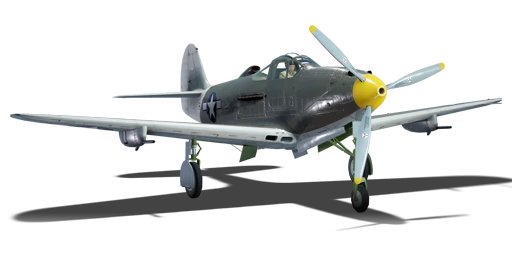
The P-39Q-5 Airacobra is a rank American fighter with a battle rating of (AB), (RB), and (SB). It has been in the game since the start of the Open Beta Test prior to Update 1.27.
The primary purpose of a P-39 is that of a low-level interceptor against low-energy aircraft. It lacks the high-altitude performance needed to engage strategic bombers. The 37 mm M4's dropping trajectory and slow rate of fire make it useless in head-on passes. Therefore, prioritise low altitude objectives, like escorting attackers & low alt bombers, or preying on the ones of the enemy.
Compared to the P-39N-0, the Q-5 trades the four .30 calibre machine guns for another pair of .50 calibre machine guns in under-wing gun pods. Keep in mind that these underwing gun pods increase drag, wing loading, and decrease maximum speed in exchange for more firepower.
General info
Flight performance
| Characteristics | Max Speed (km/h at 3,048 m) |
Max altitude (metres) |
Turn time (seconds) |
Rate of climb (metres/second) |
Take-off run (metres) | |||
|---|---|---|---|---|---|---|---|---|
| AB | RB | AB | RB | AB | RB | |||
| Stock | 573 | 554 | 19.2 | 20.1 | 10.3 | 10.3 | 280 | |
| Upgraded | 636 | 602 | 16.8 | 18.0 | 20.3 | 14.4 | ||
Details
| Features | ||||
|---|---|---|---|---|
| Combat flaps | Take-off flaps | Landing flaps | Air brakes | Arrestor gear |
| ✓ | ✓ | ✓ | X | X |
| Limits | ||||||
|---|---|---|---|---|---|---|
| Wings (km/h) | Gear (km/h) | Flaps (km/h) | Max Static G | |||
| Combat | Take-off | Landing | + | - | ||
| 886 | 426 | 396 | 241 | ~13 | ~9 | |
| Optimal velocities (km/h) | |||
|---|---|---|---|
| Ailerons | Rudder | Elevators | Radiator |
| < 360 | < 380 | < 450 | > 312 |
Survivability and armour
- 15.87 mm Steel - Propeller hub
- 15.87 mm Steel - Plate in front of the cockpit
- 7 mm Steel - Plate over the instrument cluster
- 6 mm Steel - Upper pilot's seat and headrest encasement
- 6 mm Steel - Rear tail
- 38 mm Bulletproof glass - Windscreen
- 64 mm Bulletproof glass - Headrest of pilot's seat
Modifications and economy
Armaments
Offensive armament
The P-39Q-5 is armed with:
- 1 x 37 mm M4 cannon, nose-mounted (30 rpg)
- 2 x 12.7 mm M2 Browning machine guns, nose-mounted (200 rpg = 400 total)
- 2 x 12.7 mm M2 Browning machine guns, wing-mounted (300 rpg = 600 total)
Suspended armament
The P-39Q-5 can be outfitted with the following ordnance:
- Without load
- 6 x M8 rockets
- 1 x 500 lb AN-M64A1 bomb (500 lb total)
Usage in battles
Basic dogfighting skills apply. Use energy tactics and only fire the cannon under optimum conditions. It is advised to utilise separate keys for the main weapons.
Otherwise, utilise the given machine guns at every opportunity. The centre/cowling mounted .50 cals provide great long-range accuracy & harassment.
"Jack of all trades, master of none" is the credo of the Airacobra. Thus, the basic tactic is to analyse your opponent's weakness and then exploit it. The P-39 will always be able to find an area in which to surpass the foe, or at least is on par to let the skill decide.
Given the P-39's sleek and rather an aerodynamic form, Boom & Zoom is the preferred form of combat. However, this aircraft is capable of turn-fighting as well. Again, the P-39 provides all the options a pilot would want, a "Jack of all trades, master of none".
Manual Engine Control
| MEC elements | ||||||
|---|---|---|---|---|---|---|
| Mixer | Pitch | Radiator | Supercharger | Turbocharger | ||
| Oil | Water | Type | ||||
| Controllable | Controllable Not auto controlled |
Controllable Not auto controlled |
Controllable Not auto controlled |
Separate | Not controllable 1 gear |
Not controllable |
Pros and cons
Pros:
- Heavy armament
- Great dive speed and acceleration
- Good secondary armament of four HMG
- Reasonable turn time
- High top-end diving speed, can dive up to +800 km/h
- Good climb rate
Cons:
- "Jack of all trades, but master of none"
- Different weapon trajectories make aiming difficult
- 37 mm projectiles have extremely low accuracy and muzzle velocity
- 37 mm projectiles are incapable of defeating tank armour, even at optimal angles with AP-T rounds
- Long countdown for the 37 mm in both overheating and reload
- Easy to stall with full controls
- Low ammo count for the machine guns
- More prone to overheating than the P-39N-0
- About 50 km/h slower than the P-39N-0 at optimal altitude (2,800 metres)
- .50 cal underwing gun pods increase drag and wing loading
History
| Archive of the in-game description | |
|---|---|
|
The Q series became the most numerous and advanced of all the Airacobra family. It was a direct successor of the N series. The whole propeller-engine group remained unchanged: the Allison V-1710-85 engine, the reduction gear, the elongated shaft and the Aeroprop type propeller. Because of this, the flight characteristics remained virtually unchanged. However, a more efficient four-bladed propeller was fitted to the series from Q-21 to Q-25. As for the alterations, they mainly concerned the armament. The inefficient wing machine guns of rifle-calibre were removed and usually replaced by two 12.7 mm Brownings in pods under the wings. But these were not always fitted. Most of the aircraft sent for export to the USSR had no wing machine guns. The suspension tank of 87 gallons was replaced by the standard 120-gallon tank. A tank of 110 gallons (416 l) capacity was used in the Q-5 series. The differences between the various Q series consisted mainly of the search for the optimum combination of armour protection and internal fuel tank capacity. Takeoff weight, range and load varied from version to version. Altogether, beginning with Q-1 and ending with Q-30, eight series of the fighter were built, to a total number of 4699 aircraft. Of these, 3291 were exported to the USSR. Furthermore, a few reconnaissance versions of this aircraft, fitted with photo-cameras, were built on the basis of the Q series. This aircraft was not used at all in Great Britain, because the high-altitude speed characteristics of the Cobra were considered unsatisfactory. The US Army Air Corps used the aircraft mainly in the Pacific, in places in which it was impossible to use any aircraft other than the Cobra because of the condition of the airstrips, where the P-39, because of its tricycle landing gear, had no difficulties. Nevertheless, the American pilots feared and disliked the aircraft, calling it "Iron dog" because of its rear-mounted engine and rear centering. Cases were known of the aircraft being deliberately crashed to speed up re-equipment with the more popular P-38. | |
Media
- Skins
- Videos
See also
Links to the articles on the War Thunder Wiki that you think will be useful for the reader, for example:
- reference to the series of the aircraft;
- links to approximate analogues of other nations and research trees.
External links
| Bell Aircraft Corporation | |
|---|---|
| Aircraft | |
| Fighters | P-39N-0 · P-39Q-5 |
| P-400 | |
| P-63A-10 · P-63A-5 · P-63C-5 · ␠Kingcobra | |
| Jet Fighters | P-59A |
| Export | ▂P-39K-1 · ▂Pokryshkin's P-39N-0 · ▂P-39Q-15 · ▄P-39Q-25 |
| ▂P-63A-5 · ▂P-63A-10 · ▂P-63C-5 · ▄P-63C-5 | |
| Helicopters | |
| Attack | AH-1F · AH-1G · AH-1Z · AH-1W |
| OH-58D | |
| Utility | UH-1B · UH-1C · UH-1C XM-30 |
| Export/Licensed | ▅UH-1B · ◄UH-1D |
| Tzefa A · Tzefa B · Tzefa D/E · ▅AH-1S early · ▅AH-1S · ▅AH-1S Kisarazu · ␗AH-1W | |
| ␗OH-58D | |
| See Also | Fuji Heavy Industries · Agusta |
| USA fighters | |
|---|---|
| P-26 Peashooter | P-26A-33 · P-26A-34 · P-26A-34 M2 · P-26B-35 |
| P-36 Hawk | P-36A · Rasmussen's P-36A · P-36C · ○P-36C · P-36G |
| P-39 Airacobra | P-400 · P-39N-0 · P-39Q-5 |
| P-40 | P-40C · P-40E-1 · P-40E-1 TD · P-40F-10 |
| P-43 Lancer | P-43A-1 |
| P-47 Thunderbolt | P-47D-22-RE · P-47D-25 · P-47D-28 · P-47M-1-RE · ⋠P-47M-1-RE · P-47N-15 |
| P-51 Mustang | P-51 · P-51A (Thunder League) · P-51C-10 · P-51D-5 · P-51D-10 · P-51D-20-NA · P-51D-30 · P-51H-5-NA |
| P-63 Kingcobra | P-63A-5 · P-63A-10 · P-63C-5 · ␠Kingcobra |
| Prototypes | XP-55 |
| F2A Buffalo | F2A-1 · Thach's F2A-1 · F2A-3 |
| BF2C | BF2C-1 |
| F3F | F3F-2 · Galer's F3F-2 |
| F4F Wildcat | F4F-3 · F4F-4 |
| F4U Corsair | F4U-1A · F4U-1A (USMC) · F4U-1D · F4U-1C · F4U-4 · F4U-4B · F4U-4B VMF-214 · F2G-1 |
| F6F Hellcat | F6F-5 · F6F-5N |
| F8F Bearcat | F8F-1 · F8F-1B |
| Other countries | ▃Ki-43-II · ▃Ki-61-Ib · ▃A6M2 · ▃Bf 109 F-4 · ▃Fw 190 A-8 · ▃Spitfire LF Mk IXc |