Difference between pages "G.55 serie 1" and "VL Pyörremyrsky"
(→Pros and cons) |
(→Description) |
||
| Line 1: | Line 1: | ||
| − | |||
| − | |||
| − | |||
| − | |||
| − | |||
{{Specs-Card | {{Specs-Card | ||
| − | |code= | + | |code=pyorremyrsky |
|images={{Specs-Card-Image|GarageImage_{{PAGENAME}}.jpg}} | |images={{Specs-Card-Image|GarageImage_{{PAGENAME}}.jpg}} | ||
| − | |cockpit= | + | |cockpit=cockpit_pyorremyrsky.jpg |
}} | }} | ||
== Description == | == Description == | ||
<!-- ''In the description, the first part should be about the history of and the creation and combat usage of the aircraft, as well as its key features. In the second part, tell the reader about the aircraft in the game. Insert a screenshot of the vehicle, so that if the novice player does not remember the vehicle by name, he will immediately understand what kind of vehicle the article is talking about.'' --> | <!-- ''In the description, the first part should be about the history of and the creation and combat usage of the aircraft, as well as its key features. In the second part, tell the reader about the aircraft in the game. Insert a screenshot of the vehicle, so that if the novice player does not remember the vehicle by name, he will immediately understand what kind of vehicle the article is talking about.'' --> | ||
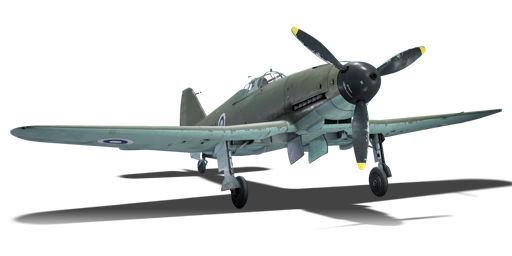
| − | + | From 1942, the superiority of the Red Army Air Force over the Finnish was becoming increasingly obvious. While 160 modern Messerschmitt Bf 109 G-2, G-6, and other versions were transferred to the Finnish Air Force by Germany between 1942 and 1944, the situation began to deteriorate among the Axis countries; due to the increasing successes (especially from the second half of 1943) of the Allied countries, it became obvious that further deliveries of new Bf 109s as well as spare parts for them would become more and more problematic. In this situation, the command of the Finnish Air Force ordered VL to develop a fighter that was to be made of domestic materials (mainly wood and steel), with characteristics comparable to the Bf 109 G-6. Engineers T.R. Verkola, Arvo Ilinen, and Edward Vigelius proposed an aerodynamically clean low-wing aircraft equipped with a German Daimler-Benz DB 605AC engine developing 1,475 hp (1,085 kW) and driving a three-bladed VDM propeller. In the project, the fairing of the propeller sleeve and the engine hood were borrowed from the German aircraft; this made the new Finnish aircraft, designated Pyörremyrsky (hurricane), very similar in front to the Bf 109 G. | |
| + | |||
| + | It was introduced in [[Update 1.93 "Shark Attack"]] as a [[wt:en/news/6450-development-pyörremyrsky-the-nordic-whirlwind-en|premium pack]], but was removed from the Gaijin store after the [[wt:en/news/7674-shop-may-sale-en|2022 May sale]]. It was re-introduced as a regular in-game premium for {{GE}} in [[Update "Fire and Ice"]]. Although the Pyörremyrsky shares some design traits with the [[Bf 109 (Family)|Bf 109 series]] of German fighters, it is a completely domestic Finnish design and has significantly different flight characteristics. It has a very capable flight performance and can be considered a middle point between regular dogfighters like the Yak-3 and boom-and-zoom fighters like the Bf 109. It has a good rate of climb similar to that of the Bf 109, but its top speed and manoeuvrability are closer to that of Soviet fighters. The aircraft has a relatively small ammo pool, requiring trigger discipline to remain active throughout an entire battle. The aircraft is still outperformed by Japanese Zeros, British Spitfires, and Italian C.205s, so it is not recommended trying to dogfight these types of enemies; instead, play passively in a boom-and-zoom role and try to target slower aircraft. | ||
== General info == | == General info == | ||
| Line 18: | Line 15: | ||
{{Specs-Avia-Flight}} | {{Specs-Avia-Flight}} | ||
<!-- ''Describe how the aircraft behaves in the air. Speed, manoeuvrability, acceleration and allowable loads - these are the most important characteristics of the vehicle.'' --> | <!-- ''Describe how the aircraft behaves in the air. Speed, manoeuvrability, acceleration and allowable loads - these are the most important characteristics of the vehicle.'' --> | ||
| − | |||
{| class="wikitable" style="text-align:center" width="70%" | {| class="wikitable" style="text-align:center" width="70%" | ||
! rowspan="2" | Characteristics | ! rowspan="2" | Characteristics | ||
| − | ! colspan="2" | Max Speed<br>(km/h at | + | ! colspan="2" | Max Speed<br>(km/h at 5,000 m) |
! rowspan="2" | Max altitude<br>(metres) | ! rowspan="2" | Max altitude<br>(metres) | ||
! colspan="2" | Turn time<br>(seconds) | ! colspan="2" | Turn time<br>(seconds) | ||
| Line 31: | Line 27: | ||
|- | |- | ||
! Stock | ! Stock | ||
| − | | | + | | 596 || 580 || rowspan="2" | {{Specs|ceiling}} || 19.0 || 19.6 || 14.3 || 14.3 || rowspan="2" | 390 |
|- | |- | ||
! Upgraded | ! Upgraded | ||
| − | | | + | | 647 || 620 || 17.1 || 18.0 || 23.9 || 18.5 |
|- | |- | ||
|} | |} | ||
| Line 60: | Line 56: | ||
! Combat !! Take-off !! Landing !! + !! - | ! Combat !! Take-off !! Landing !! + !! - | ||
|- | |- | ||
| − | | {{Specs|destruction|body}} || {{Specs|destruction|gear}} || 437 || 408 || 260 || ~ | + | | {{Specs|destruction|body}} || {{Specs|destruction|gear}} || 437 || 408 || 260 || ~14 || ~7 |
|- | |- | ||
|} | |} | ||
| Line 70: | Line 66: | ||
! Ailerons !! Rudder !! Elevators !! Radiator | ! Ailerons !! Rudder !! Elevators !! Radiator | ||
|- | |- | ||
| − | | < | + | | < 450 || < 390 || < 450 || > 715 |
| − | |||
| − | |||
| − | |||
| − | |||
| − | |||
| − | |||
| − | |||
| − | |||
| − | |||
| − | |||
| − | |||
| − | |||
| − | |||
| − | |||
|- | |- | ||
|} | |} | ||
| Line 92: | Line 74: | ||
<!-- ''Examine the survivability of the aircraft. Note how vulnerable the structure is and how secure the pilot is, whether the fuel tanks are armoured, etc. Describe the armour, if there is any, and also mention the vulnerability of other critical aircraft systems.'' --> | <!-- ''Examine the survivability of the aircraft. Note how vulnerable the structure is and how secure the pilot is, whether the fuel tanks are armoured, etc. Describe the armour, if there is any, and also mention the vulnerability of other critical aircraft systems.'' --> | ||
| − | * | + | This aircraft, having only one spar in each wing along with its water coolant system, is not a hugely durable aircraft - though it's not fragile either. The combined 20 mm of spaced armour behind the pilot is fairly effective for protection but a lack of any frontal armour makes the Pyörremyrsky very vulnerable in head-ons or in bomber hunting. |
| − | * | + | |
| − | + | * 10 mm Steel - Pilot's seat | |
| − | * | + | * 10 mm Steel - Behind pilot |
| − | + | * Self-sealing fuel tank (1 behind pilot) | |
=== Modifications and economy === | === Modifications and economy === | ||
| Line 106: | Line 88: | ||
{{Specs-Avia-Offensive}} | {{Specs-Avia-Offensive}} | ||
<!-- ''Describe the offensive armament of the aircraft, if any. Describe how effective the cannons and machine guns are in a battle, and also what belts or drums are better to use. If there is no offensive weaponry, delete this subsection.'' --> | <!-- ''Describe the offensive armament of the aircraft, if any. Describe how effective the cannons and machine guns are in a battle, and also what belts or drums are better to use. If there is no offensive weaponry, delete this subsection.'' --> | ||
| − | {{main|MG 151 (20 mm)| | + | {{main|MG 151 (20 mm)|LKk/42 (12.7 mm)}} |
The '''''{{PAGENAME}}''''' is armed with: | The '''''{{PAGENAME}}''''' is armed with: | ||
| − | * 1 x 20 mm MG 151 | + | * 1 x 20 mm MG 151 cannon, nose-mounted (150 rpg) |
| − | + | * 2 x 12.7 mm LKk/42 machine guns, nose-mounted (300 rpg = 600 total) | |
| − | * 2 x 12.7 mm | ||
| − | |||
| − | |||
| − | |||
| − | |||
=== Suspended armament === | === Suspended armament === | ||
{{Specs-Avia-Suspended}} | {{Specs-Avia-Suspended}} | ||
<!-- ''Describe the aircraft's suspended armament: additional cannons under the wings, bombs, rockets and torpedoes. This section is especially important for bombers and attackers. If there is no suspended weaponry remove this subsection.'' --> | <!-- ''Describe the aircraft's suspended armament: additional cannons under the wings, bombs, rockets and torpedoes. This section is especially important for bombers and attackers. If there is no suspended weaponry remove this subsection.'' --> | ||
| − | {{main| | + | {{main|Model 1938 (50 kg)|Model 1938 (100 kg)}} |
The '''''{{PAGENAME}}''''' can be outfitted with the following ordnance: | The '''''{{PAGENAME}}''''' can be outfitted with the following ordnance: | ||
* Without load | * Without load | ||
| − | * | + | * 4 x 50 kg Model 1938 bombs (200 kg total) |
| − | * | + | * 4 x 100 kg Model 1938 bombs (400 kg total) |
== Usage in battles == | == Usage in battles == | ||
| − | <!-- ''Describe the tactics of playing in the aircraft, the features of using aircraft in a team and advice on tactics. Refrain from creating a "guide" - do not impose a single point of view, but instead, give the reader food for thought. Examine the most dangerous enemies and give recommendations on fighting them. If necessary, note the specifics of the game in different modes (AB, RB, SB).'' --> | + | <!-- ''Describe the tactics of playing in the aircraft, the features of using aircraft in a team and advice on tactics. Refrain from creating a "guide" - do not impose a single point of view, but instead, give the reader food for thought. Examine the most dangerous enemies and give recommendations on fighting them. If necessary, note the specifics of the game in different modes (AB, RB, SB).'' -->This 1945 aircraft is not a great fighter to low-level pursuits where really great top speed is crucial. But instead, use this plane for medium-altitude engagements. Where an altitude advantage allows the Pyörremyrsky to increase the speed and surprise its enemies with a proper turn rate. This aircraft excels in both boom 'n' zoom but is also an excellent dogfighter, sporting fantastic low speed handling characteristics (especially with combat and takeoff flaps), a steady gun platform and, as previously mentioned, a fairly tight turning circle. |
| − | |||
| − | + | The Pyörremyrsky climbs very well and maintains adequate speed up to approximately 5,000 m, this is more than enough speed to initiate combat actions, albeit Finnish pilots can continue the climb to allow themselves more combat choices. Oppositely, they can remain below the 5,000 m and work together with their Swedish brothers to down all the enemy team; the Pyörremyrsky often acting as the decoy. The engine power is favourable, and under WEP produces over 1,400HP which the Pyörremyrsky can maintain almost indefinitely with proper radiator and oil radiator management. | |
| − | + | The intercepting role varies somewhat nonetheless. Pyörremyrsky does not offer great frontal protection, so engaging bombers with good turret protection is not the best idea. Specially bombers like the mighty Soviet [[Pe-8]] or the German [[He 219 A-7]] which are loaded with high-calibre weapons able to harm your pilot with a direct shot or break the light Pyörremyrsky apart. The rather reserved ammo count also limits the input damage against bombers. Because of that same reason, head-on attacks are ill-advised, only should be attempted versus planes with a good turn rate and light airframe. Usually the Japanese [[A6M3|Zeros]], The British [[Spitfire (Family)|Spitfires]] or the Italian [[C.205 (Family)|C.205s]]. Though, there are exceptions where the player must know how to engage a specific enemy. When to dive away or when to engage in a turning duel. | |
| − | + | === Ground Battles === | |
| − | + | The Pyörremyrsky is not the fastest plane in here. Therefore players need to consider 2 main roles if they seek good rewards in the Pyörremyrsky flying over the tank's battlefield. | |
| − | + | ||
| − | + | '''Air Superiority role''' | |
| + | |||
| + | In this role the Pyörremyrsky will take no bombs and instead climb over the battlefield, diving down and taking attacks of opportunity against enemy aircraft. The aircraft excels in this role as it preserves energy well and even if lured into a low level dogfight, will still be in home turf if in the hands of a skilled pilot. | ||
| + | |||
| + | Generally, the target planes are attackers with low top speed or fighters with bombs, so the Pyörremyrsky should have no trouble downing them with a surprise advantage. | ||
| + | |||
| + | '''Close air support''' | ||
| + | |||
| + | Here the Pyörremyrsky performs as a light strike fighter armed with the 4 x 100 kg bombs. This bomb load for a single engined fighter is very good and lends the Pyörremyrsky a fantastic multi-role capability. The bombs can inflict some serious damage and then the aircraft can serve to preserve air superiority over the battle. | ||
| + | |||
| + | Crew exposed vehicles or light tanks can also be destroyed with the heavy machine guns or cannons, both of which have good AP belts and can inflict some damage to armoured vehicles from a top-down approach. | ||
=== Manual Engine Control === | === Manual Engine Control === | ||
| Line 155: | Line 141: | ||
! Oil !! Water !! Type | ! Oil !! Water !! Type | ||
|- | |- | ||
| − | | Not controllable || Controllable<br> | + | | Not controllable || Controllable<br>Auto control available || Controllable<br>Auto control available || Controllable<br>Auto control available || Separate || Not controllable<br>1 gear || Not controllable |
|- | |- | ||
|} | |} | ||
| Line 164: | Line 150: | ||
'''Pros:''' | '''Pros:''' | ||
| − | * Good | + | * Good armament, MG 151/20 and two 12.7 mm LKk/42 both nose mounted |
| − | + | * The LKk/42 MGs can load entirely AP ammunition that can penetrate 26 mm of armour | |
| − | * | + | * Good turn rate, can outturn some Merlin Spitfires in sustained turnfight |
| − | * Good turn | + | * Decent flaps allow for decreased turn radius |
| − | * | + | * Fantastic engine characteristics (overheating can be negated entirely) |
| − | * | + | * Very steady and reliable gun platform |
'''Cons:''' | '''Cons:''' | ||
| − | * | + | * Not hugely fast, Bf 109 series starting F-4 outrun it |
| − | * | + | * No frontal armour protection |
| − | * | + | * Not best suited to bomber hunting |
| − | |||
| − | |||
== History == | == History == | ||
<!-- ''Describe the history of the creation and combat usage of the aircraft in more detail than in the introduction. If the historical reference turns out to be too long, take it to a separate article, taking a link to the article about the vehicle and adding a block "/History" (example: <nowiki>https://wiki.warthunder.com/(Vehicle-name)/History</nowiki>) and add a link to it here using the <code>main</code> template. Be sure to reference text and sources by using <code><nowiki><ref></ref></nowiki></code>, as well as adding them at the end of the article with <code><nowiki><references /></nowiki></code>. This section may also include the vehicle's dev blog entry (if applicable) and the in-game encyclopedia description (under <code><nowiki>=== In-game description ===</nowiki></code>, also if applicable).'' --> | <!-- ''Describe the history of the creation and combat usage of the aircraft in more detail than in the introduction. If the historical reference turns out to be too long, take it to a separate article, taking a link to the article about the vehicle and adding a block "/History" (example: <nowiki>https://wiki.warthunder.com/(Vehicle-name)/History</nowiki>) and add a link to it here using the <code>main</code> template. Be sure to reference text and sources by using <code><nowiki><ref></ref></nowiki></code>, as well as adding them at the end of the article with <code><nowiki><references /></nowiki></code>. This section may also include the vehicle's dev blog entry (if applicable) and the in-game encyclopedia description (under <code><nowiki>=== In-game description ===</nowiki></code>, also if applicable).'' --> | ||
| − | |||
| − | + | Pyörremyrsky, meaning hurricane, tornado or whirlwind in Finnish (pyörre > vortex/whirl, myrsky > storm), was the name of a Finnish fighter design at the end of WWII. Designed by Torsti Rafael Verkkola (1909-1977), the chief designer of Valtion lentokonetehdas (VL or "State Aircraft Factory") and the designer of the previous Myrsky fighter and the Pyry trainer, the Pyörremyrsky was conceived as a domestic equivalent to the Messerschmitt Bf 109G. | |
| − | + | === Design === | |
| + | Conceptually, the Pyörremyrsky was very similar to the Bf 109G: it was powered by the same Daimler Benz DB605 engine and had a similar armament, consisting of one hub-mounted 20 mm MG 151/20 cannon and two 12.7 mm hood-mounted machine guns. However, the design was optimized for domestic production, making maximum use of wooden sub-assemblies, and crucially, unlike the Bf 109, it used a wing-mounted landing gear with a wide ground track, giving the design better handling on the ground. | ||
| − | + | === Testing === | |
| + | Design and construction of the Pyörremyrsky met significant delays, and while the original tender called for a prototype to be ready in May 1944, it wasn't until 21 November 1945 that the prototype was ready and made its first flight. | ||
| + | |||
| + | The prototype was designated PM-1. PM being its intended type designation and 1 being its airframe number. The designation PM is an abbreviation of '''P'''yörre'''m'''yrsky. | ||
| + | |||
| + | Flight trials of the Pyörremyrsky revealed some minor issues, but other than that, the design was very promising. Performance of the Pyörremyrsky was very similar to that of the Bf 109G, but it had a superior climbing speed and proved to be very agile. One major worry, however, was the quality of the glue used to bind the wooden components. | ||
| + | |||
| + | === Fate === | ||
| + | The end of the War saw Finland's military subjected to severe restrictions under the Moscow Armistice, which also called for a reduction of its forces. This limited the air force to only 60 fighter aircraft. As a result, the Pyörremyrsky became surplus before it even reached production as Finland chose to retain the Messerschmitt Bf 109 G as its primary fighter for economical reasons. The last of the Finnish Bf 109 Gs bowed out of service on March 13th 1954. The sole completed prototype of the Pyörremyrsky was put into storage after its last flight on July 22nd 1947, and stricken from the Finnish Air Force's inventory on April 1st 1953. Fortunately the prototype was preserved: it is now displayed at the Aviation Museum of Central Finland in Tikkakoski. | ||
| + | |||
| + | === Legacy === | ||
| + | Fortunately the Pyörremyrsky legacy continued even after the prototype was grounded. In 1948, construction started on a replacement of the VL Pyry trainer. The new design reused the wing design of the Pyörremyrsky in combination with a new fuselage. This aircraft, which was constructed by the successor of VL, Valmet, was named Vihuri (Gale) and first flew on February 6th 1951. The Vihuri prototype was designated VH-1, VH being an abbreviation of '''V'''i'''h'''uri. | ||
| + | |||
| + | After successful tests the Finnish air force ordered 30 aircraft on 27 February 1951. These were collectively called Vihuri sarja (series) II and carried the numbers VH-2 to VH-31. Series II were entered service in 1953 and this prompted the Finnish air force to order yet another 20 aircraft by autumn 1954. These aircraft were collectively called Vihuri series III and carried the numbers VH-32 to VH-51. All of series III were handed over to the Finnish air force on 15 January 1957. | ||
| + | |||
| + | Unlike the Pyörremyrsky the Vihuri was entirely constructed from metal. As a trainer it was a sound design, however it suffered badly in the engine department. The Vihuri design used old Tampere (Bristol) Mercury engines which had been recuperated from scrapped Bristol Blenheim bombers. These engines were already worn out by the time they were installed on the trainers which lead to a lot of breakdowns. After a string of fatal accidents the design was placed under severe suspicion and in March of 1957 all the Vihuri's were grounded after an accident was caused by structural failure. A subsequent inquest showed this particular accident as well as most of the previous ones were caused by pilots violating the flight safety regulations, taking the aircraft beyond its structural limitations. The Vihuri was returned to service in May of 1957, but following two further fatal accidents in 1959 the type was permanently grounded and stricken from the Finnish Air Force's inventory, with 31 out of 32 surviving airframes being sold for scrap; ironically it was outlasted in service by the Pyry (withdrawing in 1962), the design it was supposed to replace as a trainer. The sole surviving complete Vihuri is now displayed next to the sole surviving Pyörremyrsky at the Tikkakoski air force museum. | ||
== Media == | == Media == | ||
| Line 194: | Line 193: | ||
;Skins | ;Skins | ||
| − | * [https://live.warthunder.com/feed/camouflages/?vehicle= | + | * [https://live.warthunder.com/feed/camouflages/?vehicle=pyorremyrsky Skins and camouflages for the {{PAGENAME}} from live.warthunder.com.] |
| − | + | ;Images | |
| + | <gallery mode="packed" heights="150px"> | ||
| + | File:Pyorremyrsky WTWallpaper 001.jpg | ||
| + | File:Pyorremyrsky WTWallpaper 002.jpg | ||
| + | File:Pyorremyrsky WTWallpaper 003.jpg | ||
| + | File:Pyorremyrsky WTWallpaper 004.jpg | ||
| + | File:Pyorremyrsky WTWallpaper 005.jpg | ||
| + | File:Pyorremyrsky WTWallpaper 006.jpg | ||
| + | File:Pyorremyrsky WTWallpaper 007.jpg | ||
| + | </gallery> | ||
| + | |||
| + | ;Videos | ||
| + | {{Youtube-gallery|u_HsKH1DYlc|'''Premium Vehicles: VL Pyörremyrsky''' - ''War Thunder Wiki''|ZPGPaceu1oI|'''Pyörremyrsky "One Hard Hitting Finn!"''' - ''Bo Time Gaming''|AKxlwtWIlSI|'''The Shooting Range #173''' - ''Pages of History'' section at 03:47 discusses the Pyörremyrsky. | ||
| + | }} | ||
== See also == | == See also == | ||
| Line 205: | Line 217: | ||
;Aircraft of comparable role, configuration and era | ;Aircraft of comparable role, configuration and era | ||
| − | * [[ | + | * Yakovlev [[Yak-9 (Family)|Yak-9]] |
| − | * [[ | + | * Macchi [[C.205 (Family)|C.205]] |
| − | * [[ | + | * Fiat [[G.55 (Family)|G.55]] |
| − | * [[ | + | * Reggiane [[Re.2005 serie 0|Re.2005]] |
| − | |||
== External links == | == External links == | ||
| Line 216: | Line 227: | ||
* ''other literature.'' --> | * ''other literature.'' --> | ||
| − | * [[wt:en/news/ | + | * [[wt:en/news/6448-development-py%C3%B6rremyrsky-the-nordic-whirlwind-en|[Development] Pyörremyrsky: The Nordic Whirlwind]] |
| − | * [https://forum.warthunder.com/index.php?/topic/ | + | * [[wikipedia:VL_Pyörremyrsky|[Wikipedia] VL Pyörremyrsky]] |
| + | * [https://forum.warthunder.com/index.php?/topic/474725-pyorremyrsky/ Official data sheet - more details about the performance] | ||
| − | {{AirManufacturer | + | {{AirManufacturer VL}} |
| − | {{ | + | {{Sweden fighters}} |
| + | {{Sweden premium aircraft}} | ||
Latest revision as of 12:20, 26 July 2024

Contents
Description
From 1942, the superiority of the Red Army Air Force over the Finnish was becoming increasingly obvious. While 160 modern Messerschmitt Bf 109 G-2, G-6, and other versions were transferred to the Finnish Air Force by Germany between 1942 and 1944, the situation began to deteriorate among the Axis countries; due to the increasing successes (especially from the second half of 1943) of the Allied countries, it became obvious that further deliveries of new Bf 109s as well as spare parts for them would become more and more problematic. In this situation, the command of the Finnish Air Force ordered VL to develop a fighter that was to be made of domestic materials (mainly wood and steel), with characteristics comparable to the Bf 109 G-6. Engineers T.R. Verkola, Arvo Ilinen, and Edward Vigelius proposed an aerodynamically clean low-wing aircraft equipped with a German Daimler-Benz DB 605AC engine developing 1,475 hp (1,085 kW) and driving a three-bladed VDM propeller. In the project, the fairing of the propeller sleeve and the engine hood were borrowed from the German aircraft; this made the new Finnish aircraft, designated Pyörremyrsky (hurricane), very similar in front to the Bf 109 G.
It was introduced in Update 1.93 "Shark Attack" as a premium pack, but was removed from the Gaijin store after the 2022 May sale. It was re-introduced as a regular in-game premium for  in Update "Fire and Ice". Although the Pyörremyrsky shares some design traits with the Bf 109 series of German fighters, it is a completely domestic Finnish design and has significantly different flight characteristics. It has a very capable flight performance and can be considered a middle point between regular dogfighters like the Yak-3 and boom-and-zoom fighters like the Bf 109. It has a good rate of climb similar to that of the Bf 109, but its top speed and manoeuvrability are closer to that of Soviet fighters. The aircraft has a relatively small ammo pool, requiring trigger discipline to remain active throughout an entire battle. The aircraft is still outperformed by Japanese Zeros, British Spitfires, and Italian C.205s, so it is not recommended trying to dogfight these types of enemies; instead, play passively in a boom-and-zoom role and try to target slower aircraft.
General info
Flight performance
| Characteristics | Max Speed (km/h at 5,000 m) |
Max altitude (metres) |
Turn time (seconds) |
Rate of climb (metres/second) |
Take-off run (metres) | |||
|---|---|---|---|---|---|---|---|---|
| AB | RB | AB | RB | AB | RB | |||
| Stock | 596 | 580 | 19.0 | 19.6 | 14.3 | 14.3 | 390 | |
| Upgraded | 647 | 620 | 17.1 | 18.0 | 23.9 | 18.5 | ||
Details
| Features | ||||
|---|---|---|---|---|
| Combat flaps | Take-off flaps | Landing flaps | Air brakes | Arrestor gear |
| ✓ | ✓ | ✓ | X | X |
| Limits | ||||||
|---|---|---|---|---|---|---|
| Wings (km/h) | Gear (km/h) | Flaps (km/h) | Max Static G | |||
| Combat | Take-off | Landing | + | - | ||
| 437 | 408 | 260 | ~14 | ~7 | ||
| Optimal velocities (km/h) | |||
|---|---|---|---|
| Ailerons | Rudder | Elevators | Radiator |
| < 450 | < 390 | < 450 | > 715 |
Survivability and armour
This aircraft, having only one spar in each wing along with its water coolant system, is not a hugely durable aircraft - though it's not fragile either. The combined 20 mm of spaced armour behind the pilot is fairly effective for protection but a lack of any frontal armour makes the Pyörremyrsky very vulnerable in head-ons or in bomber hunting.
- 10 mm Steel - Pilot's seat
- 10 mm Steel - Behind pilot
- Self-sealing fuel tank (1 behind pilot)
Modifications and economy
Armaments
Offensive armament
The VL Pyörremyrsky is armed with:
- 1 x 20 mm MG 151 cannon, nose-mounted (150 rpg)
- 2 x 12.7 mm LKk/42 machine guns, nose-mounted (300 rpg = 600 total)
Suspended armament
The VL Pyörremyrsky can be outfitted with the following ordnance:
- Without load
- 4 x 50 kg Model 1938 bombs (200 kg total)
- 4 x 100 kg Model 1938 bombs (400 kg total)
Usage in battles
This 1945 aircraft is not a great fighter to low-level pursuits where really great top speed is crucial. But instead, use this plane for medium-altitude engagements. Where an altitude advantage allows the Pyörremyrsky to increase the speed and surprise its enemies with a proper turn rate. This aircraft excels in both boom 'n' zoom but is also an excellent dogfighter, sporting fantastic low speed handling characteristics (especially with combat and takeoff flaps), a steady gun platform and, as previously mentioned, a fairly tight turning circle.
The Pyörremyrsky climbs very well and maintains adequate speed up to approximately 5,000 m, this is more than enough speed to initiate combat actions, albeit Finnish pilots can continue the climb to allow themselves more combat choices. Oppositely, they can remain below the 5,000 m and work together with their Swedish brothers to down all the enemy team; the Pyörremyrsky often acting as the decoy. The engine power is favourable, and under WEP produces over 1,400HP which the Pyörremyrsky can maintain almost indefinitely with proper radiator and oil radiator management.
The intercepting role varies somewhat nonetheless. Pyörremyrsky does not offer great frontal protection, so engaging bombers with good turret protection is not the best idea. Specially bombers like the mighty Soviet Pe-8 or the German He 219 A-7 which are loaded with high-calibre weapons able to harm your pilot with a direct shot or break the light Pyörremyrsky apart. The rather reserved ammo count also limits the input damage against bombers. Because of that same reason, head-on attacks are ill-advised, only should be attempted versus planes with a good turn rate and light airframe. Usually the Japanese Zeros, The British Spitfires or the Italian C.205s. Though, there are exceptions where the player must know how to engage a specific enemy. When to dive away or when to engage in a turning duel.
Ground Battles
The Pyörremyrsky is not the fastest plane in here. Therefore players need to consider 2 main roles if they seek good rewards in the Pyörremyrsky flying over the tank's battlefield.
Air Superiority role
In this role the Pyörremyrsky will take no bombs and instead climb over the battlefield, diving down and taking attacks of opportunity against enemy aircraft. The aircraft excels in this role as it preserves energy well and even if lured into a low level dogfight, will still be in home turf if in the hands of a skilled pilot.
Generally, the target planes are attackers with low top speed or fighters with bombs, so the Pyörremyrsky should have no trouble downing them with a surprise advantage.
Close air support
Here the Pyörremyrsky performs as a light strike fighter armed with the 4 x 100 kg bombs. This bomb load for a single engined fighter is very good and lends the Pyörremyrsky a fantastic multi-role capability. The bombs can inflict some serious damage and then the aircraft can serve to preserve air superiority over the battle.
Crew exposed vehicles or light tanks can also be destroyed with the heavy machine guns or cannons, both of which have good AP belts and can inflict some damage to armoured vehicles from a top-down approach.
Manual Engine Control
| MEC elements | ||||||
|---|---|---|---|---|---|---|
| Mixer | Pitch | Radiator | Supercharger | Turbocharger | ||
| Oil | Water | Type | ||||
| Not controllable | Controllable Auto control available |
Controllable Auto control available |
Controllable Auto control available |
Separate | Not controllable 1 gear |
Not controllable |
Pros and cons
Pros:
- Good armament, MG 151/20 and two 12.7 mm LKk/42 both nose mounted
- The LKk/42 MGs can load entirely AP ammunition that can penetrate 26 mm of armour
- Good turn rate, can outturn some Merlin Spitfires in sustained turnfight
- Decent flaps allow for decreased turn radius
- Fantastic engine characteristics (overheating can be negated entirely)
- Very steady and reliable gun platform
Cons:
- Not hugely fast, Bf 109 series starting F-4 outrun it
- No frontal armour protection
- Not best suited to bomber hunting
History
Pyörremyrsky, meaning hurricane, tornado or whirlwind in Finnish (pyörre > vortex/whirl, myrsky > storm), was the name of a Finnish fighter design at the end of WWII. Designed by Torsti Rafael Verkkola (1909-1977), the chief designer of Valtion lentokonetehdas (VL or "State Aircraft Factory") and the designer of the previous Myrsky fighter and the Pyry trainer, the Pyörremyrsky was conceived as a domestic equivalent to the Messerschmitt Bf 109G.
Design
Conceptually, the Pyörremyrsky was very similar to the Bf 109G: it was powered by the same Daimler Benz DB605 engine and had a similar armament, consisting of one hub-mounted 20 mm MG 151/20 cannon and two 12.7 mm hood-mounted machine guns. However, the design was optimized for domestic production, making maximum use of wooden sub-assemblies, and crucially, unlike the Bf 109, it used a wing-mounted landing gear with a wide ground track, giving the design better handling on the ground.
Testing
Design and construction of the Pyörremyrsky met significant delays, and while the original tender called for a prototype to be ready in May 1944, it wasn't until 21 November 1945 that the prototype was ready and made its first flight.
The prototype was designated PM-1. PM being its intended type designation and 1 being its airframe number. The designation PM is an abbreviation of Pyörremyrsky.
Flight trials of the Pyörremyrsky revealed some minor issues, but other than that, the design was very promising. Performance of the Pyörremyrsky was very similar to that of the Bf 109G, but it had a superior climbing speed and proved to be very agile. One major worry, however, was the quality of the glue used to bind the wooden components.
Fate
The end of the War saw Finland's military subjected to severe restrictions under the Moscow Armistice, which also called for a reduction of its forces. This limited the air force to only 60 fighter aircraft. As a result, the Pyörremyrsky became surplus before it even reached production as Finland chose to retain the Messerschmitt Bf 109 G as its primary fighter for economical reasons. The last of the Finnish Bf 109 Gs bowed out of service on March 13th 1954. The sole completed prototype of the Pyörremyrsky was put into storage after its last flight on July 22nd 1947, and stricken from the Finnish Air Force's inventory on April 1st 1953. Fortunately the prototype was preserved: it is now displayed at the Aviation Museum of Central Finland in Tikkakoski.
Legacy
Fortunately the Pyörremyrsky legacy continued even after the prototype was grounded. In 1948, construction started on a replacement of the VL Pyry trainer. The new design reused the wing design of the Pyörremyrsky in combination with a new fuselage. This aircraft, which was constructed by the successor of VL, Valmet, was named Vihuri (Gale) and first flew on February 6th 1951. The Vihuri prototype was designated VH-1, VH being an abbreviation of Vihuri.
After successful tests the Finnish air force ordered 30 aircraft on 27 February 1951. These were collectively called Vihuri sarja (series) II and carried the numbers VH-2 to VH-31. Series II were entered service in 1953 and this prompted the Finnish air force to order yet another 20 aircraft by autumn 1954. These aircraft were collectively called Vihuri series III and carried the numbers VH-32 to VH-51. All of series III were handed over to the Finnish air force on 15 January 1957.
Unlike the Pyörremyrsky the Vihuri was entirely constructed from metal. As a trainer it was a sound design, however it suffered badly in the engine department. The Vihuri design used old Tampere (Bristol) Mercury engines which had been recuperated from scrapped Bristol Blenheim bombers. These engines were already worn out by the time they were installed on the trainers which lead to a lot of breakdowns. After a string of fatal accidents the design was placed under severe suspicion and in March of 1957 all the Vihuri's were grounded after an accident was caused by structural failure. A subsequent inquest showed this particular accident as well as most of the previous ones were caused by pilots violating the flight safety regulations, taking the aircraft beyond its structural limitations. The Vihuri was returned to service in May of 1957, but following two further fatal accidents in 1959 the type was permanently grounded and stricken from the Finnish Air Force's inventory, with 31 out of 32 surviving airframes being sold for scrap; ironically it was outlasted in service by the Pyry (withdrawing in 1962), the design it was supposed to replace as a trainer. The sole surviving complete Vihuri is now displayed next to the sole surviving Pyörremyrsky at the Tikkakoski air force museum.
Media
- Skins
- Images


- Videos
See also
- Aircraft of comparable role, configuration and era
External links
- [Development] Pyörremyrsky: The Nordic Whirlwind
- [Wikipedia] VL Pyörremyrsky
- Official data sheet - more details about the performance
| Finnish State Aircraft Factory (Valtion Lentokonetehdas) | |
|---|---|
| Fighters | Mörkö-Morane* · VL Myrsky II · VL Pyörremyrsky |
| ▄Fokker D.XXI-3* · ▄Fokker D.XXI* | |
| * Licensed Production / Variants | |
| See Also | Morane-Saulnier · Fokker |
| Sweden fighters | |
|---|---|
| ASJA | J6B |
| Saab | J21A-1 · J21A-2 · A21A-3 |
| FFVS | J22-A · J22-B |
| Foreign Import | J8A · Iacobi's J8A · J9 Early · J11 · J20 · J26 David · J26 |
| Finland | |
| VL | Mörkö-Morane · VL Myrsky II · VL Pyörremyrsky |
| (NL) Fokker | ▄Fokker D.XXI-3 · ▄Fokker D.XXI |
| (DE) Messerschmitt | ▄Bf 109 G-2 · ▄Bf 109 G-6 Erla · ▄Bf 109 G-6 |
| Other | ▄B-239 · ▄Hurricane Mk I/L |
| Sweden premium aircraft | |
|---|---|
| Fighters | Iacobi's J8A · ▄Fokker D.XXI · Mörkö-Morane · VL Myrsky II · J9 Early · J26 David · VL Pyörremyrsky · ▄Bf 109 G-6 |
| Jet fighters | J29D · J35A · Saab J35XS · JA37DI F21 |
| Strike aircraft | SAAB-105OE · A32A Röd Adam |
| Bomber | ▄Ar 196 A-5 |