Difference between pages "Chi-To Late" and "Chi-Ri II"
(Edits) |
(→See also) |
||
| Line 1: | Line 1: | ||
| − | |||
| − | |||
| − | |||
| − | |||
| − | |||
{{Specs-Card | {{Specs-Card | ||
| − | |code= | + | |code=jp_type_5_chi_ri |
|images={{Specs-Card-Image|GarageImage_{{PAGENAME}}.jpg|ArtImage_{{PAGENAME}}.png}} | |images={{Specs-Card-Image|GarageImage_{{PAGENAME}}.jpg|ArtImage_{{PAGENAME}}.png}} | ||
}} | }} | ||
| Line 11: | Line 6: | ||
== Description == | == Description == | ||
<!-- ''In the description, the first part should be about the history of the creation and combat usage of the vehicle, as well as its key features. In the second part, tell the reader about the ground vehicle in the game. Insert a screenshot of the vehicle, so that if the novice player does not remember the vehicle by name, he will immediately understand what kind of vehicle the article is talking about.'' --> | <!-- ''In the description, the first part should be about the history of the creation and combat usage of the vehicle, as well as its key features. In the second part, tell the reader about the ground vehicle in the game. Insert a screenshot of the vehicle, so that if the novice player does not remember the vehicle by name, he will immediately understand what kind of vehicle the article is talking about.'' --> | ||
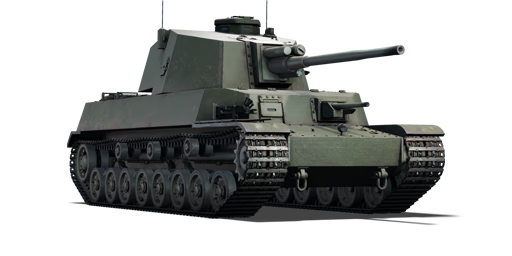
| − | The '''{{Specs|name}}''' ({{Annotation| | + | The '''{{Specs|name}}''' ({{Annotation|五式中戦車II 「チリII」|Go-Shiki Chū-Sensha II [Chi-Ri II]}}) was designed as a result of Japanese field reports on the Eastern front war between Germany and the Soviet Union which evolved tank combat as a separate branch. Roughly offering the hull protection of a KV-1 and the firepower of German long 75 mm's, the Chi-Ri was to be a heavy medium tank offering quality over quantity in tank design. However, with the scale the Chi-Ri was supposed to be designed and the draining of resources the Japanese military experienced through China and mainly the Pacific, resources were diverted to the more practical [[Chi-To]] instead. |
| − | |||
| − | |||
| − | |||
| − | |||
| − | + | The Chi-Ri II was introduced along with the initial Japanese Ground Forces tree in [[Update 1.65 "Way of the Samurai"]]. It's armed with a [[Type II Model I (75 mm)|Type II Model I 75 mm cannon]] and is one of the earliest tanks in the game to feature a fully functional auto-loader for full-size tank guns, with a two-round capacity. The "auto-loader" is simply a tray-assisted ready rack for 2 shells that can be laid ready in front of the gun to simply push in, without the need of pulling ammo directly from the storage racks into the breech. Once the trays have been emptied, the reload will be like any usual tank with a slight penalty. The big drawback of the Chi-Ri II is its size and traverse speeds - while it offers a stronger engine once spaded, the massive turret will crank slowly making response time slow if the hull isn't utilized and the sheer size of the tank makes for a massive target. | |
== General info == | == General info == | ||
| Line 23: | Line 14: | ||
{{Specs-Tank-Armour}} | {{Specs-Tank-Armour}} | ||
<!-- ''Describe armour protection. Note the most well protected and key weak areas. Appreciate the layout of modules as well as the number and location of crew members. Is the level of armour protection sufficient, is the placement of modules helpful for survival in combat? If necessary use a visual template to indicate the most secure and weak zones of the armour.'' --> | <!-- ''Describe armour protection. Note the most well protected and key weak areas. Appreciate the layout of modules as well as the number and location of crew members. Is the level of armour protection sufficient, is the placement of modules helpful for survival in combat? If necessary use a visual template to indicate the most secure and weak zones of the armour.'' --> | ||
| − | |||
| − | |||
'''Armour type:''' | '''Armour type:''' | ||
* Rolled homogeneous armour | * Rolled homogeneous armour | ||
| − | * Cast homogeneous armour (Gun mantlet) | + | * Cast homogeneous armour (Recoil tube, Gun mantlet) |
{| class="wikitable" | {| class="wikitable" | ||
| Line 34: | Line 23: | ||
! Armour !! Front !! Sides !! Rear !! Roof | ! Armour !! Front !! Sides !! Rear !! Roof | ||
|- | |- | ||
| − | | Hull || 75 mm ( | + | | Hull || 75 mm (15°) ''Front plate'' <br> 20 mm (81°) ''Front glacis'' <br> 75 mm (9°) ''Joint plate'' <br> 35 mm (59°) ''Lower glacis''|| 35 mm (18°) ''Top'' <br> 35 mm ''Bottom'' || 35 mm ''Top'' <br> 20 mm (38°) ''Bottom'' || 20 mm |
|- | |- | ||
| − | | Turret || 75 mm ( | + | | Turret || 75 mm (15°) ''Turret front'' <br> 50 mm (10°) ''Inner gun mantlet'' <br> 20-75 mm (10-15°) ''Outer gun mantlet'' || 50 mm (15°) || 50 mm || 20 mm |
| − | |||
|- | |- | ||
| Cupola || 75 mm || 75 mm || 75 mm || 20 mm | | Cupola || 75 mm || 75 mm || 75 mm || 20 mm | ||
| Line 44: | Line 32: | ||
'''Notes:''' | '''Notes:''' | ||
| − | * Suspension wheels are 15 mm thick while tracks are | + | * Suspension wheels and bogies are 15 mm thick while tracks are 20 mm thick. |
| − | + | * Small parts of the suspension on the hull sides give 10 mm thick protection at their area. | |
| − | * Small | ||
=== Mobility === | === Mobility === | ||
| Line 52: | Line 39: | ||
<!-- ''Write about the mobility of the ground vehicle. Estimate the specific power and manoeuvrability, as well as the maximum speed forwards and backwards.'' --> | <!-- ''Write about the mobility of the ground vehicle. Estimate the specific power and manoeuvrability, as well as the maximum speed forwards and backwards.'' --> | ||
| − | {{tankMobility|abMinHp= | + | {{tankMobility|abMinHp=852|rbMinHp=486}} |
| − | |||
| − | |||
=== Modifications and economy === | === Modifications and economy === | ||
| Line 64: | Line 49: | ||
{{Specs-Tank-Weapon|1}} | {{Specs-Tank-Weapon|1}} | ||
<!-- ''Give the reader information about the characteristics of the main gun. Assess its effectiveness in a battle based on the reloading speed, ballistics and the power of shells. Do not forget about the flexibility of the fire, that is how quickly the cannon can be aimed at the target, open fire on it and aim at another enemy. Add a link to the main article on the gun: <code><nowiki>{{main|Name of the weapon}}</nowiki></code>. Describe in general terms the ammunition available for the main gun. Give advice on how to use them and how to fill the ammunition storage.'' --> | <!-- ''Give the reader information about the characteristics of the main gun. Assess its effectiveness in a battle based on the reloading speed, ballistics and the power of shells. Do not forget about the flexibility of the fire, that is how quickly the cannon can be aimed at the target, open fire on it and aim at another enemy. Add a link to the main article on the gun: <code><nowiki>{{main|Name of the weapon}}</nowiki></code>. Describe in general terms the ammunition available for the main gun. Give advice on how to use them and how to fill the ammunition storage.'' --> | ||
| − | {{main|Type II Model | + | {{main|Type II Model I (75 mm)}} |
| − | |||
| − | |||
{| class="wikitable" style="text-align:center" width="100%" | {| class="wikitable" style="text-align:center" width="100%" | ||
|- | |- | ||
| − | ! colspan="5" | [[Type II Model | + | ! colspan="5" | [[Type II Model I (75 mm)|75 mm Type II Model I]] || colspan="5" | Turret rotation speed (°/s) || colspan="4" | Reloading rate (seconds) |
|- | |- | ||
! Mode !! Capacity !! Vertical !! Horizontal !! Stabilizer | ! Mode !! Capacity !! Vertical !! Horizontal !! Stabilizer | ||
| Line 77: | Line 60: | ||
|- | |- | ||
! ''Arcade'' | ! ''Arcade'' | ||
| − | | rowspan="2" | | + | | rowspan="2" | 100 || rowspan="2" | -10°/+20° || rowspan="2" | ±180° || rowspan="2" | N/A || 11.4 || 15.8 || 19.2 || 21.2 || 22.6 || rowspan="2" | 4.29 || rowspan="2" | 3.80 || rowspan="2" | 3.50 || rowspan="2" | 3.30 |
|- | |- | ||
! ''Realistic'' | ! ''Realistic'' | ||
| − | | 7. | + | | 7.1 || 8.4 || 10.2 || 11.3 || 12.0 |
|- | |- | ||
|} | |} | ||
==== Ammunition ==== | ==== Ammunition ==== | ||
| − | {| class="wikitable | + | {{:Type II Model I (75 mm)/Ammunition|Type 1 APHE, Type 4 Kou, Type 90 HE}} |
| − | + | ||
| + | ==== [[Ammo racks]] ==== | ||
| + | [[File:Ammoracks_{{PAGENAME}}.png|right|thumb|x250px|[[Ammo racks]] of the {{PAGENAME}}]] | ||
| + | <!-- '''Last updated: 1.101.0.44''' --> | ||
| + | {| class="wikitable" style="text-align:center" | ||
|- | |- | ||
| − | ! | + | ! Full<br>ammo |
| − | ! | + | ! 1st<br>rack empty |
| − | ! | + | ! 2nd<br>rack empty |
| + | ! 3rd<br>rack empty | ||
| + | ! 4th<br>rack empty | ||
| + | ! 5th<br>rack empty | ||
| + | ! 6th<br>rack empty | ||
|- | |- | ||
| − | + | | '''100''' || 93 ''(+7)'' || 85 ''(+15)'' || 77 ''(+23)'' || 66 ''(+34)'' || 55 ''(+45)'' || 45 ''(+55)'' | |
|- | |- | ||
| − | + | ! 7th<br>rack empty | |
| + | ! 8th<br>rack empty | ||
| + | ! 9th<br>rack empty | ||
| + | ! 10th<br>rack empty | ||
| + | ! 11th<br>rack empty | ||
| + | ! 12th<br>rack empty | ||
| + | ! Visual<br>discrepancy | ||
|- | |- | ||
| − | | | + | | 35 ''(+65)'' || 27 ''(+73)'' || 19 ''(+81)'' || 11 ''(+89)'' || 3 ''(+97)'' || 1 ''(+99)'' || No |
| − | |||
| − | |||
|- | |- | ||
|} | |} | ||
| − | {| class="wikitable | + | '''Notes''' |
| − | + | ||
| + | * Rack 12 is a 2-shell ready-rack, which will replenish when not reloading. | ||
| + | * Hull empty: 35 ''(+65)'' shells. | ||
| + | |||
| + | === Additional armament === | ||
| + | {{Specs-Tank-Weapon|2}} | ||
| + | <!-- ''Some tanks are armed with several guns in one or more turrets. Evaluate the additional weaponry and give advice on its use. Describe the ammunition available for additional weaponry. Give advice on about how to use them and how to fill the ammunition storage. If there is no additional weaponry remove this subsection.'' --> | ||
| + | {{main|Type 1 (37 mm)}} | ||
| + | |||
| + | {| class="wikitable" style="text-align:center" width="60%" | ||
|- | |- | ||
| − | ! | + | ! colspan="4" | [[Type 1 (37 mm)|37 mm Type 1]] (Hull mount) || colspan="4" | Reloading rate (seconds) |
| − | |||
| − | |||
| − | |||
| − | |||
| − | |||
| − | |||
| − | |||
|- | |- | ||
| − | ! | + | ! Capacity !! Vertical !! Horizontal !! Stabilizer |
| − | + | ! Stock !! Full !! Expert !! Aced | |
| − | |||
| − | |||
| − | |||
|- | |- | ||
| − | | | + | | 120 || -8°/+17° || ±10° || N/A || 5.2 || 4.6 || 4.2 || 4.0 |
|- | |- | ||
|} | |} | ||
| + | |||
| + | ==== Ammunition ==== | ||
| + | {{:Type 1 (37 mm)/Ammunition|Type 94 APHE}} | ||
==== [[Ammo racks]] ==== | ==== [[Ammo racks]] ==== | ||
| − | + | <!-- '''Last updated: 1.101.0.44''' --> | |
| − | <!-- '''Last updated: 1.101.0. | ||
{| class="wikitable" style="text-align:center" | {| class="wikitable" style="text-align:center" | ||
|- | |- | ||
| Line 135: | Line 131: | ||
! 5th<br>rack empty | ! 5th<br>rack empty | ||
! 6th<br>rack empty | ! 6th<br>rack empty | ||
| + | ! 7th<br>rack empty | ||
! Visual<br>discrepancy | ! Visual<br>discrepancy | ||
|- | |- | ||
| − | | ''' | + | | '''120''' || 101 ''(+19)'' || 81 ''(+39)'' || 61 ''(+59)'' || 41 ''(+79)'' || 21 ''(+99)'' || 11 ''(+109)'' || 1 ''(+119)'' || No |
|- | |- | ||
|} | |} | ||
| − | ''' | + | [[File:Ammoracks_{{PAGENAME}}.png|right|thumb|x230px|[[Ammo racks]] of the {{PAGENAME}}]] |
| + | '''Notes''': | ||
| − | * | + | * Left side only: 21 ''(+99)'' shells. |
=== Machine guns === | === Machine guns === | ||
| − | |||
{{Specs-Tank-Weapon|3}} | {{Specs-Tank-Weapon|3}} | ||
<!-- ''Offensive and anti-aircraft machine guns not only allow you to fight some aircraft but also are effective against lightly armoured vehicles. Evaluate machine guns and give recommendations on its use.'' --> | <!-- ''Offensive and anti-aircraft machine guns not only allow you to fight some aircraft but also are effective against lightly armoured vehicles. Evaluate machine guns and give recommendations on its use.'' --> | ||
| Line 156: | Line 153: | ||
! Mount !! Capacity (Belt) !! Fire rate !! Vertical !! Horizontal | ! Mount !! Capacity (Belt) !! Fire rate !! Vertical !! Horizontal | ||
|- | |- | ||
| − | | | + | | Hull (coaxial with Hull cannon) || 3,000 (20) || 499 || N/A || N/A |
| − | |||
| − | |||
|- | |- | ||
|} | |} | ||
| Line 164: | Line 159: | ||
== Usage in battles == | == Usage in battles == | ||
<!-- ''Describe the tactics of playing in the vehicle, the features of using vehicles in the team and advice on tactics. Refrain from creating a "guide" - do not impose a single point of view but instead give the reader food for thought. Describe the most dangerous enemies and give recommendations on fighting them. If necessary, note the specifics of the game in different modes (AB, RB, SB).'' --> | <!-- ''Describe the tactics of playing in the vehicle, the features of using vehicles in the team and advice on tactics. Refrain from creating a "guide" - do not impose a single point of view but instead give the reader food for thought. Describe the most dangerous enemies and give recommendations on fighting them. If necessary, note the specifics of the game in different modes (AB, RB, SB).'' --> | ||
| − | + | The best play style with the Chi-Ri II is a conservative one, a strategy equally applicable to its predecessor the [[Chi-To|Chi-To]]. One should lay a far distance from the enemy, using the high-velocity 75 mm gun in a sniping role than a close support. When an enemy appears, fire upon them, and the auto-loader allows for some mistakes as the next burst round is available in about a second for a follow-up shot. Once the three shots are expended, one has the option of either retreating back into cover to allow the autoloader to refill back with its three shells, or simply wait for the gun to reload one shell and fire. The latter option is viable due to the Chi-Ri's good reload speed even without the autoloader. The decent gun depression of -10° allows the Chi-Ri to exploit hull-down positions to maximize cover, so use that to gain a battlefield advantage. | |
| − | |||
| − | |||
| − | |||
| − | |||
| − | |||
| − | The | ||
| − | + | Another play style is a close-quarter ones, going against everything the paragraph above suggests. The three-round capacity of the auto-loader means the Chi-Ri has some decent close-range firepower to use if it can catch a group of enemies unawares from the sides or rear. The Chi-Ri's decent mobility, especially for its huge size, helps with that. Being able to fire two rapid shots of high-damaging 75 mm shell can allow the Chi-Ri to effectively neutralize in a record time before they have time to react. After those shots, the Chi-Ri can either wait in cover and reload the shells, or just fire each shell as its reloaded. However, the tank is always vulnerable to being spotted and surprised due to its massive profile, very weak armour and slow turret traverse. Furthermore, actually reloading the autoloader takes far longer than firing them off. As such, it's easily gunned down then if not supported by friendly tanks. | |
| − | + | One last thing to note is the secondary 37 mm hull gun. This often doesn't get much use, as it only has 46mm of penetration point-blank, making it useless against the majority of the Chi-Ri's opponents. The gun also can't be used to range the 75mm main cannon due to having a very different trajectory. Furthermore, the crew member in charge of the gun is the first to be relocated in case another crew member is knocked out, rendering it unusable unless one gets the chance to get more crew at an objective. However, the 37mm still has its uses against very thinly-armoured opponents such as Hellcats, the turrets of AA vehicles, and the sides of mediums at close enough range. In addition, it can also be used to trick opponents into thinking that the Chi-Ri has already fired all of its shells, causing them to expose themselves and be vulnerable to return fire. | |
| − | + | At this stage, most medium, heavy tanks, and tank destroyer can penetrate the Chi-Ri's armour with ease. Take caution on the battlefield. | |
| − | |||
| − | |||
| − | |||
| − | + | At BR 5.0, the Chi-Ri starts to face some tanks that are quite resistant to its 75 mm cannon, namely the [[Tiger H1|Tiger H1]] and [[IS-1]] heavy tanks. While the Type 4 Kou shell has fantastic post-penetration damage thanks to its high explosive filler, it only has 157mm of penetration. While this is enough to go through these tanks' weak spots, taking the time to aim for them is disadvantageous in a "shoot first, aim later" type of engagement. Meanwhile, Tigers, IS-1s, and Panthers can take out the Chi-Ri out with ease due to the Chi-Ri's thin armour and massive profile. Thus, it is best to pounce on and surprise enemy tanks rather than face them in a frontal duel, catch them by their sides and blow up their interior. The same strategies in place for using the Chi-To Late to deal with the horrors of 5.0 should be implemented with the Chi-Ri. | |
=== Pros and cons === | === Pros and cons === | ||
| Line 188: | Line 174: | ||
'''Pros:''' | '''Pros:''' | ||
| − | * | + | * 3.3 second reload between each shell in the autoloader with a fully trained crew |
| − | * | + | * First Stage Ammo Storage enables the tank to reload in less then 6 seconds even when the auto-loader is empty |
| − | + | * With the First Stage Ammo Storage mechanic, the auto-loader is reloaded when not firing the gun | |
| − | + | * Exceptional burst damage potential | |
| − | * | + | * Very competitive gun depression (-10°) |
| − | * | + | * Secondary 37 mm armament allows for engaging weaker enemy without wasting 75 mm shells, and can be used to trick inattentive enemy players into thinking the main gun has fired |
| − | * | + | * Decent mobility, even with stock engine |
| − | * | ||
| − | |||
'''Cons:''' | '''Cons:''' | ||
| − | * | + | * Atrocious optics |
| − | * | + | |
| − | * | + | * With the First Stage Ammo Storage mechanic, the 4 ammo racks in the back of the turret will be the last to be depleted, increasing the chance of ammo racking |
| − | * | + | * Actually reloading the autoloader takes a very long time |
| − | * | + | * Learning curve to use tank properly is worse than the [[M3 Lee|M3 Mediums]] |
| + | * Massive profile | ||
| + | * Abysmal hull turn time | ||
| + | * Unimpressive turret traverse speed | ||
| + | * Thin, poorly sloped armour all around | ||
| + | * Angled hull front cheek sections make armour angling useless | ||
| + | * 37 mm can only aim forwards and is very weak for Rank 3 | ||
| + | * Average accuracy | ||
| + | * Maximum of 151 mm of penetration with the best shell, can have trouble penetrating same and higher-rank heavy tanks | ||
== History == | == History == | ||
<!-- ''Describe the history of the creation and combat usage of the vehicle in more detail than in the introduction. If the historical reference turns out to be too long, take it to a separate article, taking a link to the article about the vehicle and adding a block "/History" (example: <nowiki>https://wiki.warthunder.com/(Vehicle-name)/History</nowiki>) and add a link to it here using the <code>main</code> template. Be sure to reference text and sources by using <code><nowiki><ref></ref></nowiki></code>, as well as adding them at the end of the article with <code><nowiki><references /></nowiki></code>. This section may also include the vehicle's dev blog entry (if applicable) and the in-game encyclopedia description (under <code><nowiki>=== In-game description ===</nowiki></code>, also if applicable).'' --> | <!-- ''Describe the history of the creation and combat usage of the vehicle in more detail than in the introduction. If the historical reference turns out to be too long, take it to a separate article, taking a link to the article about the vehicle and adding a block "/History" (example: <nowiki>https://wiki.warthunder.com/(Vehicle-name)/History</nowiki>) and add a link to it here using the <code>main</code> template. Be sure to reference text and sources by using <code><nowiki><ref></ref></nowiki></code>, as well as adding them at the end of the article with <code><nowiki><references /></nowiki></code>. This section may also include the vehicle's dev blog entry (if applicable) and the in-game encyclopedia description (under <code><nowiki>=== In-game description ===</nowiki></code>, also if applicable).'' --> | ||
| − | === | + | ===Chi-Ri=== |
| − | + | Under the pretext of their lacklustre tank designs, the Japanese worked on creating a tank that could surpass the Allies' main tank, the [[M4|M4 Sherman]]. Upgraded designs made to deal with the Sherman led to the [[Chi-Nu|Type 3 Chi-Nu]] and the [[Chi-To|Type 4 Chi-To]]. While these two were quite capable against the Sherman, they did not represent the best that the Japanese had to offer. | |
| + | |||
| + | Sometime during the development period of the Chi-Nu and the Chi-To, the Japanese designed a medium tank far more sophisticated than anything they had done previously. The tank was to be equipped with the same 75 mm gun as the Chi-To, except it had an auto-loading system on it. There was to be a hull-mounted 37 mm with a machine gun as well. The chassis was similar to the Chi-To's, but lengthened to eight road wheels per side. It was also powered by a 550 hp gasoline aircraft engine designed by BMW from Germany. The tank was classified as the '''Type 5 Chi-Ri''' and a single prototype without the main gun was produced in May 1945, but efforts were diverted to the more practical Type 4 Chi-To. Due to that, the war ended with only a single Type 5 Chi-Ri prototype produced.<ref name="ZalogaJapaneseTank">Zaloga 2007</ref> | ||
| + | |||
| + | ===Chi-Ri II=== | ||
| + | Though Chi-Ri showed the development process for the new tank design, improvements often come to during prototype stages for a more manageable tank design. The improvements on the Chi-Ri, which would be called the '''Chi-Ri II''', were mainly the removal or addition of certain features, with the added ones namely from the Chi-To. Notable differences would be the use of a supercharged Mitsubishi diesel engine instead of a German gasoline engine, the change in suspension and turret design to resemble the Chi-To's, and the removal of the 37 mm secondary armament. It is uncertain how useful these simplifications are since these are all plans never put into practice.<ref name="FTRChi-RiII">Davis 2013</ref> | ||
| − | + | ===Production plans=== | |
| + | If the Chi-Ri ever entered production, the Japanese had plans for a bit of an upgrade in its firepower. It would be armed with a gun based on the Type 99 88 mm anti-aircraft gun, giving it a much higher velocity cannon that makes the vehicle more than capable of taking out Allied tanks. With the Chi-Ri in production and in numbers, it would be used in Japan's final stand against the Allies should they invade the home islands. | ||
| − | + | However, like many late-war tanks of Japan, they would never see any battle service due to their surrender in September 1945. The single Chi-Ri prototype was captured by the ensuing American occupation force, which they transported to the Aberdeen Proving Grounds for tests. Records show that the Chi-Ri prototype was scrapped along with other foreign tanks on October 1952.<ref name="MaiScrapping">Sun 2017</ref> | |
| − | |||
== Media == | == Media == | ||
| Line 220: | Line 217: | ||
;Skins | ;Skins | ||
| − | * [https://live.warthunder.com/feed/camouflages/?vehicle= | + | |
| + | * [https://live.warthunder.com/feed/camouflages/?vehicle=jp_type_5_chi_ri Skins and camouflages for the {{PAGENAME}} from live.warthunder.com.] | ||
;Videos | ;Videos | ||
| − | {{Youtube-gallery| | + | {{Youtube-gallery|PosWOnOGkSo|'''Best experimental vehicles''' discusses the {{PAGENAME}} at 2:59 - ''War Thunder Official Channel''|RyA5KcS2hAw|'''Multi-turreted Tanks''' discusses the {{PAGENAME}} at 4:21 - ''War Thunder Official Channel''|-jmSoAvIsv4|'''The Shooting Range #26''' - ''Metal Beasts'' section at 00:46 discusses the {{PAGENAME}}.}} |
== See also == | == See also == | ||
| − | ''Links to the articles on the War Thunder Wiki that you think will be useful for the reader, for example:'' | + | <!-- ''Links to the articles on the War Thunder Wiki that you think will be useful for the reader, for example:'' |
* ''reference to the series of the vehicles;'' | * ''reference to the series of the vehicles;'' | ||
| − | * ''links to approximate analogues of other nations and research trees.'' | + | * ''links to approximate analogues of other nations and research trees.'' --> |
| + | |||
| + | ;Other vehicles of similar configuration and role | ||
| + | * [[File:IJA flag.png|30px|link=]] [[Chi-To (Family)]] | ||
| + | * [[File:Germany flag.png|30px|link=]] [[Panther tank (Family)]] | ||
| + | * [[File:USSR flag.png|30px|link=]] [[KV-85]] | ||
| + | * [[File:USA flag.png|30px|link=]] [[M6A1]] | ||
| + | * [[File:France flag.png|30px|link=]] [[ARL-44]] | ||
== External links == | == External links == | ||
| Line 235: | Line 240: | ||
* ''other literature.'' --> | * ''other literature.'' --> | ||
| − | === References === | + | * Zaloga Steven. ''Japanese Tanks 1939-1945'' Great Britain: Osprey Publishing Ltd., 2007 |
| − | + | * Davis, Frank. "Chi Ri II - Japanese Tier 6/7 Medium." For the Record. Blogger.com, 05 June 2013. Web. 12 Jan. 2017. [http://ftr-wot.blogspot.com/2013/06/chi-ri-ii-japanese-tier-67-medium.html] | |
| + | * Sun, Eun Ae. ''Chi-Ri & Chi-To: Aberdeen Tank Scrapping.'' YouTube, YouTube, 7 Aug. 2017, [https://www.youtube.com/watch?v=4mkS8EodQbA] | ||
| + | |||
| + | ===References=== | ||
<references /> | <references /> | ||
| − | |||
| − | |||
| − | |||
| − | |||
| − | |||
{{TankManufacturer Mitsubishi}} | {{TankManufacturer Mitsubishi}} | ||
{{Japan medium tanks}} | {{Japan medium tanks}} | ||
Latest revision as of 11:25, 26 June 2024


Contents
Description
The Type 5 Chi-Ri II (五式中戦車II 「チリII」) was designed as a result of Japanese field reports on the Eastern front war between Germany and the Soviet Union which evolved tank combat as a separate branch. Roughly offering the hull protection of a KV-1 and the firepower of German long 75 mm's, the Chi-Ri was to be a heavy medium tank offering quality over quantity in tank design. However, with the scale the Chi-Ri was supposed to be designed and the draining of resources the Japanese military experienced through China and mainly the Pacific, resources were diverted to the more practical Chi-To instead.
The Chi-Ri II was introduced along with the initial Japanese Ground Forces tree in Update 1.65 "Way of the Samurai". It's armed with a Type II Model I 75 mm cannon and is one of the earliest tanks in the game to feature a fully functional auto-loader for full-size tank guns, with a two-round capacity. The "auto-loader" is simply a tray-assisted ready rack for 2 shells that can be laid ready in front of the gun to simply push in, without the need of pulling ammo directly from the storage racks into the breech. Once the trays have been emptied, the reload will be like any usual tank with a slight penalty. The big drawback of the Chi-Ri II is its size and traverse speeds - while it offers a stronger engine once spaded, the massive turret will crank slowly making response time slow if the hull isn't utilized and the sheer size of the tank makes for a massive target.
General info
Survivability and armour
Armour type:
- Rolled homogeneous armour
- Cast homogeneous armour (Recoil tube, Gun mantlet)
| Armour | Front | Sides | Rear | Roof |
|---|---|---|---|---|
| Hull | 75 mm (15°) Front plate 20 mm (81°) Front glacis 75 mm (9°) Joint plate 35 mm (59°) Lower glacis |
35 mm (18°) Top 35 mm Bottom |
35 mm Top 20 mm (38°) Bottom |
20 mm |
| Turret | 75 mm (15°) Turret front 50 mm (10°) Inner gun mantlet 20-75 mm (10-15°) Outer gun mantlet |
50 mm (15°) | 50 mm | 20 mm |
| Cupola | 75 mm | 75 mm | 75 mm | 20 mm |
Notes:
- Suspension wheels and bogies are 15 mm thick while tracks are 20 mm thick.
- Small parts of the suspension on the hull sides give 10 mm thick protection at their area.
Mobility
| Game Mode | Max Speed (km/h) | Weight (tons) | Engine power (horsepower) | Power-to-weight ratio (hp/ton) | |||
|---|---|---|---|---|---|---|---|
| Forward | Reverse | Stock | Upgraded | Stock | Upgraded | ||
| Arcade | Expression error: Unexpected * operator. | 852 | Expression error: Unexpected round operator. | __.__ | |||
| Realistic | 486 | Expression error: Unexpected round operator. | __.__ | ||||
Modifications and economy
Armaments
Main armament
| 75 mm Type II Model I | Turret rotation speed (°/s) | Reloading rate (seconds) | |||||||||||
|---|---|---|---|---|---|---|---|---|---|---|---|---|---|
| Mode | Capacity | Vertical | Horizontal | Stabilizer | Stock | Upgraded | Full | Expert | Aced | Stock | Full | Expert | Aced |
| Arcade | 100 | -10°/+20° | ±180° | N/A | 11.4 | 15.8 | 19.2 | 21.2 | 22.6 | 4.29 | 3.80 | 3.50 | 3.30 |
| Realistic | 7.1 | 8.4 | 10.2 | 11.3 | 12.0 | ||||||||
Ammunition
| Penetration statistics | |||||||
|---|---|---|---|---|---|---|---|
| Ammunition | Type of warhead |
Penetration @ 0° Angle of Attack (mm) | |||||
| 10 m | 100 m | 500 m | 1,000 m | 1,500 m | 2,000 m | ||
| Type 1 APHE | APHE | 149 | 146 | 133 | 118 | 105 | 93 |
| Type 4 Kou | APHE | 151 | 148 | 137 | 124 | 112 | 101 |
| Type 90 HE | HE | 17 | 17 | 15 | 14 | 12 | 11 |
| Shell details | ||||||||||||
|---|---|---|---|---|---|---|---|---|---|---|---|---|
| Ammunition | Type of warhead |
Velocity (m/s) |
Projectile mass (kg) |
Fuse delay (m) |
Fuse sensitivity (mm) |
Explosive mass (TNT equivalent) (g) |
Ricochet | |||||
| 0% | 50% | 100% | ||||||||||
| Type 1 APHE | APHE | 865 | 6.56 | 1.3 | 15 | 84.8 | 47° | 60° | 65° | |||
| Type 4 Kou | APHE | 865 | 6.75 | 1.2 | 14 | 80.64 | 47° | 60° | 65° | |||
| Type 90 HE | HE | 830 | 6.17 | 0.2 | 0.1 | 490 | 79° | 80° | 81° | |||
Ammo racks

| Full ammo |
1st rack empty |
2nd rack empty |
3rd rack empty |
4th rack empty |
5th rack empty |
6th rack empty |
|---|---|---|---|---|---|---|
| 100 | 93 (+7) | 85 (+15) | 77 (+23) | 66 (+34) | 55 (+45) | 45 (+55) |
| 7th rack empty |
8th rack empty |
9th rack empty |
10th rack empty |
11th rack empty |
12th rack empty |
Visual discrepancy |
| 35 (+65) | 27 (+73) | 19 (+81) | 11 (+89) | 3 (+97) | 1 (+99) | No |
Notes
- Rack 12 is a 2-shell ready-rack, which will replenish when not reloading.
- Hull empty: 35 (+65) shells.
Additional armament
| 37 mm Type 1 (Hull mount) | Reloading rate (seconds) | ||||||
|---|---|---|---|---|---|---|---|
| Capacity | Vertical | Horizontal | Stabilizer | Stock | Full | Expert | Aced |
| 120 | -8°/+17° | ±10° | N/A | 5.2 | 4.6 | 4.2 | 4.0 |
Ammunition
| Penetration statistics | |||||||
|---|---|---|---|---|---|---|---|
| Ammunition | Type of warhead |
Penetration @ 0° Angle of Attack (mm) | |||||
| 10 m | 100 m | 500 m | 1,000 m | 1,500 m | 2,000 m | ||
| Type 94 APHE | APHE | 46 | 44 | 36 | 29 | 23 | 18 |
| Shell details | ||||||||||||
|---|---|---|---|---|---|---|---|---|---|---|---|---|
| Ammunition | Type of warhead |
Velocity (m/s) |
Projectile mass (kg) |
Fuse delay (m) |
Fuse sensitivity (mm) |
Explosive mass (TNT equivalent) (g) |
Ricochet | |||||
| 0% | 50% | 100% | ||||||||||
| Type 94 APHE | APHE | 700 | 0.7 | 1.2 | 9 | 11 | 47° | 60° | 65° | |||
Ammo racks
| Full ammo |
1st rack empty |
2nd rack empty |
3rd rack empty |
4th rack empty |
5th rack empty |
6th rack empty |
7th rack empty |
Visual discrepancy |
|---|---|---|---|---|---|---|---|---|
| 120 | 101 (+19) | 81 (+39) | 61 (+59) | 41 (+79) | 21 (+99) | 11 (+109) | 1 (+119) | No |
Notes:
- Left side only: 21 (+99) shells.
Machine guns
| 7.7 mm Type 97 | ||||
|---|---|---|---|---|
| Mount | Capacity (Belt) | Fire rate | Vertical | Horizontal |
| Hull (coaxial with Hull cannon) | 3,000 (20) | 499 | N/A | N/A |
Usage in battles
The best play style with the Chi-Ri II is a conservative one, a strategy equally applicable to its predecessor the Chi-To. One should lay a far distance from the enemy, using the high-velocity 75 mm gun in a sniping role than a close support. When an enemy appears, fire upon them, and the auto-loader allows for some mistakes as the next burst round is available in about a second for a follow-up shot. Once the three shots are expended, one has the option of either retreating back into cover to allow the autoloader to refill back with its three shells, or simply wait for the gun to reload one shell and fire. The latter option is viable due to the Chi-Ri's good reload speed even without the autoloader. The decent gun depression of -10° allows the Chi-Ri to exploit hull-down positions to maximize cover, so use that to gain a battlefield advantage.
Another play style is a close-quarter ones, going against everything the paragraph above suggests. The three-round capacity of the auto-loader means the Chi-Ri has some decent close-range firepower to use if it can catch a group of enemies unawares from the sides or rear. The Chi-Ri's decent mobility, especially for its huge size, helps with that. Being able to fire two rapid shots of high-damaging 75 mm shell can allow the Chi-Ri to effectively neutralize in a record time before they have time to react. After those shots, the Chi-Ri can either wait in cover and reload the shells, or just fire each shell as its reloaded. However, the tank is always vulnerable to being spotted and surprised due to its massive profile, very weak armour and slow turret traverse. Furthermore, actually reloading the autoloader takes far longer than firing them off. As such, it's easily gunned down then if not supported by friendly tanks.
One last thing to note is the secondary 37 mm hull gun. This often doesn't get much use, as it only has 46mm of penetration point-blank, making it useless against the majority of the Chi-Ri's opponents. The gun also can't be used to range the 75mm main cannon due to having a very different trajectory. Furthermore, the crew member in charge of the gun is the first to be relocated in case another crew member is knocked out, rendering it unusable unless one gets the chance to get more crew at an objective. However, the 37mm still has its uses against very thinly-armoured opponents such as Hellcats, the turrets of AA vehicles, and the sides of mediums at close enough range. In addition, it can also be used to trick opponents into thinking that the Chi-Ri has already fired all of its shells, causing them to expose themselves and be vulnerable to return fire.
At this stage, most medium, heavy tanks, and tank destroyer can penetrate the Chi-Ri's armour with ease. Take caution on the battlefield.
At BR 5.0, the Chi-Ri starts to face some tanks that are quite resistant to its 75 mm cannon, namely the Tiger H1 and IS-1 heavy tanks. While the Type 4 Kou shell has fantastic post-penetration damage thanks to its high explosive filler, it only has 157mm of penetration. While this is enough to go through these tanks' weak spots, taking the time to aim for them is disadvantageous in a "shoot first, aim later" type of engagement. Meanwhile, Tigers, IS-1s, and Panthers can take out the Chi-Ri out with ease due to the Chi-Ri's thin armour and massive profile. Thus, it is best to pounce on and surprise enemy tanks rather than face them in a frontal duel, catch them by their sides and blow up their interior. The same strategies in place for using the Chi-To Late to deal with the horrors of 5.0 should be implemented with the Chi-Ri.
Pros and cons
Pros:
- 3.3 second reload between each shell in the autoloader with a fully trained crew
- First Stage Ammo Storage enables the tank to reload in less then 6 seconds even when the auto-loader is empty
- With the First Stage Ammo Storage mechanic, the auto-loader is reloaded when not firing the gun
- Exceptional burst damage potential
- Very competitive gun depression (-10°)
- Secondary 37 mm armament allows for engaging weaker enemy without wasting 75 mm shells, and can be used to trick inattentive enemy players into thinking the main gun has fired
- Decent mobility, even with stock engine
Cons:
- Atrocious optics
- With the First Stage Ammo Storage mechanic, the 4 ammo racks in the back of the turret will be the last to be depleted, increasing the chance of ammo racking
- Actually reloading the autoloader takes a very long time
- Learning curve to use tank properly is worse than the M3 Mediums
- Massive profile
- Abysmal hull turn time
- Unimpressive turret traverse speed
- Thin, poorly sloped armour all around
- Angled hull front cheek sections make armour angling useless
- 37 mm can only aim forwards and is very weak for Rank 3
- Average accuracy
- Maximum of 151 mm of penetration with the best shell, can have trouble penetrating same and higher-rank heavy tanks
History
Chi-Ri
Under the pretext of their lacklustre tank designs, the Japanese worked on creating a tank that could surpass the Allies' main tank, the M4 Sherman. Upgraded designs made to deal with the Sherman led to the Type 3 Chi-Nu and the Type 4 Chi-To. While these two were quite capable against the Sherman, they did not represent the best that the Japanese had to offer.
Sometime during the development period of the Chi-Nu and the Chi-To, the Japanese designed a medium tank far more sophisticated than anything they had done previously. The tank was to be equipped with the same 75 mm gun as the Chi-To, except it had an auto-loading system on it. There was to be a hull-mounted 37 mm with a machine gun as well. The chassis was similar to the Chi-To's, but lengthened to eight road wheels per side. It was also powered by a 550 hp gasoline aircraft engine designed by BMW from Germany. The tank was classified as the Type 5 Chi-Ri and a single prototype without the main gun was produced in May 1945, but efforts were diverted to the more practical Type 4 Chi-To. Due to that, the war ended with only a single Type 5 Chi-Ri prototype produced.[1]
Chi-Ri II
Though Chi-Ri showed the development process for the new tank design, improvements often come to during prototype stages for a more manageable tank design. The improvements on the Chi-Ri, which would be called the Chi-Ri II, were mainly the removal or addition of certain features, with the added ones namely from the Chi-To. Notable differences would be the use of a supercharged Mitsubishi diesel engine instead of a German gasoline engine, the change in suspension and turret design to resemble the Chi-To's, and the removal of the 37 mm secondary armament. It is uncertain how useful these simplifications are since these are all plans never put into practice.[2]
Production plans
If the Chi-Ri ever entered production, the Japanese had plans for a bit of an upgrade in its firepower. It would be armed with a gun based on the Type 99 88 mm anti-aircraft gun, giving it a much higher velocity cannon that makes the vehicle more than capable of taking out Allied tanks. With the Chi-Ri in production and in numbers, it would be used in Japan's final stand against the Allies should they invade the home islands.
However, like many late-war tanks of Japan, they would never see any battle service due to their surrender in September 1945. The single Chi-Ri prototype was captured by the ensuing American occupation force, which they transported to the Aberdeen Proving Grounds for tests. Records show that the Chi-Ri prototype was scrapped along with other foreign tanks on October 1952.[3]
Media
- Skins
- Videos
See also
- Other vehicles of similar configuration and role


External links
- Zaloga Steven. Japanese Tanks 1939-1945 Great Britain: Osprey Publishing Ltd., 2007
- Davis, Frank. "Chi Ri II - Japanese Tier 6/7 Medium." For the Record. Blogger.com, 05 June 2013. Web. 12 Jan. 2017. [1]
- Sun, Eun Ae. Chi-Ri & Chi-To: Aberdeen Tank Scrapping. YouTube, YouTube, 7 Aug. 2017, [2]
References
| Mitsubishi Heavy Industries (三菱重工業株式会社) | |
|---|---|
| Light Tanks | |
| Type 95 | Ha-Go · Ha-Go Commander |
| Medium Tanks | |
| Type 89 | I-Go Ko |
| Type 97 | Chi-Ha · Chi-Ha Kai |
| Type 1 | Chi-He · Chi-He (5th Regiment) |
| Type 3 | Chi-Nu · Chi-Nu II |
| Type 4 | Chi-To · Chi-To Late |
| Type 5 | Chi-Ri II |
| SPGs | |
| Chi-Ha Derived | Ho-Ro |
| Chi-He Derived | Ho-I |
| Chi-Ri Derived | Ho-Ri Prototype · Ho-Ri Production |
| Other | Na-To · Ro-Go Exp. |
| Captured | ␗Chi-Ha · ␗Chi-Ha Kai |
| Note | Most tank designs would be contracted by the Army Technical Bureau to Mitsubishi |
| See also | Mitsubishi Heavy Industries Ltd. (Post-War) |
| Japan medium tanks | |
|---|---|
| Type 97 | Chi-Ha · Chi-Ha Kai · Chi-Ha Kai TD · Chi-Ha Short Gun |
| Type 1 | Chi-He · Chi-He (5th Regiment) · Ho-I |
| Type 3 | Chi-Nu · Chi-Nu II |
| Type 4 | Chi-To · Chi-To Late |
| Type 5 | Chi-Ri II |
| Type 61 MBT | ST-A1* · ST-A2* · ST-A3* · Type 61 |
| Type 74 MBT | ST-B2* · Type 74 (C) · Type 74 (E) · Type 74 (F) · Type 74 (G) |
| Type 90 MBT | Type 90 · Type 90 (B) · Type 90 (B) "Fuji" |
| Type 10 MBT | TKX (P)* · TKX* · Type 10 |
| Other | Ka-Chi |
| USA | ▅M4A3 (76) W · ▅M47 |
| *Prototype | |