Difference between pages "BTD-1" and "Tu-2S-44 (China)"
(Edits) |
|||
| Line 1: | Line 1: | ||
| + | {{About | ||
| + | | about = Chinese bomber '''{{PAGENAME}}''' | ||
| + | | usage = other versions | ||
| + | | link = Tu-2 (Family) | ||
| + | }} | ||
{{Specs-Card | {{Specs-Card | ||
| − | |code= | + | |code=tu-2_postwar_china |
| − | |images={{Specs-Card-Image|GarageImage_ | + | |images={{Specs-Card-Image|GarageImage_{{PAGENAME}}.jpg}} |
| − | |||
}} | }} | ||
== Description == | == Description == | ||
<!-- ''In the description, the first part should be about the history of and the creation and combat usage of the aircraft, as well as its key features. In the second part, tell the reader about the aircraft in the game. Insert a screenshot of the vehicle, so that if the novice player does not remember the vehicle by name, he will immediately understand what kind of vehicle the article is talking about.'' --> | <!-- ''In the description, the first part should be about the history of and the creation and combat usage of the aircraft, as well as its key features. In the second part, tell the reader about the aircraft in the game. Insert a screenshot of the vehicle, so that if the novice player does not remember the vehicle by name, he will immediately understand what kind of vehicle the article is talking about.'' --> | ||
| − | The '''{{Specs|name}}''' | + | The '''{{Specs|name}}''' (known as 杜/图-2轰炸机 in PLAAF) represented the Tu-2S-44 delivered to PLAAF in 1950. These aircraft were delivered during the Korean War to boost PLAAF's capability for bombing runs as they were in dire for more bombers against future operations against Nationalist forces by coastal China; these bombers was first used in bombing runs against the United Nations Command in Korean War, destroying surveillance infrastructures of US Army in North Korea, then they served as the major contributor to the victories against Nationalist-occupied islands in Zhejiang and later used during riot-suppression operations in Southwestern China with some loses against insurgent's M2HB. These aircraft were eventually replaced by new aircraft in 1977. |
| − | + | Introduced in [[Update 1.91 "Night Vision"]]. along with the Chinese air tech-tree, sharing most of the performance and payload to its Soviet counterpart; not only it has devastating payload for a frontline bomber, it also has sufficient forward-facing 20 mm autocannon and 12.7 mm self-defense HMG in case of incoming enemy aircraft. Although it is not designed to have dogfights with enemy aircraft, if used carefully against careless targets or unprotected ground targets, Tu-2 will still shine at its tier and possibly turning the table for teammates. | |
== General info == | == General info == | ||
| Line 15: | Line 19: | ||
{{Specs-Avia-Flight}} | {{Specs-Avia-Flight}} | ||
<!-- ''Describe how the aircraft behaves in the air. Speed, manoeuvrability, acceleration and allowable loads - these are the most important characteristics of the vehicle.'' --> | <!-- ''Describe how the aircraft behaves in the air. Speed, manoeuvrability, acceleration and allowable loads - these are the most important characteristics of the vehicle.'' --> | ||
| + | Built for speed in a level flight, the Chinese Tu-2S-44 performs reasonably well at low altitude (below 4000 m). The plane can reach its top speed of 547 km/h relatively quickly in a shallow dive, and even capable of reaching 720 km/h in a steep dive. At an altitude above 4000 m, the Tu-2 engine's WEP will stop working, resulting into deteriorating flight performance, as such, it is best used the plane in its intended role; as a fast bomber or even dive bomber when needed. | ||
| − | + | Due to its high wing and dual tail design, the Tu-2 will often struggle to maintains its energy when its nose were leveled, and that an extra lift will often gets in the way while the plane tries to roll and turn, thus significantly hampers its maneuverability. Though, at lower speed of around 300 - 450 km/h, the Tu-2 can be handled with relative ease, which will help you into lining up your 20 mm autocannons on ground targets. | |
| − | |||
{| class="wikitable" style="text-align:center" width="70%" | {| class="wikitable" style="text-align:center" width="70%" | ||
! rowspan="2" | Characteristics | ! rowspan="2" | Characteristics | ||
| − | ! colspan="2" | Max Speed<br>(km/h at | + | ! colspan="2" | Max Speed<br>(km/h at 7,300 m) |
! rowspan="2" | Max altitude<br>(metres) | ! rowspan="2" | Max altitude<br>(metres) | ||
! colspan="2" | Turn time<br>(seconds) | ! colspan="2" | Turn time<br>(seconds) | ||
| Line 29: | Line 33: | ||
|- | |- | ||
! Stock | ! Stock | ||
| − | | | + | | 522 || 504 || rowspan="2" | {{Specs|ceiling}} || 32.0 || 32.7 || 4.3 || 4.3 || rowspan="2" | 326 |
|- | |- | ||
! Upgraded | ! Upgraded | ||
| − | | | + | | 574 || 547 || 29.8 || 30.8 || 13.2 || 8.1 |
|- | |- | ||
|} | |} | ||
| Line 43: | Line 47: | ||
! Combat flaps !! Take-off flaps !! Landing flaps !! Air brakes !! Arrestor gear | ! Combat flaps !! Take-off flaps !! Landing flaps !! Air brakes !! Arrestor gear | ||
|- | |- | ||
| − | | ✓ || ✓ || ✓ || | + | | ✓ || ✓ || ✓ || X || X <!-- ✓ --> |
|- | |- | ||
|} | |} | ||
| Line 58: | Line 62: | ||
! Combat !! Take-off !! Landing !! + !! - | ! Combat !! Take-off !! Landing !! + !! - | ||
|- | |- | ||
| − | | {{Specs|destruction|body}} || {{Specs|destruction|gear}} || | + | | 900 <!-- {{Specs|destruction|body}} --> || {{Specs|destruction|gear}} || 437 || 380 || 310 || ~8 || ~4 |
|- | |- | ||
|} | |} | ||
| Line 68: | Line 72: | ||
! Ailerons !! Rudder !! Elevators !! Radiator | ! Ailerons !! Rudder !! Elevators !! Radiator | ||
|- | |- | ||
| − | | < | + | | < 360 || < 360 || < 440 || > 302 |
|- | |- | ||
|} | |} | ||
| Line 76: | Line 80: | ||
<!-- ''Examine the survivability of the aircraft. Note how vulnerable the structure is and how secure the pilot is, whether the fuel tanks are armoured, etc. Describe the armour, if there is any, and also mention the vulnerability of other critical aircraft systems.'' --> | <!-- ''Examine the survivability of the aircraft. Note how vulnerable the structure is and how secure the pilot is, whether the fuel tanks are armoured, etc. Describe the armour, if there is any, and also mention the vulnerability of other critical aircraft systems.'' --> | ||
| − | * | + | * 15 mm Steel - Pilot's seat |
| − | * | + | * 15 mm Steel - Between pilot and front dorsal gunner |
| − | * | + | * 6 mm Steel - On the front dorsal gunner's left hand side |
| − | * | + | * 15 mm Steel - In front of the front dorsal gunner |
| − | + | * 8 mm Steel - In front of the front dorsal gunner | |
| − | + | * 12 mm Steel - In front of the rear dorsal gunner | |
| − | + | * 15 mm Steel - In front of the rear dorsal gunner | |
| + | * 8 mm Steel - Below the ventral gunner | ||
| + | * 12 mm Steel - In the tail | ||
| + | * Self-sealing fuel tanks (5 in each wing, 2 in the fuselage) | ||
=== Modifications and economy === | === Modifications and economy === | ||
| Line 92: | Line 99: | ||
{{Specs-Avia-Offensive}} | {{Specs-Avia-Offensive}} | ||
<!-- ''Describe the offensive armament of the aircraft, if any. Describe how effective the cannons and machine guns are in a battle, and also what belts or drums are better to use. If there is no offensive weaponry, delete this subsection.'' --> | <!-- ''Describe the offensive armament of the aircraft, if any. Describe how effective the cannons and machine guns are in a battle, and also what belts or drums are better to use. If there is no offensive weaponry, delete this subsection.'' --> | ||
| − | {{main| | + | {{main|ShVAK (20 mm)}} |
The '''''{{PAGENAME}}''''' is armed with: | The '''''{{PAGENAME}}''''' is armed with: | ||
| − | * 2 x 20 mm | + | * 2 x 20 mm ShVAK cannons, wing-mounted (150 rpg = 300 total) |
| − | The | + | The Tu-2's powerful offensive armament of two 20 mm ShVAK cannons sets it apart from other bombers , most of which lack any offensive armament at all. Although not having amazing penetration the cannons are still useful against AI ground target in air battles, and some of the more lightly armoured vehicles in ground battles. The cannons also allow you to use your air spawn to engage enemy bombers, and can even be used again enemy fighters at opportune moments. The cannons mounting at the base of the wings means that convergence is not too bad of a problem, and the amount of ammo is fairly decent as well. |
=== Suspended armament === | === Suspended armament === | ||
{{Specs-Avia-Suspended}} | {{Specs-Avia-Suspended}} | ||
<!-- ''Describe the aircraft's suspended armament: additional cannons under the wings, bombs, rockets and torpedoes. This section is especially important for bombers and attackers. If there is no suspended weaponry remove this subsection.'' --> | <!-- ''Describe the aircraft's suspended armament: additional cannons under the wings, bombs, rockets and torpedoes. This section is especially important for bombers and attackers. If there is no suspended weaponry remove this subsection.'' --> | ||
| − | |||
The '''''{{PAGENAME}}''''' can be outfitted with the following ordnance: | The '''''{{PAGENAME}}''''' can be outfitted with the following ordnance: | ||
| + | |||
| + | {| class="wikitable" style="text-align:center" width="100%" | ||
| + | |- | ||
| + | ! !! width="15%" | 1 !! width="15%" | 2 !! width="15%" | 3 | ||
| + | | rowspan="8" width="30%" | <div class="ttx-image">[[File:Hardpoints_Tu-2.png]]</div> | ||
| + | |- | ||
| + | ! [[FAB-100M-43 (100 kg)|100 kg FAB-100M-43]] bombs | ||
| + | | || 9 || | ||
| + | |- | ||
| + | ! [[FAB-250M-44 (250 kg)|250 kg FAB-250M-44]] bombs | ||
| + | | 1 || 2, 4 || 1 | ||
| + | |- | ||
| + | ! [[BRAB-250 (250 kg)|250 kg BRAB-250]] bombs | ||
| + | | 1 || 2, 4 || 1 | ||
| + | |- | ||
| + | ! [[FAB-500M-44 (500 kg)|500 kg FAB-500M-44]] bombs | ||
| + | | 1 || 1 || 1 | ||
| + | |- | ||
| + | ! [[BRAB-500 (500 kg)|500 kg BRAB-500]] bombs | ||
| + | | 1 || 1 || 1 | ||
| + | |- | ||
| + | ! [[FAB-1000M-44 (1,000 kg)|1,000 kg FAB-1000M-44]] bombs | ||
| + | | 1 || 1 || 1 | ||
| + | |- | ||
| + | ! [[BRAB-1000 (1,000 kg)|1,000 kg BRAB-1000]] bombs | ||
| + | | 1 || 1 || 1 | ||
| + | |- | ||
| + | |} | ||
| + | |||
| + | {{Navigation-Start|Default weapon presets}} | ||
| + | {{Navigation-First-Simple-Line}} | ||
* Without load | * Without load | ||
| − | * 2 x 500 | + | * 9 x 100 kg FAB-100M-43 bombs (900 kg total) |
| − | * 2 x 1,000 | + | * 4 x 250 kg FAB-250M-44 bombs (1,000 kg total) |
| − | * | + | * 6 x 250 kg FAB-250M-44 bombs (1,500 kg total) |
| − | * | + | * 6 x 250 kg BRAB-250 bombs (1,500 kg total) |
| − | * | + | * 1 x 500 kg FAB-500M-44 bomb (500 kg total) |
| + | * 2 x 500 kg FAB-500M-44 bombs (1,000 kg total) | ||
| + | * 3 x 500 kg FAB-500M-44 bombs (1,500 kg total) | ||
| + | * 3 x 500 kg BRAB-500 bombs (1,500 kg total) | ||
| + | * 1 x 1,000 kg FAB-1000M-44 bomb (1,000 kg total) | ||
| + | * 2 x 1,000 kg FAB-1000M-44 bombs (2,000 kg total) | ||
| + | * 3 x 1,000 kg FAB-1000M-44 bombs (3,000 kg total) | ||
| + | * 3 x 1,000 kg BRAB-1000 bombs (3,000 kg total) | ||
| + | {{Navigation-End}} | ||
| + | |||
| + | The ␗Tu-2S-44 has the same bombload options as its counterpart in the Soviet tech tree, the [[Tu-2S-44]]. At 2,000 kg the maximum bomb load is fairly good for a light bomber, but nothing special compared to most bombers around this BR. If you are trying to kill ground targets then the 4 x 500 kg bombs loadout gives the best balance of lethality and number of bombs. Bombs can be dropped individually, making the load very effective. | ||
| + | |||
| + | === Defensive armament === | ||
| + | {{Specs-Avia-Defensive}} | ||
| + | <!-- ''Defensive armament with turret machine guns or cannons, crewed by gunners. Examine the number of gunners and what belts or drums are better to use. If defensive weaponry is not available, remove this subsection.'' --> | ||
| + | {{main|Berezin UB (12.7 mm)}} | ||
| + | |||
| + | The '''''{{PAGENAME}}''''' is defended by: | ||
| + | |||
| + | * 1 x 12.7 mm Berezin UB machine gun, front dorsal turret (190 rpg) | ||
| + | * 1 x 12.7 mm Berezin UB machine gun, rear dorsal turret (250 rpg) | ||
| + | * 1 x 12.7 mm Berezin UB machine gun, rear ventral turret (350 rpg) | ||
| + | |||
| + | The defensive armament of the Tu-2S-44 is among the worst it this battle rating, consisting only of three 12.7 mm machine guns. In addition the front dorsal turret and ventral turret have fairly narrow firing arcs; and none of the guns have a particularly impressive ammo pool. They can be useful in some situations, but you should generally not rely on the defensive guns for your survival. | ||
== Usage in battles == | == Usage in battles == | ||
<!-- ''Describe the tactics of playing in the aircraft, the features of using aircraft in a team and advice on tactics. Refrain from creating a "guide" - do not impose a single point of view, but instead, give the reader food for thought. Examine the most dangerous enemies and give recommendations on fighting them. If necessary, note the specifics of the game in different modes (AB, RB, SB).'' --> | <!-- ''Describe the tactics of playing in the aircraft, the features of using aircraft in a team and advice on tactics. Refrain from creating a "guide" - do not impose a single point of view, but instead, give the reader food for thought. Examine the most dangerous enemies and give recommendations on fighting them. If necessary, note the specifics of the game in different modes (AB, RB, SB).'' --> | ||
| − | |||
| − | |||
| − | |||
| − | |||
| − | |||
| − | + | Once spawned (~3,500 m), locate what ground targets to engage. It is suggested to engage the targets farthest from the enemy's airfield in order to avoid detection. Attack pillboxes (light or heavy, it doesn't matter with 500 kg bombs) as these don't move. Only engage the AI tanks if there are no pillboxes, and if engaging the tanks, judge the speed of the tank column, and release the bombs, making sure to lead where the tanks will be as the bombs fall, not where they are in that moment. | |
| − | + | When bombing anything, note that the center of the reticle should be aimed below the target by about a centimetre (looking at the screen). This will allow the bombs maximum precision. Remember to open the bomb bay doors before attempting to drop the bombs. Once the payload has dropped, begin attacking artillery and AAA guns with the 20 mm cannons. Fire in short bursts to conserve ammo, as the more of these light targets are destroyed, the better. Never attack light pillboxes with the frontal cannons! The ammo spent attempting to destroy these (~200 rounds) isn't worth it! Always attack lighter targets, or if the situation presents itself, enemy aircraft. Once the bombs and cannon ammo are exhausted, then high-tail it back to the airfield. Fully upgraded, the Tu-2S can maintain ~450 km/h on the deck, no problem. Be careful upon landing, as the plane tends to stall at ~175 km/h. Rearm, and repeat! | |
| − | + | '''Specific enemies worth noting''' | |
| − | ''' | + | '''Late War Props ([[Spitfire F Mk 24]], [[Fw 190 D-13]], [[F8F-1B]], etc.):''' |
| − | + | These are constant opponents at the battle rating, so they should never be ignored. If possible, run back to base and don't commit to a head-on with props, as they have a little more time to aim their shots and steady their plane. Rely mostly on the defensive turrets if needed. | |
| − | ''' | + | '''Player-Controlled Flak ([[Kugelblitz]], [[Crusader AA Mk II]], etc.):''' |
| − | + | These are the bane of bombers (especially medium-sized ones such as the Tu-2S-44). When the tracers fly, don't risk a dive. Circle around or find some unsuspecting flanker that is outside the cover of these AAA guns. If you are feeling lucky, there is the possibility to use the bomb sight while diving on an alerted SPAA to take them out to make the tasks of your fellow aviators easier. | |
=== Manual Engine Control === | === Manual Engine Control === | ||
| Line 149: | Line 204: | ||
! Oil !! Water !! Type | ! Oil !! Water !! Type | ||
|- | |- | ||
| − | | Controllable || Controllable<br> | + | | Controllable || Controllable<br>Not auto controlled || Controllable<br>Auto control available || Controllable<br>Auto control available || Separate || Controllable<br>2 gears || Not controllable |
|- | |- | ||
|} | |} | ||
| Line 158: | Line 213: | ||
'''Pros:''' | '''Pros:''' | ||
| − | * | + | * Generally fast and relatively agile at low-to-medium altitude |
| − | + | * High wing rip speed (over 700 km/h), allowing it to perform dive bombing with ease | |
| − | + | * Large payload size and option to choose from | |
| − | + | * Has two offensive 20 mm autocannons to attack ground targets and other aircrafts | |
| − | + | * Tough airframe allows the plane to take a considerable damage before going down | |
| − | + | * Pressurized gas system allows the plane to endure a lot of fire damage | |
| − | + | * Great all-round visibility for a bomber/attacker, even has a downward window in the nose, allowing you to scan target area | |
| − | * | ||
| − | * | ||
| − | |||
| − | * | ||
| − | * | ||
| − | * | ||
'''Cons:''' | '''Cons:''' | ||
| − | + | * Very poor energy retention, any quick maneuver will bleeds a lot of airspeed away | |
| − | * | + | * Terrible roll rate, especially at higher speeds |
| − | * | + | * High stall speed (175 km/h, more of a pain when taking off/landing) |
| − | * | + | * Performance starts to degrade with altitude |
| − | * | + | * Only one pilot who is unprotected by armour from the front, head-ons are not advised |
| − | * | + | * Relatively small defensive armament with restrictive coverage |
| − | + | * While gunsight is well above the cockpit, it is still obstructed by the sight itself, limiting downward visibility in a lead | |
| − | |||
== History == | == History == | ||
<!-- ''Describe the history of the creation and combat usage of the aircraft in more detail than in the introduction. If the historical reference turns out to be too long, take it to a separate article, taking a link to the article about the vehicle and adding a block "/History" (example: <nowiki>https://wiki.warthunder.com/(Vehicle-name)/History</nowiki>) and add a link to it here using the <code>main</code> template. Be sure to reference text and sources by using <code><nowiki><ref></ref></nowiki></code>, as well as adding them at the end of the article with <code><nowiki><references /></nowiki></code>. This section may also include the vehicle's dev blog entry (if applicable) and the in-game encyclopedia description (under <code><nowiki>=== In-game description ===</nowiki></code>, also if applicable).'' --> | <!-- ''Describe the history of the creation and combat usage of the aircraft in more detail than in the introduction. If the historical reference turns out to be too long, take it to a separate article, taking a link to the article about the vehicle and adding a block "/History" (example: <nowiki>https://wiki.warthunder.com/(Vehicle-name)/History</nowiki>) and add a link to it here using the <code>main</code> template. Be sure to reference text and sources by using <code><nowiki><ref></ref></nowiki></code>, as well as adding them at the end of the article with <code><nowiki><references /></nowiki></code>. This section may also include the vehicle's dev blog entry (if applicable) and the in-game encyclopedia description (under <code><nowiki>=== In-game description ===</nowiki></code>, also if applicable).'' --> | ||
| − | The | + | {{main|Tu-2S-44#History|l1=History of the Tu-2S-44}} |
| + | |||
| + | The Tupolev Tu-2 has already proved its capability against German forces and contributed a lot for the Eastern Front; while the WWII has ended, Tu-2 waited for another chance to shine, this time on the hands of PLAAF who were in need for a frontline bomber to handle Nationalist forces on coastal islands. | ||
| + | |||
| + | The PLAAF got their hands on 29 Tu-2 in 1950, they were first seen during the battle of Taehwa-do Island (大和島/대화도) off-coast of northeastern Yellow Sea; this island, with just around 5 km² in size was in fact a forward intelligence base for the United Nation forces with radars and 1,200 personnels on it. It was planned that PVAF would assault the island, supporting the landing forces in November; earlier in the month, Tu-2s bombed the island with 95% accuracy over the targets; but on the 30th November, due to the lack of escorting jet fighters, these 9 Tu-2 were only accompanied by 16 [[La-11 (China)|La-11]] and they have to face 30 [[F-86 Sabre (Family)|F-86 Sabres]] from USAF, this caused the distraction of bombers and 4 Tu-2 were loss during the battle. | ||
| + | |||
| + | While they saw some losses during the Korean War, in January 1955, Tu-2 along with IL-10, were saw during the very first tri-service landing operation of PLA- the battle of Yijiangshan Island (一江山岛) off the coast of Zhejiang, forcing the Nationalist forces to retreat from Dachen Island (大陈岛) and marking the total loss of Zhejiang, leaving only Matsu and Kinmen of Fujian the remaining Nationalist-controlled area off-coast of Mainland China. Tu-2 were then saw in riot-suppression operations at southwestern China on the Tibetan Plateau, soon PLAAF realized that Tu-2 was not enough to handle the CIA-supplied rebels with M2HBs via air-drop and eventually have to deploy [[Tu-4 (China)|Tu-4]] as a gunship, replacing Tu-2 for supporting the PLAGF with those 10 x 23 mm autocannons on-board.<ref>http://mil.news.sina.com.cn/p/2008-12-11/0810534238.html</ref> | ||
| − | + | These Tu-2 were eventually decommissioned in 1982 and marked the end of propeller-driven frontline bombers in PLAAF service. | |
== Media == | == Media == | ||
| Line 193: | Line 247: | ||
;Skins | ;Skins | ||
| − | * [https://live.warthunder.com/feed/camouflages/?vehicle= | + | * [https://live.warthunder.com/feed/camouflages/?vehicle=tu-2_postwar_china Skins and camouflages for the {{PAGENAME}} from live.warthunder.com.] |
| − | + | == See also == | |
| − | + | ''Links to the articles on the War Thunder Wiki that you think will be useful for the reader, for example:'' | |
| − | |||
| − | |||
| − | |||
| − | |||
| − | |||
| − | |||
| − | |||
* ''reference to the series of the aircraft;'' | * ''reference to the series of the aircraft;'' | ||
| − | * ''links to approximate analogues of other nations and research trees.'' | + | * ''links to approximate analogues of other nations and research trees.'' |
| − | |||
| − | |||
| − | |||
| − | |||
== External links == | == External links == | ||
| − | ''Paste links to sources and external resources, such as:'' | + | <!-- ''Paste links to sources and external resources, such as:'' |
| + | * ''topic on the official game forum;'' | ||
| + | * ''other literature.'' --> | ||
| − | + | === References === | |
| − | + | <references /> | |
| − | {{AirManufacturer | + | {{AirManufacturer Tupolev}} |
| − | {{ | + | {{China bombers}} |
| − | |||
Latest revision as of 14:37, 21 December 2023
| This page is about the Chinese bomber Tu-2S-44 (China). For other versions, see Tu-2 (Family). |
.jpg)
Contents
Description
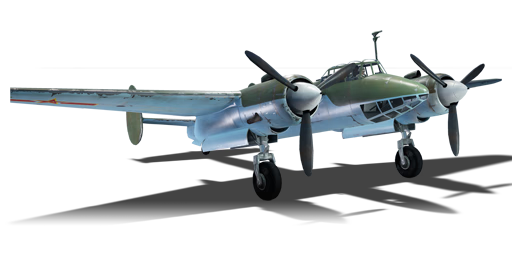
The ␗Tu-2S-44 (known as 杜/图-2轰炸机 in PLAAF) represented the Tu-2S-44 delivered to PLAAF in 1950. These aircraft were delivered during the Korean War to boost PLAAF's capability for bombing runs as they were in dire for more bombers against future operations against Nationalist forces by coastal China; these bombers was first used in bombing runs against the United Nations Command in Korean War, destroying surveillance infrastructures of US Army in North Korea, then they served as the major contributor to the victories against Nationalist-occupied islands in Zhejiang and later used during riot-suppression operations in Southwestern China with some loses against insurgent's M2HB. These aircraft were eventually replaced by new aircraft in 1977.
Introduced in Update 1.91 "Night Vision". along with the Chinese air tech-tree, sharing most of the performance and payload to its Soviet counterpart; not only it has devastating payload for a frontline bomber, it also has sufficient forward-facing 20 mm autocannon and 12.7 mm self-defense HMG in case of incoming enemy aircraft. Although it is not designed to have dogfights with enemy aircraft, if used carefully against careless targets or unprotected ground targets, Tu-2 will still shine at its tier and possibly turning the table for teammates.
General info
Flight performance
Built for speed in a level flight, the Chinese Tu-2S-44 performs reasonably well at low altitude (below 4000 m). The plane can reach its top speed of 547 km/h relatively quickly in a shallow dive, and even capable of reaching 720 km/h in a steep dive. At an altitude above 4000 m, the Tu-2 engine's WEP will stop working, resulting into deteriorating flight performance, as such, it is best used the plane in its intended role; as a fast bomber or even dive bomber when needed.
Due to its high wing and dual tail design, the Tu-2 will often struggle to maintains its energy when its nose were leveled, and that an extra lift will often gets in the way while the plane tries to roll and turn, thus significantly hampers its maneuverability. Though, at lower speed of around 300 - 450 km/h, the Tu-2 can be handled with relative ease, which will help you into lining up your 20 mm autocannons on ground targets.
| Characteristics | Max Speed (km/h at 7,300 m) |
Max altitude (metres) |
Turn time (seconds) |
Rate of climb (metres/second) |
Take-off run (metres) | |||
|---|---|---|---|---|---|---|---|---|
| AB | RB | AB | RB | AB | RB | |||
| Stock | 522 | 504 | 32.0 | 32.7 | 4.3 | 4.3 | 326 | |
| Upgraded | 574 | 547 | 29.8 | 30.8 | 13.2 | 8.1 | ||
Details
| Features | ||||
|---|---|---|---|---|
| Combat flaps | Take-off flaps | Landing flaps | Air brakes | Arrestor gear |
| ✓ | ✓ | ✓ | X | X |
| Limits | ||||||
|---|---|---|---|---|---|---|
| Wings (km/h) | Gear (km/h) | Flaps (km/h) | Max Static G | |||
| Combat | Take-off | Landing | + | - | ||
| 900 | 437 | 380 | 310 | ~8 | ~4 | |
| Optimal velocities (km/h) | |||
|---|---|---|---|
| Ailerons | Rudder | Elevators | Radiator |
| < 360 | < 360 | < 440 | > 302 |
Survivability and armour
- 15 mm Steel - Pilot's seat
- 15 mm Steel - Between pilot and front dorsal gunner
- 6 mm Steel - On the front dorsal gunner's left hand side
- 15 mm Steel - In front of the front dorsal gunner
- 8 mm Steel - In front of the front dorsal gunner
- 12 mm Steel - In front of the rear dorsal gunner
- 15 mm Steel - In front of the rear dorsal gunner
- 8 mm Steel - Below the ventral gunner
- 12 mm Steel - In the tail
- Self-sealing fuel tanks (5 in each wing, 2 in the fuselage)
Modifications and economy
Armaments
Offensive armament
The Tu-2S-44 (China) is armed with:
- 2 x 20 mm ShVAK cannons, wing-mounted (150 rpg = 300 total)
The Tu-2's powerful offensive armament of two 20 mm ShVAK cannons sets it apart from other bombers , most of which lack any offensive armament at all. Although not having amazing penetration the cannons are still useful against AI ground target in air battles, and some of the more lightly armoured vehicles in ground battles. The cannons also allow you to use your air spawn to engage enemy bombers, and can even be used again enemy fighters at opportune moments. The cannons mounting at the base of the wings means that convergence is not too bad of a problem, and the amount of ammo is fairly decent as well.
Suspended armament
The Tu-2S-44 (China) can be outfitted with the following ordnance:
| 1 | 2 | 3 |  | |
|---|---|---|---|---|
| 100 kg FAB-100M-43 bombs | 9 | |||
| 250 kg FAB-250M-44 bombs | 1 | 2, 4 | 1 | |
| 250 kg BRAB-250 bombs | 1 | 2, 4 | 1 | |
| 500 kg FAB-500M-44 bombs | 1 | 1 | 1 | |
| 500 kg BRAB-500 bombs | 1 | 1 | 1 | |
| 1,000 kg FAB-1000M-44 bombs | 1 | 1 | 1 | |
| 1,000 kg BRAB-1000 bombs | 1 | 1 | 1 |
| Default weapon presets | |
|---|---|
| |
The ␗Tu-2S-44 has the same bombload options as its counterpart in the Soviet tech tree, the Tu-2S-44. At 2,000 kg the maximum bomb load is fairly good for a light bomber, but nothing special compared to most bombers around this BR. If you are trying to kill ground targets then the 4 x 500 kg bombs loadout gives the best balance of lethality and number of bombs. Bombs can be dropped individually, making the load very effective.
Defensive armament
The Tu-2S-44 (China) is defended by:
- 1 x 12.7 mm Berezin UB machine gun, front dorsal turret (190 rpg)
- 1 x 12.7 mm Berezin UB machine gun, rear dorsal turret (250 rpg)
- 1 x 12.7 mm Berezin UB machine gun, rear ventral turret (350 rpg)
The defensive armament of the Tu-2S-44 is among the worst it this battle rating, consisting only of three 12.7 mm machine guns. In addition the front dorsal turret and ventral turret have fairly narrow firing arcs; and none of the guns have a particularly impressive ammo pool. They can be useful in some situations, but you should generally not rely on the defensive guns for your survival.
Usage in battles
Once spawned (~3,500 m), locate what ground targets to engage. It is suggested to engage the targets farthest from the enemy's airfield in order to avoid detection. Attack pillboxes (light or heavy, it doesn't matter with 500 kg bombs) as these don't move. Only engage the AI tanks if there are no pillboxes, and if engaging the tanks, judge the speed of the tank column, and release the bombs, making sure to lead where the tanks will be as the bombs fall, not where they are in that moment.
When bombing anything, note that the center of the reticle should be aimed below the target by about a centimetre (looking at the screen). This will allow the bombs maximum precision. Remember to open the bomb bay doors before attempting to drop the bombs. Once the payload has dropped, begin attacking artillery and AAA guns with the 20 mm cannons. Fire in short bursts to conserve ammo, as the more of these light targets are destroyed, the better. Never attack light pillboxes with the frontal cannons! The ammo spent attempting to destroy these (~200 rounds) isn't worth it! Always attack lighter targets, or if the situation presents itself, enemy aircraft. Once the bombs and cannon ammo are exhausted, then high-tail it back to the airfield. Fully upgraded, the Tu-2S can maintain ~450 km/h on the deck, no problem. Be careful upon landing, as the plane tends to stall at ~175 km/h. Rearm, and repeat!
Specific enemies worth noting
Late War Props (Spitfire F Mk 24, Fw 190 D-13, F8F-1B, etc.):
These are constant opponents at the battle rating, so they should never be ignored. If possible, run back to base and don't commit to a head-on with props, as they have a little more time to aim their shots and steady their plane. Rely mostly on the defensive turrets if needed.
Player-Controlled Flak (Kugelblitz, Crusader AA Mk II, etc.):
These are the bane of bombers (especially medium-sized ones such as the Tu-2S-44). When the tracers fly, don't risk a dive. Circle around or find some unsuspecting flanker that is outside the cover of these AAA guns. If you are feeling lucky, there is the possibility to use the bomb sight while diving on an alerted SPAA to take them out to make the tasks of your fellow aviators easier.
Manual Engine Control
| MEC elements | ||||||
|---|---|---|---|---|---|---|
| Mixer | Pitch | Radiator | Supercharger | Turbocharger | ||
| Oil | Water | Type | ||||
| Controllable | Controllable Not auto controlled |
Controllable Auto control available |
Controllable Auto control available |
Separate | Controllable 2 gears |
Not controllable |
Pros and cons
Pros:
- Generally fast and relatively agile at low-to-medium altitude
- High wing rip speed (over 700 km/h), allowing it to perform dive bombing with ease
- Large payload size and option to choose from
- Has two offensive 20 mm autocannons to attack ground targets and other aircrafts
- Tough airframe allows the plane to take a considerable damage before going down
- Pressurized gas system allows the plane to endure a lot of fire damage
- Great all-round visibility for a bomber/attacker, even has a downward window in the nose, allowing you to scan target area
Cons:
- Very poor energy retention, any quick maneuver will bleeds a lot of airspeed away
- Terrible roll rate, especially at higher speeds
- High stall speed (175 km/h, more of a pain when taking off/landing)
- Performance starts to degrade with altitude
- Only one pilot who is unprotected by armour from the front, head-ons are not advised
- Relatively small defensive armament with restrictive coverage
- While gunsight is well above the cockpit, it is still obstructed by the sight itself, limiting downward visibility in a lead
History
The Tupolev Tu-2 has already proved its capability against German forces and contributed a lot for the Eastern Front; while the WWII has ended, Tu-2 waited for another chance to shine, this time on the hands of PLAAF who were in need for a frontline bomber to handle Nationalist forces on coastal islands.
The PLAAF got their hands on 29 Tu-2 in 1950, they were first seen during the battle of Taehwa-do Island (大和島/대화도) off-coast of northeastern Yellow Sea; this island, with just around 5 km² in size was in fact a forward intelligence base for the United Nation forces with radars and 1,200 personnels on it. It was planned that PVAF would assault the island, supporting the landing forces in November; earlier in the month, Tu-2s bombed the island with 95% accuracy over the targets; but on the 30th November, due to the lack of escorting jet fighters, these 9 Tu-2 were only accompanied by 16 La-11 and they have to face 30 F-86 Sabres from USAF, this caused the distraction of bombers and 4 Tu-2 were loss during the battle.
While they saw some losses during the Korean War, in January 1955, Tu-2 along with IL-10, were saw during the very first tri-service landing operation of PLA- the battle of Yijiangshan Island (一江山岛) off the coast of Zhejiang, forcing the Nationalist forces to retreat from Dachen Island (大陈岛) and marking the total loss of Zhejiang, leaving only Matsu and Kinmen of Fujian the remaining Nationalist-controlled area off-coast of Mainland China. Tu-2 were then saw in riot-suppression operations at southwestern China on the Tibetan Plateau, soon PLAAF realized that Tu-2 was not enough to handle the CIA-supplied rebels with M2HBs via air-drop and eventually have to deploy Tu-4 as a gunship, replacing Tu-2 for supporting the PLAGF with those 10 x 23 mm autocannons on-board.[1]
These Tu-2 were eventually decommissioned in 1982 and marked the end of propeller-driven frontline bombers in PLAAF service.
Media
- Skins
See also
Links to the articles on the War Thunder Wiki that you think will be useful for the reader, for example:
- reference to the series of the aircraft;
- links to approximate analogues of other nations and research trees.
External links
References
| Tupolev Design Bureau (Ту́полев Опытное конструкторское бюро) | |
|---|---|
| Bombers | TB-3M-17-32 · SB 2M-100 · SB 2M-103 MV-3 · SB 2M-103 · SB 2M-103U · SB 2M-103U MV-3 · SB 2M-105 |
| Tu-2 · Tu-2S · Tu-2S-44 · Tu-2S-59 · Tu-4 | |
| Arkhangelsky Bomber | Ar-2* |
| Strike Aircraft | Tu-1 |
| Jet Bomber | Tu-14T |
| Export | ␗SB 2M-103U · ␗Tu-2S-44 · ␗Tu-4 |
| ◔Tu-2S-59 | |
| * While Andrei Tupolev was imprisoned, Alexander Arkhangelsky, second in command at Tupolev OKB was able to append his name to the final production series of the SB bomber. | |
| China bombers | |
|---|---|
| American | Martin 139WC*(␗B-10B) · ␗A-29 · ␗B-25J-30 · ␗PB4Y-2 |
| German | ␗Hs 123 A-1 |
| Soviet | ␗SB 2M-103U · ␗DB-3A · ␗Tu-2S-44 · ␗Tu-4 |
| Japanese | ␗P1Y1 mod. 11 |
| *Export Name | |