Difference between pages "Meteor NF.13 (Israel)" and "D.510C"
U123025608 (talk | contribs) (I had been changing the history of the aircraft,.) (Tag: Visual edit) |
(Updated description and slight addition to the history) (Tag: Visual edit) |
||
| Line 1: | Line 1: | ||
| + | {{About | ||
| + | | about = Chinese fighter '''{{PAGENAME}}''' | ||
| + | | usage = the other version | ||
| + | | link = Pallier's D.510 | ||
| + | }} | ||
{{Specs-Card | {{Specs-Card | ||
| − | |code= | + | |code=d_510c |
|images={{Specs-Card-Image|GarageImage_{{PAGENAME}}.jpg}} | |images={{Specs-Card-Image|GarageImage_{{PAGENAME}}.jpg}} | ||
}} | }} | ||
| Line 6: | Line 11: | ||
== Description == | == Description == | ||
<!-- ''In the description, the first part should be about the history of and the creation and combat usage of the aircraft, as well as its key features. In the second part, tell the reader about the aircraft in the game. Insert a screenshot of the vehicle, so that if the novice player does not remember the vehicle by name, he will immediately understand what kind of vehicle the article is talking about.'' --> | <!-- ''In the description, the first part should be about the history of and the creation and combat usage of the aircraft, as well as its key features. In the second part, tell the reader about the aircraft in the game. Insert a screenshot of the vehicle, so that if the novice player does not remember the vehicle by name, he will immediately understand what kind of vehicle the article is talking about.'' --> | ||
| − | The '''{{Specs|name}}''' | + | The '''{{Specs|name}}''' , aka "地機" ("Dì jī": '''De'''woitine) to Chinese pilots, was the 24 D.510 series delivered to the Nationalist Revolutionary Air Force by 1938. During the visit of European countries after the accession of George VI in May 1937, Nationalist government seek for new fighters to supply the NRAF before the total outbreak of 2nd Sino-Japanese War, which France later approved the sales of 34 fighters to NRAF but only 24 of them could ever made it to China before the blockade of sea and land borders by Japanese forces. Piloted by European and Chinese pilots, D.510C only contributed very little to the resistance efforts for the NRAF before these aircrafts eventually replaced by Soviet and American fighters by 1941. |
| + | |||
| + | Introduced in [[Update "Danger Zone"]] as a tier I premium aircraft, D.510C was part of the composition for the early days of the Chinese Air Force and a variant of the French D.500 family, the D.510C offers high firepower at its tier thanks to its 20 mm autocannon and rather good turning radius. However, players do have to be aware of its poor protection all-round as well as its ammo count, as well as outdated powerplant when uptiered. | ||
== General info == | == General info == | ||
| Line 12: | Line 19: | ||
{{Specs-Avia-Flight}} | {{Specs-Avia-Flight}} | ||
<!-- ''Describe how the aircraft behaves in the air. Speed, manoeuvrability, acceleration and allowable loads - these are the most important characteristics of the vehicle.'' --> | <!-- ''Describe how the aircraft behaves in the air. Speed, manoeuvrability, acceleration and allowable loads - these are the most important characteristics of the vehicle.'' --> | ||
| − | + | The overall flight performance of D.510C in Nationalist forces is identical to its French variants. Thanks to its all-metal airframe, the airframe itself can take some hits from smaller calibre ammo before being shot down; the monoplane design also makes it nimble enough to make sure heavy targets or those without sufficient protection from cannons will meet their end quickly. However, do remember that the top speed can be a problem as the engine might not be as powerful as some of its enemies like the Italian CR.42, let along when being uptiered. Keeping the pilot alive is also essential, as he is not protected in any means other than the windshield and engine plates in front of him with little protection whatsoever. | |
{| class="wikitable" style="text-align:center" width="70%" | {| class="wikitable" style="text-align:center" width="70%" | ||
! rowspan="2" | Characteristics | ! rowspan="2" | Characteristics | ||
| − | ! colspan="2" | Max Speed<br>(km/h at | + | ! colspan="2" | Max Speed<br>(km/h at 3,200 m) |
! rowspan="2" | Max altitude<br>(metres) | ! rowspan="2" | Max altitude<br>(metres) | ||
! colspan="2" | Turn time<br>(seconds) | ! colspan="2" | Turn time<br>(seconds) | ||
| Line 25: | Line 32: | ||
|- | |- | ||
! Stock | ! Stock | ||
| − | | | + | | 382 || 374 || rowspan="2" | {{Specs|ceiling}} || 13.2 || 14.1 || 15.7 || 15.7 || rowspan="2" | 150 |
|- | |- | ||
! Upgraded | ! Upgraded | ||
| − | | | + | | 408 || 394 || 12.8 || 13.0 || 23.8 || 19.2 |
|- | |- | ||
|} | |} | ||
| Line 35: | Line 42: | ||
{| class="wikitable" style="text-align:center" width="50%" | {| class="wikitable" style="text-align:center" width="50%" | ||
|- | |- | ||
| − | ! colspan=" | + | ! colspan="5" | Features |
|- | |- | ||
| − | ! Combat flaps !! Take-off flaps !! Landing flaps !! Air brakes !! Arrestor gear | + | ! Combat flaps !! Take-off flaps !! Landing flaps !! Air brakes !! Arrestor gear |
|- | |- | ||
| − | | | + | | X || X || X || X || X <!-- ✓ --> |
|- | |- | ||
|} | |} | ||
| Line 54: | Line 61: | ||
! Combat !! Take-off !! Landing !! + !! - | ! Combat !! Take-off !! Landing !! + !! - | ||
|- | |- | ||
| − | | {{Specs|destruction|body}} || {{Specs|destruction|gear}} || | + | | 576 <!-- {{Specs|destruction|body}} --> || {{Specs|destruction|gear}} || - || - || - || ~14 || ~8 |
|- | |- | ||
|} | |} | ||
| Line 64: | Line 71: | ||
! Ailerons !! Rudder !! Elevators !! Radiator | ! Ailerons !! Rudder !! Elevators !! Radiator | ||
|- | |- | ||
| − | | < | + | | < 320 || < 330 || < 360 || > 280 |
| − | |||
| − | |||
| − | |||
| − | |||
| − | |||
| − | |||
| − | |||
| − | |||
| − | |||
| − | |||
| − | |||
| − | |||
| − | |||
| − | |||
| − | |||
| − | |||
| − | |||
| − | |||
| − | |||
| − | |||
| − | |||
| − | |||
| − | |||
| − | |||
| − | |||
| − | |||
| − | |||
| − | |||
| − | |||
| − | |||
| − | |||
| − | |||
| − | |||
| − | |||
| − | |||
|- | |- | ||
|} | |} | ||
| Line 106: | Line 78: | ||
{{Specs-Avia-Armour}} | {{Specs-Avia-Armour}} | ||
<!-- ''Examine the survivability of the aircraft. Note how vulnerable the structure is and how secure the pilot is, whether the fuel tanks are armoured, etc. Describe the armour, if there is any, and also mention the vulnerability of other critical aircraft systems.'' --> | <!-- ''Examine the survivability of the aircraft. Note how vulnerable the structure is and how secure the pilot is, whether the fuel tanks are armoured, etc. Describe the armour, if there is any, and also mention the vulnerability of other critical aircraft systems.'' --> | ||
| − | + | Although being the earliest French all-metal monoplane, the D.510C is rather unprotected as there's no cockpit glass to cover him and there is only a 3 mm steel plate between the engine block and the pilot; any penetrating shots from high-calibre ammo will quickly knock out the pilot. | |
=== Modifications and economy === | === Modifications and economy === | ||
| Line 116: | Line 88: | ||
{{Specs-Avia-Offensive}} | {{Specs-Avia-Offensive}} | ||
<!-- ''Describe the offensive armament of the aircraft, if any. Describe how effective the cannons and machine guns are in a battle, and also what belts or drums are better to use. If there is no offensive weaponry, delete this subsection.'' --> | <!-- ''Describe the offensive armament of the aircraft, if any. Describe how effective the cannons and machine guns are in a battle, and also what belts or drums are better to use. If there is no offensive weaponry, delete this subsection.'' --> | ||
| − | {{main|Hispano | + | {{main|Hispano 404 (20 mm)|MAC 1934 (7.5 mm)}} |
The '''''{{PAGENAME}}''''' is armed with: | The '''''{{PAGENAME}}''''' is armed with: | ||
| − | * | + | * 1 x 20 mm Hispano 404 cannon, nose-mounted (60 rpg) |
| + | * 2 x 7.5 mm MAC 1934 machine guns, wing-mounted (300 rpg = 600 total) | ||
== Usage in battles == | == Usage in battles == | ||
<!-- ''Describe the tactics of playing in the aircraft, the features of using aircraft in a team and advice on tactics. Refrain from creating a "guide" - do not impose a single point of view, but instead, give the reader food for thought. Examine the most dangerous enemies and give recommendations on fighting them. If necessary, note the specifics of the game in different modes (AB, RB, SB).'' --> | <!-- ''Describe the tactics of playing in the aircraft, the features of using aircraft in a team and advice on tactics. Refrain from creating a "guide" - do not impose a single point of view, but instead, give the reader food for thought. Examine the most dangerous enemies and give recommendations on fighting them. If necessary, note the specifics of the game in different modes (AB, RB, SB).'' --> | ||
| − | + | Like its French cousins, players can utilize the high firepower and good manoeuvrability of the D.510C to take down enemies at lower altitudes; your 20 mm cannon with 60 rounds will certainly make very short work of interwar fighters with very little protection, sometimes even bombers will fall victim of the autocannon given trigger-control is utilized. However, players do also have to be aware of the insufficient speed against later aircraft which could fly up to 500 km/h, as well as its overall unprotected airframe that any shots landed near the cockpit will have the chance to take down the pilot with ease. Unless going for last-ditch options, never head-on against anything that has more guns than D.510C or having run out of cannon shells. The 7.5 mm machine guns might sometimes shine during dogfights, but not when heading-on enemies. | |
| + | |||
| + | === Manual Engine Control === | ||
| + | {| class="wikitable" style="text-align:center" | ||
| + | |- | ||
| + | ! colspan="7" | MEC elements | ||
| + | |- | ||
| + | ! rowspan="2" | Mixer | ||
| + | ! rowspan="2" | Pitch | ||
| + | ! colspan="3" | Radiator | ||
| + | ! rowspan="2" | Supercharger | ||
| + | ! rowspan="2" | Turbocharger | ||
| + | |- | ||
| + | ! Oil !! Water !! Type | ||
| + | |- | ||
| + | | Controllable || Not controllable<br>Not auto controlled || Not controllable<br>Not auto controlled || Controllable<br>Not auto controlled || Combined || Not controllable<br>1 gear || Not controllable | ||
| + | |- | ||
| + | |} | ||
=== Pros and cons === | === Pros and cons === | ||
<!-- ''Summarise and briefly evaluate the vehicle in terms of its characteristics and combat effectiveness. Mark its pros and cons in the bulleted list. Try not to use more than 6 points for each of the characteristics. Avoid using categorical definitions such as "bad", "good" and the like - use substitutions with softer forms such as "inadequate" and "effective".'' --> | <!-- ''Summarise and briefly evaluate the vehicle in terms of its characteristics and combat effectiveness. Mark its pros and cons in the bulleted list. Try not to use more than 6 points for each of the characteristics. Avoid using categorical definitions such as "bad", "good" and the like - use substitutions with softer forms such as "inadequate" and "effective".'' --> | ||
| − | '''Pros:''' | + | '''Pros:''' |
| − | * | + | * 20 mm nose-mounted autocannon is easy to aim and lethal against early planes like the [[He 51 (Family)|He 51]] |
| − | * | + | * Low stall speed of ~180 km/h gives it nice low-speed handling |
| − | * | + | * Very responsive on the roll axis |
| − | * | + | * Turn radius is rather tight, can turnfight early monoplanes like the [[He 112 (Family)|He 112]] |
| − | |||
'''Cons:''' | '''Cons:''' | ||
| − | * | + | * The 20 mm cannon has only 60 rounds which runs out extremely quickly |
| − | * | + | * Low survivability: there is almost no armour in its fragile airframe and wings |
| − | * | + | * Poor speed against early monoplanes like [[He 100 D-1|He 100]] and [[P-400]] |
| − | * | + | * Telescopic gunsight is rather awkward in simulator battles |
| − | + | * Turning capacity is still worse than biplanes such as [[I-15 (Family)|I-15]] | |
== History == | == History == | ||
<!-- ''Describe the history of the creation and combat usage of the aircraft in more detail than in the introduction. If the historical reference turns out to be too long, take it to a separate article, taking a link to the article about the vehicle and adding a block "/History" (example: <nowiki>https://wiki.warthunder.com/(Vehicle-name)/History</nowiki>) and add a link to it here using the <code>main</code> template. Be sure to reference text and sources by using <code><nowiki><ref></ref></nowiki></code>, as well as adding them at the end of the article with <code><nowiki><references /></nowiki></code>. This section may also include the vehicle's dev blog entry (if applicable) and the in-game encyclopedia description (under <code><nowiki>=== In-game description ===</nowiki></code>, also if applicable).'' --> | <!-- ''Describe the history of the creation and combat usage of the aircraft in more detail than in the introduction. If the historical reference turns out to be too long, take it to a separate article, taking a link to the article about the vehicle and adding a block "/History" (example: <nowiki>https://wiki.warthunder.com/(Vehicle-name)/History</nowiki>) and add a link to it here using the <code>main</code> template. Be sure to reference text and sources by using <code><nowiki><ref></ref></nowiki></code>, as well as adding them at the end of the article with <code><nowiki><references /></nowiki></code>. This section may also include the vehicle's dev blog entry (if applicable) and the in-game encyclopedia description (under <code><nowiki>=== In-game description ===</nowiki></code>, also if applicable).'' --> | ||
| − | + | In the late 1930s during the expansion of the Nationalist Air Force and in view of the invasion from Japan, the Nationalist Government sought for supplementary fighters before US-built aircraft could be imported as the orders were delayed. During a visit to Europe in May 1937 (for the accession of George VI), France approved the sales of 34 D.510C along with around a dozen other French aircraft on credit; but by the outbreak of the Second Sino-Japanese War, only 24 those D.510Cs had been delivered to the Nationalist forces and the remaining ones were either cancelled by the French Government or by the Governor of French Indochina. They were known as the "地機" ("Dì jī": '''De'''woitine) and made into service by late 1938 with pilots from Britain and France. | |
| + | |||
| + | The records from Chinese sources remarked that French pilots feared the war and contributed few of the fights in the skies. Coupled with conflicts of payment and behaviour, most of the French pilots were fired by the Nationalists and all the D.510Cs were then taken over by Nationalist pilots instead. The earliest record of Nationalists piloting D.510Cs fought on 8 April 1938 during an interception of Japanese bombers; the later conclusion by one of the pilots, Hu Zhuangru (胡莊如, KIA during the war) "地機發炮,每次決不應超過三發,發射速度與震動均甚大,不易命中也 " ''(The Dewoitine shouldn't fire more than 3 rounds at a time, as it has rather high RPM and severe vibration that makes hitting targets difficult)''. The D.510Cs were then transferred to 17th Squadron and the only confirmed kill from Nationalist forces was from their captain 岑澤鎏 (Cen Zeliu, KIA in 1941) when he shot down a bomber with its commanding officers on 4th November 1939. | ||
| + | |||
| + | As the overall degrading performance of D.510C as well as heavy losses to the Japanese, they were soon phased out by the Nationalist forces by 1941, in favour of new Soviet aircraft.<ref>https://www.sohu.com/a/459720280_464121</ref> | ||
| − | The | + | The decal in game marks the No.4106 as in 1938 when it was stationed in Kunming (昆明). |
| − | |||
== Media == | == Media == | ||
| Line 174: | Line 166: | ||
* ''other literature.'' | * ''other literature.'' | ||
| − | {{AirManufacturer | + | {{AirManufacturer Dewoitine}} |
| − | {{ | + | {{China fighters}} |
| + | {{China premium aircraft}} | ||
| + | <references /> | ||
Latest revision as of 05:50, 16 November 2023
| This page is about the Chinese fighter D.510C. For the other version, see Pallier's D.510. |

Contents
Description
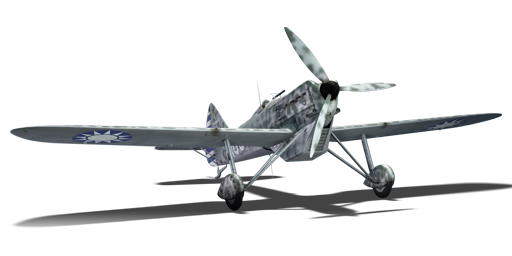
The D.510C , aka "地機" ("Dì jī": Dewoitine) to Chinese pilots, was the 24 D.510 series delivered to the Nationalist Revolutionary Air Force by 1938. During the visit of European countries after the accession of George VI in May 1937, Nationalist government seek for new fighters to supply the NRAF before the total outbreak of 2nd Sino-Japanese War, which France later approved the sales of 34 fighters to NRAF but only 24 of them could ever made it to China before the blockade of sea and land borders by Japanese forces. Piloted by European and Chinese pilots, D.510C only contributed very little to the resistance efforts for the NRAF before these aircrafts eventually replaced by Soviet and American fighters by 1941.
Introduced in Update "Danger Zone" as a tier I premium aircraft, D.510C was part of the composition for the early days of the Chinese Air Force and a variant of the French D.500 family, the D.510C offers high firepower at its tier thanks to its 20 mm autocannon and rather good turning radius. However, players do have to be aware of its poor protection all-round as well as its ammo count, as well as outdated powerplant when uptiered.
General info
Flight performance
The overall flight performance of D.510C in Nationalist forces is identical to its French variants. Thanks to its all-metal airframe, the airframe itself can take some hits from smaller calibre ammo before being shot down; the monoplane design also makes it nimble enough to make sure heavy targets or those without sufficient protection from cannons will meet their end quickly. However, do remember that the top speed can be a problem as the engine might not be as powerful as some of its enemies like the Italian CR.42, let along when being uptiered. Keeping the pilot alive is also essential, as he is not protected in any means other than the windshield and engine plates in front of him with little protection whatsoever.
| Characteristics | Max Speed (km/h at 3,200 m) |
Max altitude (metres) |
Turn time (seconds) |
Rate of climb (metres/second) |
Take-off run (metres) | |||
|---|---|---|---|---|---|---|---|---|
| AB | RB | AB | RB | AB | RB | |||
| Stock | 382 | 374 | 13.2 | 14.1 | 15.7 | 15.7 | 150 | |
| Upgraded | 408 | 394 | 12.8 | 13.0 | 23.8 | 19.2 | ||
Details
| Features | ||||
|---|---|---|---|---|
| Combat flaps | Take-off flaps | Landing flaps | Air brakes | Arrestor gear |
| X | X | X | X | X |
| Limits | ||||||
|---|---|---|---|---|---|---|
| Wings (km/h) | Gear (km/h) | Flaps (km/h) | Max Static G | |||
| Combat | Take-off | Landing | + | - | ||
| 576 | - | - | - | ~14 | ~8 | |
| Optimal velocities (km/h) | |||
|---|---|---|---|
| Ailerons | Rudder | Elevators | Radiator |
| < 320 | < 330 | < 360 | > 280 |
Survivability and armour
Although being the earliest French all-metal monoplane, the D.510C is rather unprotected as there's no cockpit glass to cover him and there is only a 3 mm steel plate between the engine block and the pilot; any penetrating shots from high-calibre ammo will quickly knock out the pilot.
Modifications and economy
Armaments
Offensive armament
The D.510C is armed with:
- 1 x 20 mm Hispano 404 cannon, nose-mounted (60 rpg)
- 2 x 7.5 mm MAC 1934 machine guns, wing-mounted (300 rpg = 600 total)
Usage in battles
Like its French cousins, players can utilize the high firepower and good manoeuvrability of the D.510C to take down enemies at lower altitudes; your 20 mm cannon with 60 rounds will certainly make very short work of interwar fighters with very little protection, sometimes even bombers will fall victim of the autocannon given trigger-control is utilized. However, players do also have to be aware of the insufficient speed against later aircraft which could fly up to 500 km/h, as well as its overall unprotected airframe that any shots landed near the cockpit will have the chance to take down the pilot with ease. Unless going for last-ditch options, never head-on against anything that has more guns than D.510C or having run out of cannon shells. The 7.5 mm machine guns might sometimes shine during dogfights, but not when heading-on enemies.
Manual Engine Control
| MEC elements | ||||||
|---|---|---|---|---|---|---|
| Mixer | Pitch | Radiator | Supercharger | Turbocharger | ||
| Oil | Water | Type | ||||
| Controllable | Not controllable Not auto controlled |
Not controllable Not auto controlled |
Controllable Not auto controlled |
Combined | Not controllable 1 gear |
Not controllable |
Pros and cons
Pros:
- 20 mm nose-mounted autocannon is easy to aim and lethal against early planes like the He 51
- Low stall speed of ~180 km/h gives it nice low-speed handling
- Very responsive on the roll axis
- Turn radius is rather tight, can turnfight early monoplanes like the He 112
Cons:
- The 20 mm cannon has only 60 rounds which runs out extremely quickly
- Low survivability: there is almost no armour in its fragile airframe and wings
- Poor speed against early monoplanes like He 100 and P-400
- Telescopic gunsight is rather awkward in simulator battles
- Turning capacity is still worse than biplanes such as I-15
History
In the late 1930s during the expansion of the Nationalist Air Force and in view of the invasion from Japan, the Nationalist Government sought for supplementary fighters before US-built aircraft could be imported as the orders were delayed. During a visit to Europe in May 1937 (for the accession of George VI), France approved the sales of 34 D.510C along with around a dozen other French aircraft on credit; but by the outbreak of the Second Sino-Japanese War, only 24 those D.510Cs had been delivered to the Nationalist forces and the remaining ones were either cancelled by the French Government or by the Governor of French Indochina. They were known as the "地機" ("Dì jī": Dewoitine) and made into service by late 1938 with pilots from Britain and France.
The records from Chinese sources remarked that French pilots feared the war and contributed few of the fights in the skies. Coupled with conflicts of payment and behaviour, most of the French pilots were fired by the Nationalists and all the D.510Cs were then taken over by Nationalist pilots instead. The earliest record of Nationalists piloting D.510Cs fought on 8 April 1938 during an interception of Japanese bombers; the later conclusion by one of the pilots, Hu Zhuangru (胡莊如, KIA during the war) "地機發炮,每次決不應超過三發,發射速度與震動均甚大,不易命中也 " (The Dewoitine shouldn't fire more than 3 rounds at a time, as it has rather high RPM and severe vibration that makes hitting targets difficult). The D.510Cs were then transferred to 17th Squadron and the only confirmed kill from Nationalist forces was from their captain 岑澤鎏 (Cen Zeliu, KIA in 1941) when he shot down a bomber with its commanding officers on 4th November 1939.
As the overall degrading performance of D.510C as well as heavy losses to the Japanese, they were soon phased out by the Nationalist forces by 1941, in favour of new Soviet aircraft.[1]
The decal in game marks the No.4106 as in 1938 when it was stationed in Kunming (昆明).
Media
Excellent additions to the article would be video guides, screenshots from the game, and photos.
See also
Links to the articles on the War Thunder Wiki that you think will be useful for the reader, for example:
- reference to the series of the aircraft;
- links to approximate analogues of other nations and research trees.
External links
Paste links to sources and external resources, such as:
- topic on the official game forum;
- other literature.
| Dewoitine (SNCAM/SNCASE) | |
|---|---|
| Fighters | |
| D.37 | D.371 · D.371 H.S.9 · D.373 |
| D.500 | D.500 · D.501 · Pallier's D.510 |
| D.520 | D.520 · ▄D.520 · ▄D.521 |
| Export | ␗D.510C |
| China fighters | |
|---|---|
| British | ␗Gladiator Mk I |
| French | D.510C |
| Japanese | ␗A6M2 · ␗Ki-27 otsu · ␗Ki-43-III ko · ␗Ki-44-II hei · ␗Ki-61-I otsu · ␗Ki-84 ko |
| American | CW-21 · Hawk III · P-66 · ␗P-40E-1 · H-81A-2 · ␗P-43A-1 |
| ␗P-47D-23-RA · ␗P-47D-30 · ␗F-47N-25-RE · ␗P-51C-11-NT · ␗P-51D-20 · ␗P-51K | |
| Soviet | ␗I-15bis · ␗I-153 M-62 · ␗I-16 Chung 28 · ␗I-16 type 5 · ␗I-16 type 10 · ␗I-16 type 17 · ␗La-11 · ␗La-9 |
| China premium aircraft | |
|---|---|
| Fighters | ␗A6M2 · D.510C · ␗F-47N-25-RE · H-81A-2 · Hawk III · ␗Ki-45 hei/tei · ␗Ki-84 ko · ␗P-51C-11-NT |
| Jet fighters | Shenyang F-5 · J-7D |
| Strike aircraft | A-5C · ␗F-84G-31-RE |