Difference between revisions of "Potez 631"
(→See also) |
(All info, page was blank except for basic technical specs prior to my edits.) (Tag: Visual edit) |
||
| (32 intermediate revisions by 16 users not shown) | |||
| Line 1: | Line 1: | ||
| − | + | {{Specs-Card|code=potez_631}} | |
| − | |||
| − | |||
| − | |||
| − | |||
| − | |||
| − | |||
| − | {{Specs-Card | ||
| − | |code=potez_631 | ||
| − | |||
| − | }} | ||
== Description == | == Description == | ||
| − | + | The SNCAN '''Potez 631''' was the second production variant of the Potez 63 project, which was a project intended to provide France with modern heavy fighter capabilities and which eventually led to one of the most prolific and versatile series of combat aircraft to be built by the French aeronautical industry at the beginning of World War II. The 63 series, originally conceived in 1934, yielded not only strategic fighters, but also light bombers as well as attack and reconnaissance planes, resulting in the production of more than 1,100 aircraft of different variants in the series by June 1940. This elegant aircraft remained in active service during German occupation, and approximately 250 additional planes built in that period were used by the Luftwaffe as transport and liaison aircraft of the Vichy Air Force, the Italian ''Regia Aeronautica'', and of the Rumanian Air Force. | |
| − | The ''' | ||
| − | It | + | In War Thunder, the '''Potez 631''' is a Rank I French twin-engine fighter with a Battle Rating of 2.0 (AB/SB) and 2.3 (RB). It appeared following the introduction of the Potez 630 in [[Update 1.73 "Vive la France"]]. Its armament features the last-ditch French effort to upgrade the aircraft before the outbreak of hostilities, equipped with 2 x 20mm underbelly cannon and 6 wing-mounted 7.5mm machine guns, along with a single 7.5mm rear-facing defensive turret. |
| + | |||
| + | [[File:Garage Image - Potez 631.jpg|left|thumb|500x500px|War Thunder Potez 631]] | ||
== General info == | == General info == | ||
| − | === Flight | + | === Flight Performance === |
| − | + | The '''Potez 631''' is a slow climber and heavy lander, with a stall speed of 138 km/h (SB, 45 min fuel, full ammunition, no bombs), but is very stable in high-speed dives and turns and can be lethal when used properly as an energy fighter. Its maximum speed is modest at 332 km/h @ 4,000m (SB, 45 min fuel, full ammunition, no bombs) but maneuvers surprisingly well at medium and high speeds, and the canopy provides excellent 360-degree visibility. | |
| − | |||
| − | |||
| − | |||
| − | |||
| − | |||
| − | |||
| − | |||
| − | |||
| − | |||
| − | |||
| − | |||
| − | |||
| − | |||
| − | |||
| − | |||
| − | |||
| − | |||
| − | |||
| − | |||
| − | |||
| − | |||
| − | |||
| − | |||
| − | |||
| − | |||
| − | |||
| − | |||
| − | |||
| − | |||
| − | |||
| − | |||
| − | |||
| − | |||
| − | |||
| − | |||
| − | |||
| − | |||
| − | |||
| − | |||
| − | |||
| − | |||
| − | |||
| − | |||
| − | |||
| − | |||
| − | |||
| − | |||
| − | |||
| − | |||
| − | |||
| − | |||
| − | |||
| − | |||
| − | |||
| − | |||
| − | |||
=== Survivability and armour === | === Survivability and armour === | ||
| − | + | The '''Potez 631''' has minimal armor and is relatively fragile, and highly vulnerable to damage from the front which makes it less-than-ideal as a high-level interceptor. | |
| − | |||
| − | The '''Potez 631''' has | ||
| − | + | * '''No armor plating''' | |
| − | + | * '''No armor glazing''' | |
| + | * '''Critical components located in front of aircraft (fuel, pilot, engine, controls)''' | ||
== Armaments == | == Armaments == | ||
| − | + | === Offensive armament: === | |
| − | === Offensive armament === | ||
| − | |||
| − | |||
| − | |||
| − | + | : | |
| + | : ''Main article'': '''''[[MAC 1934 (7.5 mm)]]''''' | ||
| + | : ''Main article'': '''''[[Hispano 404 (20 mm)]]''''' | ||
| − | + | The '''Potez 631''' is armed with: | |
| − | |||
| − | + | * 6 х 7.5 mm MAC 1934 machine gun (300 rpg = 1800 total rounds) | |
| − | + | The machine guns are wing-mounted, three guns in each wing. | |
| − | = | + | * 2 x 20 mm Hispano 404 cannon (90 rpg = 180 total rounds) |
| − | |||
| − | |||
| − | |||
| − | The ' | + | The cannons are arranged in the belly of the fuselage right under the pilot's seat. |
| − | + | Universal ammunition belts will be the preferred loadout for both weapons in most cases, although the extra armor-piercing capabilities of the ground target belt for the cannon will work effectively against both armored ground targets and aircraft for penetrating engine blocks. A short-burst of both cannon and MG fire at convergence range will mortally wound or kill any opponent of equivalent rank. Recommended convergence settings: 300m for high-energy fighter engagements, 400m for boom-and-zoom bounce tactics against fighters/bombers/attackers, 500m for ground attack. | |
| − | |||
| − | The '''Potez 631''' can be armed with 2 x 100 No.1 bombs (118 kg each, | + | === Suspended armament === |
| + | The '''Potez 631''' can be armed with 2 x 100 No.1 bombs (118 kg each, explosive mass of 50kg with an armored target destruction radius of 4m) mounted under wing between the fuselage and each engine. | ||
=== Defensive armament === | === Defensive armament === | ||
| − | |||
| − | |||
| − | |||
| − | The ''' | + | : |
| + | |||
| + | The '''Potez 631''' is defended by: | ||
* 1 x 7.5 mm MAC 1934 machine gun, dorsal turret (1,000 rpg) | * 1 x 7.5 mm MAC 1934 machine gun, dorsal turret (1,000 rpg) | ||
| − | == Usage in battles == | + | == Usage in the battles == |
| − | + | The '''Potez 631''' is best used as a mid- to low-altitude energy fighter. The sluggish climb, poor performance above 16,000 feet and vulnerability to frontal damage limit its effectiveness as a higher-altitude interceptor, while the stability and surprising maneuverability at high speeds make it ideal for diving on vulnerable targets at low altitudes and then extending away to begin the slow climb to set up for another pass. If you attract the attention of an enemy fighter, do not attempt to climb away or to execute any advanced maneuvers such as loops or chandelles, as the '''Potez 631''' bleeds energy at an exceptional rate in any kind of a climb. Just stay level with the throttle wide open and let the dorsal gunner warn off trailing attackers until you can safely begin a shallow climb to set up for re-engagement. Pilots with solid gunnery skills who can accurately gauge convergence distance can excel in this aircraft with six converged guns and two centerline cannons delivering a high volume of lethal ordnance to a small targeted area. | |
| − | The '''Potez 631''' is best used as a mid- to low-altitude energy fighter. The sluggish climb, poor performance above 16,000 feet and vulnerability to frontal damage limit its effectiveness as a higher-altitude interceptor, while the stability and surprising | ||
| − | |||
| − | |||
| − | |||
| − | |||
| − | |||
| − | |||
| − | |||
| − | |||
| − | |||
| − | |||
| − | |||
| − | |||
| − | |||
| − | |||
| − | |||
| − | |||
| − | |||
| − | |||
| − | |||
=== Pros and cons === | === Pros and cons === | ||
| − | |||
| − | |||
'''Pros:''' | '''Pros:''' | ||
| − | * | + | * Surprisingly maneuverable for a heavy fighter |
| − | * | + | * Potent offensive armament |
* Stable at high speeds, effective dive characteristics | * Stable at high speeds, effective dive characteristics | ||
| − | * | + | * Excellent 360-degree visibility |
| − | * | + | |
| + | * | ||
'''Cons:''' | '''Cons:''' | ||
| − | * | + | * Nose and wings create a large profile and lack of armor make the aircraft highly vulnerable to battle damage |
* Very sluggish climb rate, unimpressive max speed in level flight | * Very sluggish climb rate, unimpressive max speed in level flight | ||
* Poor energy retention in turns and especially in vertical loops | * Poor energy retention in turns and especially in vertical loops | ||
| − | * | + | * Dorsal gun serves more of a warning role than as an effective defensive armament |
| − | * | + | * Overheat tendency in climbs |
| − | * Poor performance above | + | * Poor performance above 16,000 feet |
| + | |||
| + | * | ||
== History == | == History == | ||
| − | + | The Potez 63 project was initiated in October 1934 with the issuance of official specifications for construction of an aircraft fulfilling three primary roles: a two-seat interceptor and escort fighter; a two-seat night fighter; and a three-seat command-and-control aircraft to radio direct operations of single-seat fighters. The first prototype flew in April 1936 powered by a pair of 580 HP Hispano-Suiza radial engines, which, after redesign and minor modifications, would become the 630 production variant, while a second prototype fitted with Gnome-Rhone 14 Mars engines flew in March 1937 and would become the '''631''' production variant. Following successful official trials, an initial order for 80 Potez 630s and 90 '''Potez 631s''' was placed, with delivery to combat units beginning at the end of 1938 and eventual production of a total of 207 '''Potez 631s''' completed. The '''631''' was intended to be the main production variant of the project, but the limited availability of the Gnome-Rhone engines required greater reliance on the 630 model and development of other variants. The performance in official trials resulted in the expansion of the project, with development of the day bomber Potez 633, the three-seat reconnaissance Potez 637, and experimental aircraft that were later abandoned including the 635 night bomber, the 639 ground attack plane, and 63.12 dive bomber. | |
| + | |||
| + | The '''Potez 631''' entered service with the fighter director flights that were attached to each single-engine fighter wing (''Escadre de Chasse''), and with the night fighter groups (G.C.N. or ''Groupes de Chasse de Nuit''). At the start of the Second World War a total of 206 aircraft had been accepted and 117 had reached front line units. G.C.N. I/13 and G.C.N. II/13 possessed 39 aircraft, four were in Djibouti, four were at Ajaccio and 70 were with the ''Escadre de Chasse'' (alongside a number of Potez 630s). A small number were also assigned to GC II/8 where they replaced the Morane-Saulnier MS 225 and Dewoitine D.510 single-seat fighters. In the spring of 1940, a belated attempt was made to improve the armament of the '''Potez 631'''. Although the type was meant to have two forward-firing 20mm cannon, these had been in short supply, and a number were built with one cannon and one machine gun. It was now decided to fit every aircraft with two 20mm cannon and to add four machine guns under the wings. Although this decision was made on 8 February, by 10 May only two improved aircraft had reached the front lines. | ||
| + | |||
| + | On 10 May 1940 the Armée de l'Air had 75 '''Potez 631s''' in front line units, with 53 of them serviceable. Four night fighter units were allocated to the defense of Paris and the fifth to the defense of Lyons, Etienne and the Le Creusot area. The day-fighter unit E.C.M. I/16 was at Wez-Thuisy. Finally the Navy's Flotille F1C was deployed at Calais. This naval unit was the most successful '''Potez 631''' unit of the Battle of France. Between 10-21 May, this squadron shot down 12 German aircraft over the North Sea at the loss of eight '''Potez 631s'''. The five night fighter units were not successful. Night operations commenced on 11 May, but there were no successful interceptions. A week later, the French High Command decided to use the aircraft in the increasingly desperate day battles. On 17 May twenty-four '''Potez 631s''' from the units based around Paris attempted to attack German columns around Formies. Eighteen aircraft reached the target area and six were lost, probably all to German anti-aircraft batteries. The night fighter units achieved their first success on 18 May, when an aircraft from E.C.N. 1/13 shot down a Heinkel He 111. Sadly, this same day saw a '''Potez 631''' lost to friendly fire by an M.S. 406 pilot who had mistaken the aircraft for a German Bf-110. Another Potez was shot down by three Bloch 152s on 23 May, and on the following day the ''Armée de l'Air'' ordered recognition stripes to be painted on each aircraft (5m long white stripes on the fuselage). From 20 June the night fighter units were forced to retreat south to escape the advancing Germans. By the end of the Battle of France, the five night fighter units claimed four confirmed victories and eight probable victories, but at the cost of ten fighters lost to enemy action and three to friendly fire. | ||
| + | |||
| + | After the fall of France, The '''Potez 631''' remained in use in small numbers with the Vichy Air Force. Two night fighter units, E.C.N 1/13 and E.C.N. 3/13 kept the aircraft. Eighty two aircraft were on strength on 1 November 1941, and 64 one year later. In the aftermath of the Allied invasion of North Africa and the German occupation of Vichy France, the French units in North Africa changed sides to support the Allies. The '''Potez 631s''' of E.C.N. 3/13 were used to defend the Gabès area against German attack, but were replaced with more modern aircraft later in November 1942. Three '''Potez 631s''' were used by the French Forces of the Interior after the Allied invasion of the south of France, allocated to ''Groupe de Reconnaissance'' II/33 'Périgord' at Cognac, and were used to fly reconnaissance missions over the remaining German pockets of resistance on the Atlantic coast. After the war these aircraft were used as trainers. | ||
| − | + | ''Sources:'' | |
| − | + | ''"The Complete book of World War II Combat Aircraft", by Enzo Angelucci, Paolo Matricardi and Pierluigi Pinto, 2001, Barnes & Noble Books.'' | |
| − | + | ''Rickard, J (20 May 2011), Potez 631, <nowiki>http://www.historyofwar.org/articles/weapons_potez_631.html</nowiki>'' | |
== Media == | == Media == | ||
| − | |||
| − | |||
| − | |||
| − | + | [https://www.youtube.com/watch?v=FSy6IFHZv1E Arcade Battle Video Review] | |
| − | + | [https://www.youtube.com/watch?v=kWHz9HkF6Lc Realistic Battle Video Review] | |
| − | |||
| − | + | [https://www.youtube.com/watch?v=ux0UOLTLKuM Simulator Battle Demonstration (no commentary)] | |
| − | |||
| − | |||
| − | |||
| − | + | == Read also == | |
| − | |||
| − | + | https://en.wikipedia.org/wiki/Potez_630 | |
| − | |||
| − | |||
| − | |||
| − | |||
| − | |||
| − | |||
| − | |||
| − | == | + | http://all-aero.com/index.php/54-planes-p-q-e-r-s/8072-potez-63--630--631--637 |
| − | + | == Sources == | |
| − | + | [[Potez 630]] | |
| − | |||
| − | + | http://all-aero.com/index.php/54-planes-p-q-e-r-s/8072-potez-63--630--631--637 | |
| − | |||
| − | |||
| − | |||
| − | + | https://www.passionair1940.fr/Armee%20de%20l%27Air/Appareils/Chasse/Potez-630-631/EN-Potez-631.htm | |
| − | |||
Revision as of 22:45, 20 February 2019
Contents
Description
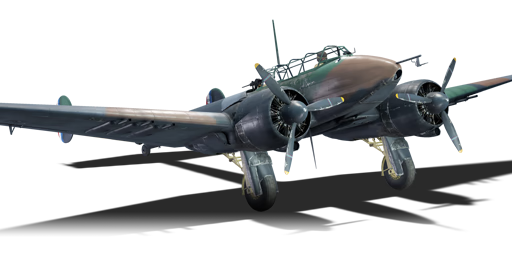
The SNCAN Potez 631 was the second production variant of the Potez 63 project, which was a project intended to provide France with modern heavy fighter capabilities and which eventually led to one of the most prolific and versatile series of combat aircraft to be built by the French aeronautical industry at the beginning of World War II. The 63 series, originally conceived in 1934, yielded not only strategic fighters, but also light bombers as well as attack and reconnaissance planes, resulting in the production of more than 1,100 aircraft of different variants in the series by June 1940. This elegant aircraft remained in active service during German occupation, and approximately 250 additional planes built in that period were used by the Luftwaffe as transport and liaison aircraft of the Vichy Air Force, the Italian Regia Aeronautica, and of the Rumanian Air Force.
In War Thunder, the Potez 631 is a Rank I French twin-engine fighter with a Battle Rating of 2.0 (AB/SB) and 2.3 (RB). It appeared following the introduction of the Potez 630 in Update 1.73 "Vive la France". Its armament features the last-ditch French effort to upgrade the aircraft before the outbreak of hostilities, equipped with 2 x 20mm underbelly cannon and 6 wing-mounted 7.5mm machine guns, along with a single 7.5mm rear-facing defensive turret.
General info
Flight Performance
The Potez 631 is a slow climber and heavy lander, with a stall speed of 138 km/h (SB, 45 min fuel, full ammunition, no bombs), but is very stable in high-speed dives and turns and can be lethal when used properly as an energy fighter. Its maximum speed is modest at 332 km/h @ 4,000m (SB, 45 min fuel, full ammunition, no bombs) but maneuvers surprisingly well at medium and high speeds, and the canopy provides excellent 360-degree visibility.
Survivability and armour
The Potez 631 has minimal armor and is relatively fragile, and highly vulnerable to damage from the front which makes it less-than-ideal as a high-level interceptor.
- No armor plating
- No armor glazing
- Critical components located in front of aircraft (fuel, pilot, engine, controls)
Armaments
Offensive armament:
- Main article: MAC 1934 (7.5 mm)
- Main article: Hispano 404 (20 mm)
The Potez 631 is armed with:
- 6 х 7.5 mm MAC 1934 machine gun (300 rpg = 1800 total rounds)
The machine guns are wing-mounted, three guns in each wing.
- 2 x 20 mm Hispano 404 cannon (90 rpg = 180 total rounds)
The cannons are arranged in the belly of the fuselage right under the pilot's seat.
Universal ammunition belts will be the preferred loadout for both weapons in most cases, although the extra armor-piercing capabilities of the ground target belt for the cannon will work effectively against both armored ground targets and aircraft for penetrating engine blocks. A short-burst of both cannon and MG fire at convergence range will mortally wound or kill any opponent of equivalent rank. Recommended convergence settings: 300m for high-energy fighter engagements, 400m for boom-and-zoom bounce tactics against fighters/bombers/attackers, 500m for ground attack.
Suspended armament
The Potez 631 can be armed with 2 x 100 No.1 bombs (118 kg each, explosive mass of 50kg with an armored target destruction radius of 4m) mounted under wing between the fuselage and each engine.
Defensive armament
The Potez 631 is defended by:
- 1 x 7.5 mm MAC 1934 machine gun, dorsal turret (1,000 rpg)
Usage in the battles
The Potez 631 is best used as a mid- to low-altitude energy fighter. The sluggish climb, poor performance above 16,000 feet and vulnerability to frontal damage limit its effectiveness as a higher-altitude interceptor, while the stability and surprising maneuverability at high speeds make it ideal for diving on vulnerable targets at low altitudes and then extending away to begin the slow climb to set up for another pass. If you attract the attention of an enemy fighter, do not attempt to climb away or to execute any advanced maneuvers such as loops or chandelles, as the Potez 631 bleeds energy at an exceptional rate in any kind of a climb. Just stay level with the throttle wide open and let the dorsal gunner warn off trailing attackers until you can safely begin a shallow climb to set up for re-engagement. Pilots with solid gunnery skills who can accurately gauge convergence distance can excel in this aircraft with six converged guns and two centerline cannons delivering a high volume of lethal ordnance to a small targeted area.
Pros and cons
Pros:
- Surprisingly maneuverable for a heavy fighter
- Potent offensive armament
- Stable at high speeds, effective dive characteristics
- Excellent 360-degree visibility
Cons:
- Nose and wings create a large profile and lack of armor make the aircraft highly vulnerable to battle damage
- Very sluggish climb rate, unimpressive max speed in level flight
- Poor energy retention in turns and especially in vertical loops
- Dorsal gun serves more of a warning role than as an effective defensive armament
- Overheat tendency in climbs
- Poor performance above 16,000 feet
History
The Potez 63 project was initiated in October 1934 with the issuance of official specifications for construction of an aircraft fulfilling three primary roles: a two-seat interceptor and escort fighter; a two-seat night fighter; and a three-seat command-and-control aircraft to radio direct operations of single-seat fighters. The first prototype flew in April 1936 powered by a pair of 580 HP Hispano-Suiza radial engines, which, after redesign and minor modifications, would become the 630 production variant, while a second prototype fitted with Gnome-Rhone 14 Mars engines flew in March 1937 and would become the 631 production variant. Following successful official trials, an initial order for 80 Potez 630s and 90 Potez 631s was placed, with delivery to combat units beginning at the end of 1938 and eventual production of a total of 207 Potez 631s completed. The 631 was intended to be the main production variant of the project, but the limited availability of the Gnome-Rhone engines required greater reliance on the 630 model and development of other variants. The performance in official trials resulted in the expansion of the project, with development of the day bomber Potez 633, the three-seat reconnaissance Potez 637, and experimental aircraft that were later abandoned including the 635 night bomber, the 639 ground attack plane, and 63.12 dive bomber.
The Potez 631 entered service with the fighter director flights that were attached to each single-engine fighter wing (Escadre de Chasse), and with the night fighter groups (G.C.N. or Groupes de Chasse de Nuit). At the start of the Second World War a total of 206 aircraft had been accepted and 117 had reached front line units. G.C.N. I/13 and G.C.N. II/13 possessed 39 aircraft, four were in Djibouti, four were at Ajaccio and 70 were with the Escadre de Chasse (alongside a number of Potez 630s). A small number were also assigned to GC II/8 where they replaced the Morane-Saulnier MS 225 and Dewoitine D.510 single-seat fighters. In the spring of 1940, a belated attempt was made to improve the armament of the Potez 631. Although the type was meant to have two forward-firing 20mm cannon, these had been in short supply, and a number were built with one cannon and one machine gun. It was now decided to fit every aircraft with two 20mm cannon and to add four machine guns under the wings. Although this decision was made on 8 February, by 10 May only two improved aircraft had reached the front lines.
On 10 May 1940 the Armée de l'Air had 75 Potez 631s in front line units, with 53 of them serviceable. Four night fighter units were allocated to the defense of Paris and the fifth to the defense of Lyons, Etienne and the Le Creusot area. The day-fighter unit E.C.M. I/16 was at Wez-Thuisy. Finally the Navy's Flotille F1C was deployed at Calais. This naval unit was the most successful Potez 631 unit of the Battle of France. Between 10-21 May, this squadron shot down 12 German aircraft over the North Sea at the loss of eight Potez 631s. The five night fighter units were not successful. Night operations commenced on 11 May, but there were no successful interceptions. A week later, the French High Command decided to use the aircraft in the increasingly desperate day battles. On 17 May twenty-four Potez 631s from the units based around Paris attempted to attack German columns around Formies. Eighteen aircraft reached the target area and six were lost, probably all to German anti-aircraft batteries. The night fighter units achieved their first success on 18 May, when an aircraft from E.C.N. 1/13 shot down a Heinkel He 111. Sadly, this same day saw a Potez 631 lost to friendly fire by an M.S. 406 pilot who had mistaken the aircraft for a German Bf-110. Another Potez was shot down by three Bloch 152s on 23 May, and on the following day the Armée de l'Air ordered recognition stripes to be painted on each aircraft (5m long white stripes on the fuselage). From 20 June the night fighter units were forced to retreat south to escape the advancing Germans. By the end of the Battle of France, the five night fighter units claimed four confirmed victories and eight probable victories, but at the cost of ten fighters lost to enemy action and three to friendly fire.
After the fall of France, The Potez 631 remained in use in small numbers with the Vichy Air Force. Two night fighter units, E.C.N 1/13 and E.C.N. 3/13 kept the aircraft. Eighty two aircraft were on strength on 1 November 1941, and 64 one year later. In the aftermath of the Allied invasion of North Africa and the German occupation of Vichy France, the French units in North Africa changed sides to support the Allies. The Potez 631s of E.C.N. 3/13 were used to defend the Gabès area against German attack, but were replaced with more modern aircraft later in November 1942. Three Potez 631s were used by the French Forces of the Interior after the Allied invasion of the south of France, allocated to Groupe de Reconnaissance II/33 'Périgord' at Cognac, and were used to fly reconnaissance missions over the remaining German pockets of resistance on the Atlantic coast. After the war these aircraft were used as trainers.
Sources:
"The Complete book of World War II Combat Aircraft", by Enzo Angelucci, Paolo Matricardi and Pierluigi Pinto, 2001, Barnes & Noble Books.
Rickard, J (20 May 2011), Potez 631, http://www.historyofwar.org/articles/weapons_potez_631.html
Media
Simulator Battle Demonstration (no commentary)
Read also
https://en.wikipedia.org/wiki/Potez_630
http://all-aero.com/index.php/54-planes-p-q-e-r-s/8072-potez-63--630--631--637
Sources
http://all-aero.com/index.php/54-planes-p-q-e-r-s/8072-potez-63--630--631--637
https://www.passionair1940.fr/Armee%20de%20l%27Air/Appareils/Chasse/Potez-630-631/EN-Potez-631.htm